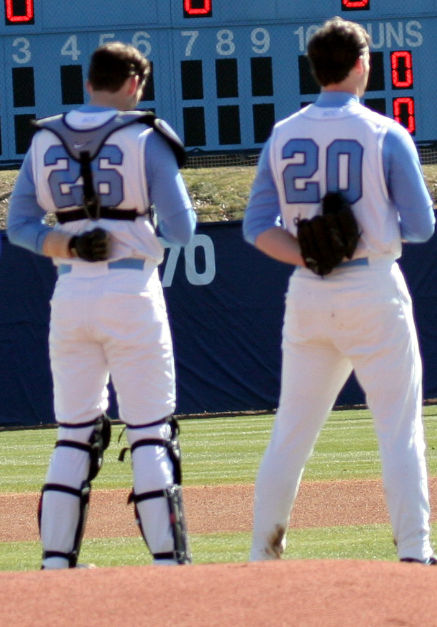
The symphony of a baseball game is not merely the crack of the bat or the roar of the crowd—it is the silent, unspoken dialogue between the pitcher and catcher, a choreography of signals and signals ignored, of trust and unspoken understanding. At the heart of this exchange lies the “shake off,” a gesture as old as the sport itself, yet as nuanced as the finest curveball. This ritual, often overlooked by casual spectators, is the cornerstone of strategic dominance on the mound, a tactical chess match where every nod and wave carries the weight of a season’s expectations. To the uninitiated, it may seem like a simple flick of the wrist or a subtle tilt of the head, but to those who play the game, it is the first volley in a battle of wits that can decide the fate of a pitch, an inning, or even a championship.
The Language of the Shake Off: Decoding the Silent Signals
The shake off is more than a refusal—it is a negotiation. When a catcher flashes a sign for a fastball, only for the pitcher to respond with a dismissive shake of the head, they are engaging in a high-stakes game of cat and mouse. The pitcher, surveying the batter’s stance or the runner’s lead, may deem the original call ill-suited for the moment. The shake off, then, is not an act of defiance but of adaptation, a signal that the catcher’s initial instinct has been overridden by the pitcher’s on-field intelligence. This exchange is steeped in baseball’s unwritten codes, where experience and intuition often outweigh rigid adherence to strategy. The key lies in the subtlety: a quick, almost imperceptible motion that conveys dissent without breaking the rhythm of the game. It is a language that only those who have stood in the dirt of a major league infield can truly comprehend.
The Psychology Behind the Gesture: Power Dynamics and Trust
Behind every shake off is a psychological duel. The catcher, tasked with calling the game, may feel a pang of frustration when their signal is rejected, their expertise momentarily sidelined. Yet, the best catchers understand that the pitcher’s veto is not a challenge to their authority but an invitation to collaborate. This dynamic is a microcosm of the broader relationship between pitcher and catcher, where mutual respect is the glue that holds their partnership together. The pitcher, in shaking off a sign, asserts their autonomy, but they also bear the burden of execution. A poorly timed shake off can disrupt the catcher’s rhythm, leaving them scrambling to adjust. Conversely, a well-timed refusal can demoralize a batter, who may sense the discord between the battery mates. The psychology of the shake off is a delicate balance, where every motion is a calculated risk, and every hesitation a potential misstep.
Variations of the Shake Off: From the Subtle to the Theatrical
Not all shake offs are created equal. The most understated are the ones that slip past the casual observer—a slight tilt of the catcher’s glove or a barely perceptible wave of the hand. These are the preferred methods of veterans, who understand that the less attention drawn to the exchange, the better. Then there are the more overt displays, where a pitcher might dramatically wipe their brow or adjust their cap in a way that signals their dissent. These theatrical shake offs are often employed in high-pressure situations, where the pitcher seeks to assert their presence or disrupt the batter’s concentration. Some pitchers even develop their own idiosyncratic signals, a private language that only they and their catcher understand. Whether subtle or bold, each shake off is a reflection of the pitcher’s personality and their relationship with the catcher, a fingerprint of their on-field chemistry.
The Ripple Effect: How Shake Offs Influence the Game’s Flow
The consequences of a shake off extend far beyond the immediate pitch. A rejected sign can shift the momentum of an inning, leaving the defense off-balance or the offense second-guessing. When a pitcher repeatedly shakes off a catcher’s calls, it may signal a deeper disconnect, a fracture in the team’s strategic cohesion. Conversely, a well-executed shake off can demoralize a batter, who may begin to question the catcher’s competence or the pitcher’s consistency. The ripple effect is particularly pronounced in late-inning situations, where the stakes are highest and the margin for error smallest. A single shake off in a critical moment can change the course of a game, turning a routine out into a game-saving strikeout or a harmless single into a rally-killing double play. The shake off, then, is not just a tactical tool but a narrative device, a moment that can define the arc of a contest.
Cultural and Historical Perspectives: The Shake Off Through the Ages
The shake off has evolved alongside the game itself, its form and function shaped by the eras in which it has been wielded. In the dead-ball era, when strategy was king and home runs were rare, shake offs were a staple of the pitcher’s arsenal, a way to outthink the batter in a battle of wits rather than power. As the game shifted toward the long ball in the 1920s and beyond, the shake off took on a different role, often serving as a psychological weapon to disrupt a hitter’s rhythm. Legends like Bob Gibson and Johnny Bench elevated the shake off to an art form, their exchanges becoming the stuff of lore. Today, with advanced analytics and real-time data at their fingertips, modern pitchers and catchers use shake offs in tandem with statistical insights, blending old-school intuition with cutting-edge technology. The shake off, then, is a living artifact of baseball’s history, a tradition that has adapted to the times while retaining its core essence.
Common Mistakes and How to Avoid Them
Even the most seasoned pitchers and catchers can fall victim to the pitfalls of the shake off. One of the most common mistakes is overusing the gesture, which can erode the catcher’s confidence and leave the pitcher second-guessing their own decisions. Another pitfall is the lack of clarity in the signal itself—if the shake off is too ambiguous, it can lead to confusion on the mound or, worse, a breakdown in communication that results in a costly mistake. Timing is also critical; a shake off that comes too late may give the batter an unintended advantage, tipping them off to the next pitch. To avoid these errors, pitchers and catchers must cultivate a deep understanding of each other’s tendencies and communicate openly about their preferences. The best shake offs are those that feel instinctive, a seamless part of the game’s rhythm rather than a jarring interruption.
The Future of the Shake Off: Technology and Tradition in Harmony
As baseball continues to embrace innovation, the shake off finds itself at a crossroads between tradition and technology. Some teams are experimenting with wearable devices that allow pitchers and catchers to communicate discreetly, eliminating the need for overt signals altogether. Yet, for purists, these advancements threaten to dilute the artistry of the shake off, reducing it to a sterile, data-driven exchange. The future may lie in a hybrid approach, where technology enhances the traditional shake off without erasing its human element. Pitchers and catchers will always need the ability to adapt on the fly, to trust their instincts in the heat of the moment. The shake off, then, will endure not despite technology, but because of it—proof that even in an era of algorithms and analytics, the soul of baseball remains in the unspoken language of the diamond.