What if baseball’s most feared sluggers were secretly the game’s greatest tease? Picture this: a hitter steps into the box, the crowd roars, the pitcher winds up—and then, with a flick of the wrist, the ball sails past the catcher’s mitt, only to be ruled a strike. Repeat this scenario often enough, and you’ve just encountered the statistical purgatory known as the “whiff rate.” For players like Joey Gallo, this isn’t just a quirk of their game; it’s a defining paradox that turns power into peril and precision into a high-stakes guessing game.
The Whiff Rate: Baseball’s Most Polarizing Metric
The whiff rate, formally known as the swing-and-miss percentage, measures how often a batter fails to make contact with the ball after initiating a swing. It’s a brutal statistic because it doesn’t just reflect poor timing or bad luck—it exposes a fundamental flaw in a hitter’s approach. A high whiff rate suggests that a player’s swing mechanics, pitch recognition, or even their mental approach might be out of sync with the game’s relentless pace. For power hitters, this is particularly damning. The same swing that generates 400-foot home runs can also produce a league-leading 40% whiff rate, leaving fans and analysts alike scratching their heads.
Take Joey Gallo, for instance. His career whiff rate hovers around 38%, a figure that would make most pitchers blush. Yet, Gallo’s power numbers are undeniable—he’s a two-time All-Star with a career slugging percentage north of .450. This dichotomy is what makes the whiff rate so fascinating: it’s not just about missing the ball; it’s about the cost of that miss. Every swing-and-miss is a wasted opportunity, a strike that could have been a line drive, a fly ball, or—if the stars align—a towering home run.
The Physics of a Whiff: Why Some Swings Fail Spectacularly
At its core, a whiff is a failure of biomechanics. The human body is a marvel of coordination, but when a hitter’s timing is off by even a few milliseconds, the result is a swing that either lags behind the pitch or overshoots it entirely. For power hitters, the issue is often exacerbated by their aggressive approach. These players are trained to drive the ball with maximum force, which means their swings are longer and more violent than those of contact hitters. The trade-off? Less margin for error.
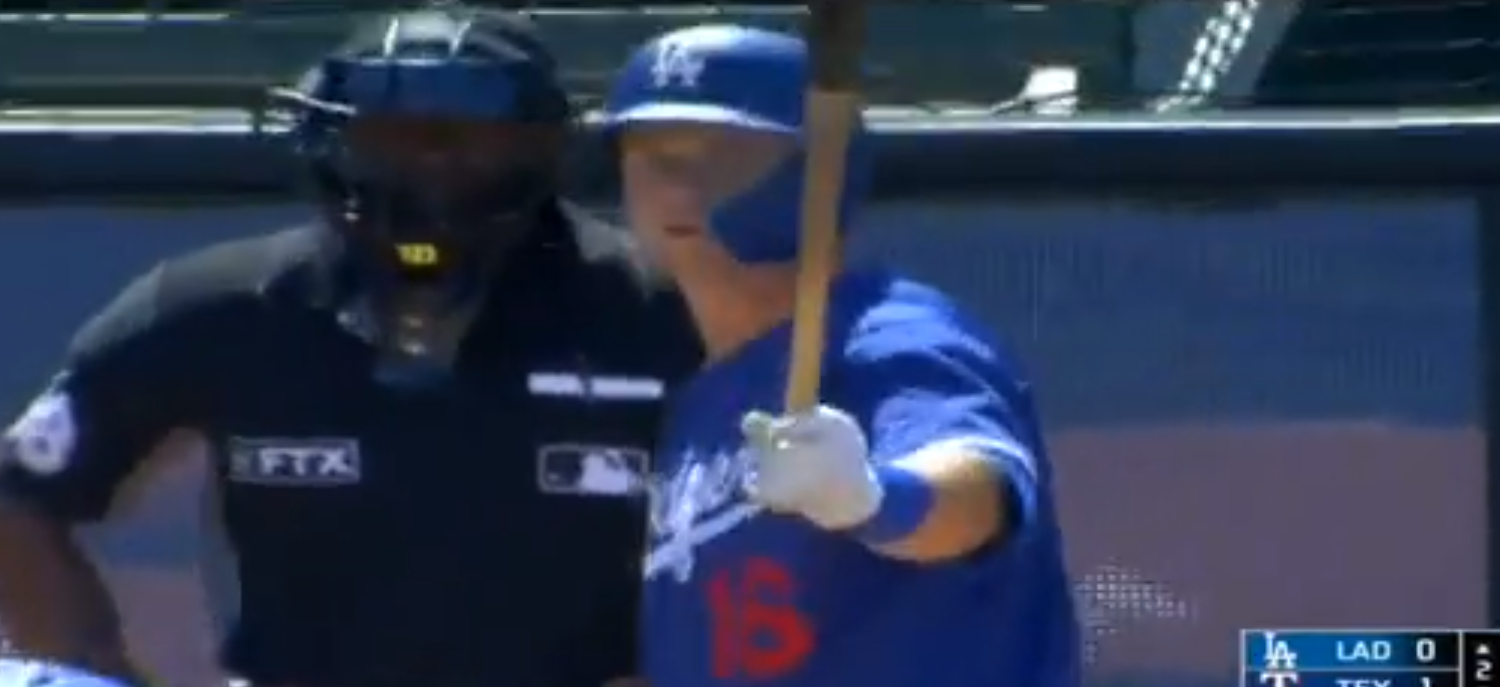
Consider the mechanics of a Gallo-esque swing. His hands start high, his stride is pronounced, and his finish is a full-body rotation that would make a discus thrower proud. This is a swing designed to generate exit velocities that shatter stat sheets, but it’s also a swing that demands near-perfect pitch recognition. A slight misjudgment in the zone’s depth, and suddenly, the bat is cutting through empty air. The physics here are unforgiving: the faster the pitch, the less time a hitter has to adjust. A 95-mph fastball reaches the plate in roughly 400 milliseconds. A batter’s reaction time, from pitch recognition to swing initiation, must be flawless to avoid a whiff.
But it’s not just about speed. The vertical movement on modern breaking balls and the late life on high-velocity fastballs can turn a hitter’s best intentions into a comedy of errors. A pitch that starts in the zone but dives out of it at the last second is a hitter’s worst nightmare—and a whiff waiting to happen.
The Mental Game: When the Brain Betrays the Body
Baseball is as much a mental game as it is a physical one, and the whiff rate is a window into a hitter’s psychological state. A player with a high whiff rate isn’t just struggling with mechanics; they’re often battling doubt, overthinking, or a lack of confidence in their approach. The mind can be a hitter’s greatest ally or their most insidious foe. When a player steps into the box knowing they’re likely to swing and miss, the pressure mounts. Do they try to adjust mid-at-bat, risking further inconsistency? Or do they double down on their approach, hoping for a streak of good fortune?
For Gallo, the mental grind is palpable. His career has been a rollercoaster of 400-foot blasts followed by back-to-back strikeouts. This unpredictability isn’t just frustrating for fans—it’s mentally taxing for the player. The constant cycle of hope and disappointment can erode confidence, turning a hitter’s approach into a self-fulfilling prophecy of whiffs. The question then becomes: can a player like Gallo ever break free from this cycle, or is he doomed to be defined by the very statistic that haunts him?
The Analytics Dilemma: When Numbers Lie and Truth Hurts
Baseball analytics has revolutionized the game, but it’s also created a paradox where the numbers can both expose and obscure a player’s true value. The whiff rate is a prime example. On paper, a 38% whiff rate looks like a red flag—a sign that a player is fundamentally flawed. But what if that same player is also posting a .250 ISO (isolated power) and a .350 OBP? The analytics tell two stories: one of inefficiency, and another of undeniable production.
This is the crux of the whiff rate dilemma. Traditional metrics like batting average and on-base percentage often fail to capture the nuance of a power hitter’s game. A player who whiffs a lot but also walks frequently and crushes the ball when he does make contact can still be a net positive. The problem is that these players are often undervalued in a league that increasingly prioritizes contact over power. Teams chasing playoff spots may shy away from Gallo-types, fearing the volatility of their production. Yet, in a game where a single home run can change the course of a season, is the risk worth the reward?
The analytics revolution has also led to a cottage industry of swing adjustments, pitch-tracking technology, and biomechanical analysis. Players like Gallo have access to data that previous generations could only dream of. So why do they still whiff at such alarming rates? The answer may lie in the intangibles—the unquantifiable aspects of the game that resist the cold, hard gaze of the numbers.
The Future of the Whiff: Can the Gallo-Type Evolve?
The baseball landscape is shifting. The league’s emphasis on launch angle and exit velocity has created a new breed of hitter—one that prioritizes power over contact. But as the whiff rate crisis shows, this approach comes with significant risks. The question now is whether the next generation of power hitters can learn from the mistakes of their predecessors. Can they refine their swings to reduce whiffs without sacrificing their prodigious power?
Some players have managed to strike this balance. Aaron Judge, for all his power, has a whiff rate closer to 25%. His ability to make consistent contact while still driving the ball at elite levels is a testament to the power of adaptation. But for every Judge, there’s a Gallo—a player whose gifts are undeniable, but whose flaws are equally glaring. The challenge for these players is to evolve, to find a way to harness their power without being enslaved by their whiff rate.
The solution may lie in a hybrid approach. Imagine a hitter who can adjust their swing based on the count, the pitcher’s repertoire, or even the game situation. A player who can turn a high-whiff approach into a strategic weapon, using the threat of a home run to draw walks or force pitchers into mistakes. This isn’t just a pipe dream—it’s the future of the game. As analytics become more sophisticated, and technology more advanced, the players who can adapt will thrive, while those who can’t will be left behind.
Conclusion: The Whiff Rate as a Metaphor for Baseball’s Paradoxes
The whiff rate is more than just a statistic—it’s a metaphor for the game itself. Baseball is a sport of inches, of milliseconds, of the delicate balance between failure and success. For players like Joey Gallo, the whiff rate is a reminder that even the most gifted athletes are subject to the game’s cruelest ironies. It’s a statistic that exposes the fragility of human perfection, the thin line between glory and ignominy.
Yet, it’s also a statistic that invites us to ask: what if the whiff rate isn’t a flaw, but a feature? What if the very thing that makes Gallo’s game so maddening is also what makes it so compelling? In a sport where the smallest adjustments can lead to the biggest breakthroughs, the whiff rate is a challenge—a call to arms for players, coaches, and analysts to rethink the way they approach the game. The next time you see a hitter swing and miss, remember: it’s not just a strike. It’s a story. And like all great stories, it’s one that’s still being written.