In the pantheon of modern baseball cards, few rookie cards have endured the test of time quite like Manny Machado’s. A decade after his debut, his early issues still command attention—not just from collectors, but from investors who see something deeper than cardboard and ink. There’s a quiet revolution happening in the market, one where Machado’s rookie cards are no longer just nostalgic relics, but strategic assets poised for a resurgence. What’s driving this shift? Why does a player whose career has seen both meteoric highs and polarizing lows still hold such sway over the hobby? The answer lies not in hype, but in the convergence of scarcity, performance, and the evolving psychology of collectors.
Baseball cards are more than collectibles; they’re time capsules. They capture a player’s essence at a singular moment—before injuries, before controversies, before the weight of expectation reshapes their legacy. Machado’s rookie cards, scattered across multiple brands and parallels, each tell a different story. Some are pristine, untouched by the wear of time. Others are scarred by the market’s volatility. But all of them share one thing: they represent a player who, at his peak, was undeniably elite. And that’s where the intrigue begins.
The Myth of the “One-Hit Wonder” and Why Machado Defies It
Machado burst onto the scene in 2012 as a 19-year-old wunderkind with the Baltimore Orioles. His defensive prowess at third base was otherworldly, his bat flashed 30-homer potential, and his swagger—whether flipping his helmet or jawing at opponents—made him an instant fan favorite. But as his career unfolded, so did the narratives: the defensive miscues, the perceived lack of hustle, the polarizing contract with the Padres. Critics called him a “one-hit wonder,” a player whose peak was fleeting, whose legacy would be defined by what he wasn’t rather than what he was.
Yet, in the world of vintage and modern collecting, Machado’s rookie cards tell a different story. They’re not just relics of a bygone era; they’re proof that greatness leaves a mark, even when the player’s public persona shifts. The 2012 Bowman Chrome Machado rookie card, with its shimmering refractor parallel, isn’t just a card—it’s a talisman. It’s the moment before the storm, before the scrutiny, before the contract that would divide fans. And that’s precisely why it’s valuable. Collectors aren’t just buying a piece of cardboard; they’re buying a slice of a player’s unfiltered potential.
The Parallel Paradox: Why Scarcity Trumps Sentiment
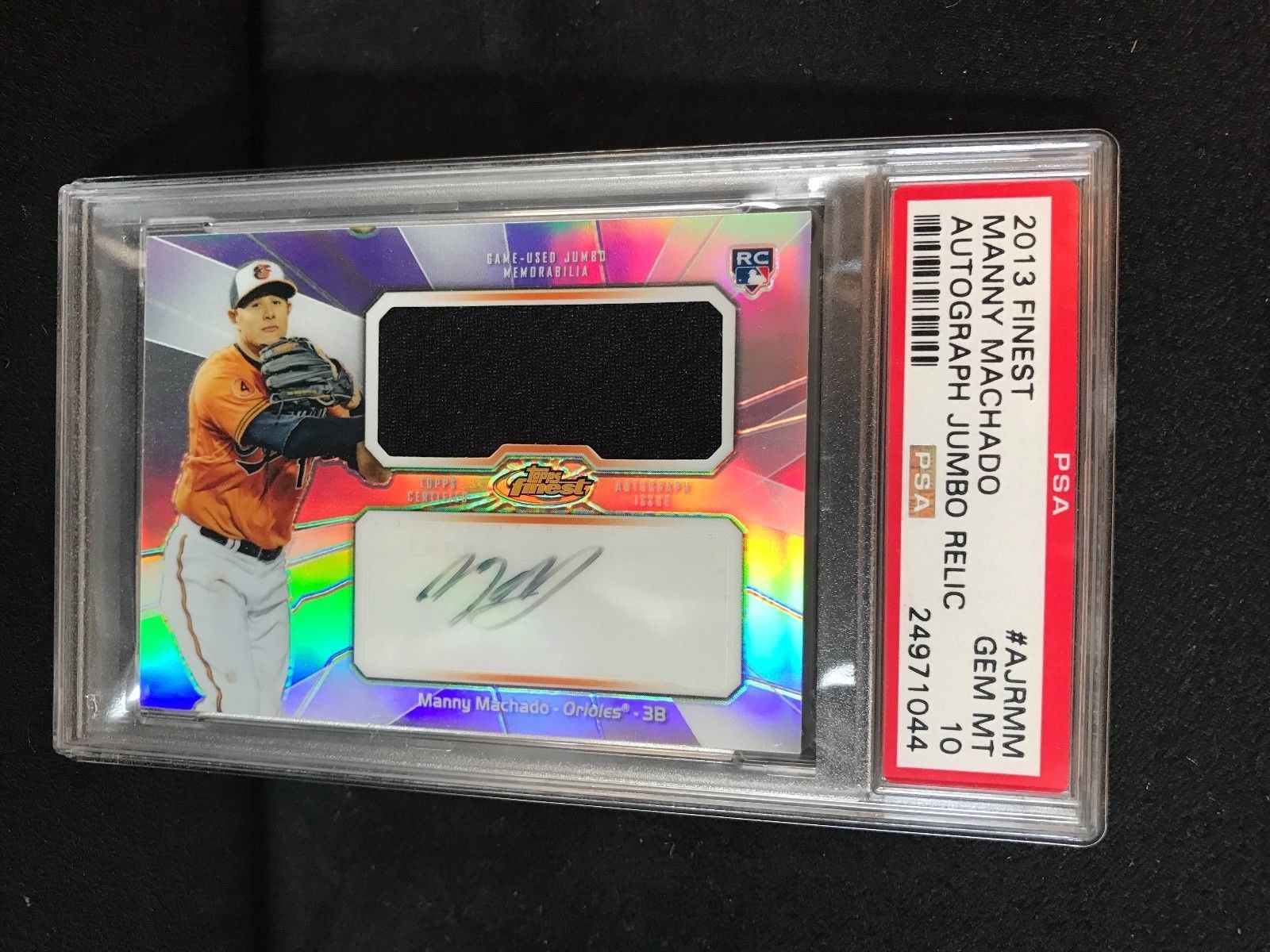
Machado’s rookie card market is a masterclass in the economics of scarcity. While his base rookie cards from brands like Topps and Bowman remain accessible, it’s the parallels and autographs that command premiums. The 2013 Topps Finest Auto Jumbo Relic, for instance, isn’t just a card—it’s a relic, a piece of game-used memorabilia fused with a signature. These are the cards that whisper to collectors: *This is rare. This is irreplaceable.*
But here’s the twist: scarcity alone doesn’t drive value. It’s the intersection of scarcity and demand. Machado’s parallels—refractors, mosaics, super fractors—aren’t just harder to find; they’re harder to *want*. Collectors are drawn to them because they represent the apex of production. A refractor parallel, with its prismatic sheen, isn’t just a card; it’s a status symbol. It’s the difference between owning a piece of history and owning a piece of *exclusive* history. And in a market where exclusivity is currency, Machado’s parallels are the gold standard.
Consider the 2012 Panini Prizm Top Prospects Insert #TP7. It’s not a base rookie card. It’s not even a standard autograph. It’s a limited-run insert, a “top prospect” designation that elevates its significance. These cards aren’t just collectibles; they’re investment-grade assets. And as Machado’s career has stabilized—now a two-time All-Star, a World Series champion, and a player with over 300 home runs—the demand for these parallels has only intensified. The market is betting on the idea that Machado’s legacy will only grow, and with it, the value of his scarcest cards.
The Performance Factor: How Machado’s Resurgence Fuels Collector Frenzy
Machado’s career has been a rollercoaster, but his recent performances have silenced many critics. After leaving San Diego in free agency, he signed a massive deal with the Los Angeles Dodgers, where he’s become a cornerstone of their lineup. His bat has regained its power, his defense has stabilized, and his leadership has been undeniable. In 2023, he hit .262 with 37 home runs and 108 RBIs, proving that at 31 years old, he’s still an elite hitter.
This resurgence isn’t just good for baseball—it’s good for his rookie cards. When a player’s career trajectory aligns with their early promise, the market takes notice. Machado’s 2012 Bowman Chrome refractor, once a $50 card, now sells for hundreds. His autographed parallels, once a $200 gamble, now fetch thousands. The reason? Collectors are no longer just buying nostalgia; they’re buying *potential*. They’re betting on the idea that Machado’s best days are ahead, and that his rookie cards will one day reflect that.

The Psychological Edge: Why Collectors Still Believe in Machado
There’s a psychological phenomenon at play in the Machado rookie card market: the *halo effect*. Even when a player’s reputation takes a hit, their early cards retain value because they’re tied to a moment of pure potential. Machado’s rookie cards aren’t just about what he’s done; they’re about what he *could* do. And in a hobby where hope often outweighs reality, that’s a powerful narrative.
Consider the collector who bought a Machado refractor in 2012. They weren’t just buying a card; they were buying a belief. A belief that he’d become a superstar. A belief that his cards would appreciate. A belief that his legacy would endure. Even when Machado’s career hit rough patches, those collectors held on. And now, as his stock rises again, their patience is rewarded. This isn’t just about profit; it’s about vindication. It’s about proving that sometimes, the market gets it right.
The Machado rookie card market is a testament to the power of narrative. It’s not just about the player; it’s about the story collectors tell themselves. And Machado’s story—flawed, complicated, ultimately triumphant—is one that resonates. It’s the story of a kid who arrived with a bang, faced adversity, and came back stronger. It’s the story of a market that rewards patience, belief, and a little bit of luck.
The Future: What’s Next for Machado’s Rookie Cards?
If history is any indication, Machado’s rookie cards are poised for a significant uptick in value. The key drivers? Scarcity, performance, and the shifting tides of collector psychology. As Machado continues to age gracefully and his legacy solidifies, the demand for his scarcest cards will only grow. The 2013 Topps Finest Auto Jumbo Relic, for instance, could easily double in value over the next five years. The 2012 Bowman Chrome refractor? It’s not out of the question to see it reach four figures in high-grade PSA 10s.
But the real opportunity lies in the overlooked. The 2012 Panini Prizm Top Prospects Insert #TP7, once a $50 card, is now a $200 card. It’s not the flashiest Machado card, but it’s the one that tells the most compelling story. It’s the card that represents the moment before the world knew his name. And in a market where collectors crave authenticity, that’s priceless.

For investors, the message is clear: Machado’s rookie cards aren’t just a bet on the past; they’re a bet on the future. They’re a bet on a player who has defied expectations, a market that rewards patience, and a hobby that thrives on storytelling. And if Machado’s career is any indication, the best chapters are yet to come.
In the end, collecting Machado’s rookie cards isn’t just about owning a piece of baseball history. It’s about owning a piece of a player’s journey—one that’s still being written. And that’s a story worth investing in.