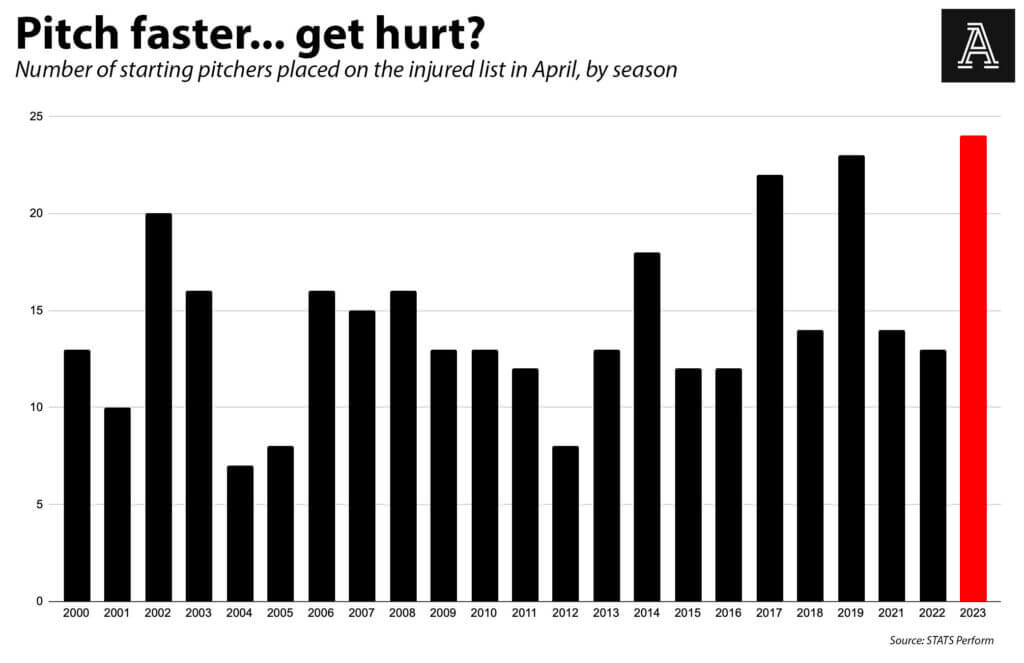
Baseball, often hailed as America’s pastime, has recently undergone one of its most significant regulatory transformations in decades with the implementation of the pitch clock. Designed to quicken the pace of play and enhance fan engagement, this innovation has stirred both enthusiasm and concern. While the pitch clock’s primary goal was to streamline gameplay, a growing cadre of experts, players, and observers note an unsettling side effect: a surge in pitching injuries. This phenomenon prompts a deeper investigation, beyond surface criticisms of the rule, into how accelerated pitching rhythms might be fostering a crisis of physical strain among the game’s most important athletes.
The Pitch Clock’s Origins and Intent
The pitch clock was introduced as a remedy to one of the sport’s enduring critiques—its often glacial pace. Long at odds with the modern appetite for immediacy, baseball games sometimes dragged on for hours, testifying to older traditions that prized deliberation over tempo. The pitch clock mandates a strict window—typically 15 seconds with bases empty and 20 seconds with runners on base—in which a pitcher must deliver the ball. This innovation nudges the game into a brisker tempo, aligning baseball more closely with contemporary entertainment expectations. However, this well-intentioned alteration is not merely a cosmetic adjustment; it fundamentally reshapes a pitcher’s routine, with profound implications.
Acceleration of the Pitching Process and Biomechanical Stress
Pitching relies heavily on a complex sequence of precise, repetitive biomechanical motions. Centuries of tradition and training have honed pitchers’ timing, allowing their bodies to peak for each delivery. The acceleration demanded by the pitch clock truncates this rhythm. Rather than allowing pitchers to ritualistically prepare between pitches, the clock forces a condensed timeframe, which appears to compromise their ability to fully engage in optimal warm-up microcycles. This truncated recovery period between explosive motions may elevate musculoskeletal stress, contributing to microtraumas that accumulate over the course of a game or season. The gamut of injuries—ranging from flexor tendon strains to ulnar collateral ligament tears—suggests that the very bones, muscles, and connective tissues are bearing the brunt of this compressed cadence.
Psychological Ramifications: Anxiety, Hurry, and Performance Declines
The pitch clock exerts not just a physical toll, but also a profound psychological pressure on pitchers. Pitchers traditionally rely on a self-regulated tempo to induce a state of flow, a mental zone correlating to peak focus and control. The clock disrupts this sanctified mental environment, embedding a persistent urgency that can foster cognitive dissonance and anxiety. Such heightened mental tension may predispose pitchers to mechanical breakdowns—mistimed foot placements, altered arm angles, or rushed grips. The interplay of psychological strain and biomechanical deviation compounds injury risks, subtly undermining the pillars of effective performance and physical safety.
Statistical Insights: The Surge in Pitching Injuries Post-Implementation
Data emerging from the seasons following the pitch clock’s implementation reveals a stark trend: a marked increase in time spent on the Injured List by pitchers, especially in arm-related injuries. UCL repairs and shoulder inflammation have surged, conflicting with the narrative that the pitch clock only affects game duration. This emerging epidemiological pattern cannot be dismissed as coincidental. Instead, it signals a systemic stressor introduced by the enforced tempo, as pitchers are compelled to execute maximum effort pitches without adequate recuperation. The pitch clock may inadvertently be accelerating the attrition of pitching arms across the league, threatening the longevity and efficacy of pitchers from rookie to veteran.
Adaptive Measures and Training Innovations
In response to these mounting challenges, coaching staffs and training personnel have begun exploring novel strategies to mitigate injury risks under the pitch clock regime. These include enhanced pre-game warm-ups emphasizing rapid neuromuscular priming, interval conditioning tailored to replicate game-day pacing, and biomechanical adjustments to optimize efficiency under time constraints. Teams increasingly rely on advanced analytics and wearable technology to monitor fatigue markers in real time, aiming to intervene before injury manifests clinically. Yet, these adaptive measures, while promising, may only partially offset the physiological burden imposed by the accelerated pitch rhythm.
Resistance and Calls for Reevaluation
Some within the baseball community advocate for adjustments—or even a rollback—of the pitch clock rules, citing player welfare as paramount. Veteran pitchers and union representatives emphasize the irreplaceable value of cadence as a safeguard against injury. While opponents acknowledge the pitch clock’s benefits to fan engagement, their plea stresses balance: the game must evolve, but not at the expense of its athletes’ health. This tension crystallizes a fundamental question for baseball’s stewards—how to harmonize modern entertainment demands with the traditional imperatives of player preservation?
The Fascination with Pitching: An Enduring Baseball Mythos
At its core, the pitcher’s duel is baseball’s soulful essence—an intricate dance of strategy, skill, and endurance. This mythical fascination with pitching has transcended mere sport, embodying notions of mastery against adversity. The pitch clock’s impact challenges this reverence by imposing a regimented cadence that risks eroding the very artistry the game venerates. The current injury epidemic echoes a deeper ambivalence towards mechanization versus human resilience. Baseball’s ongoing narrative may hinge on reconciling this dichotomy, preserving the sanctity of pitching while embracing innovation.
Conclusion: Navigating the Future of Pitching in Baseball
The pitch clock represents more than a rule change; it symbolizes baseball’s complex negotiation between tradition and progression. While it has undeniably invigorated the pace of play, the unintended consequence—an epidemic of pitching injuries—demands comprehensive scrutiny and empathetic responses. Solutions will likely require multifaceted approaches, blending biomechanical science, mental health awareness, and regulatory flexibility. As MLB explores the next chapters of its storied history, the stewardship of pitching health must remain paramount. Ultimately, the quest endures: to maintain the game’s poetic rhythm without fracturing the fragile bodies that bring it to life.