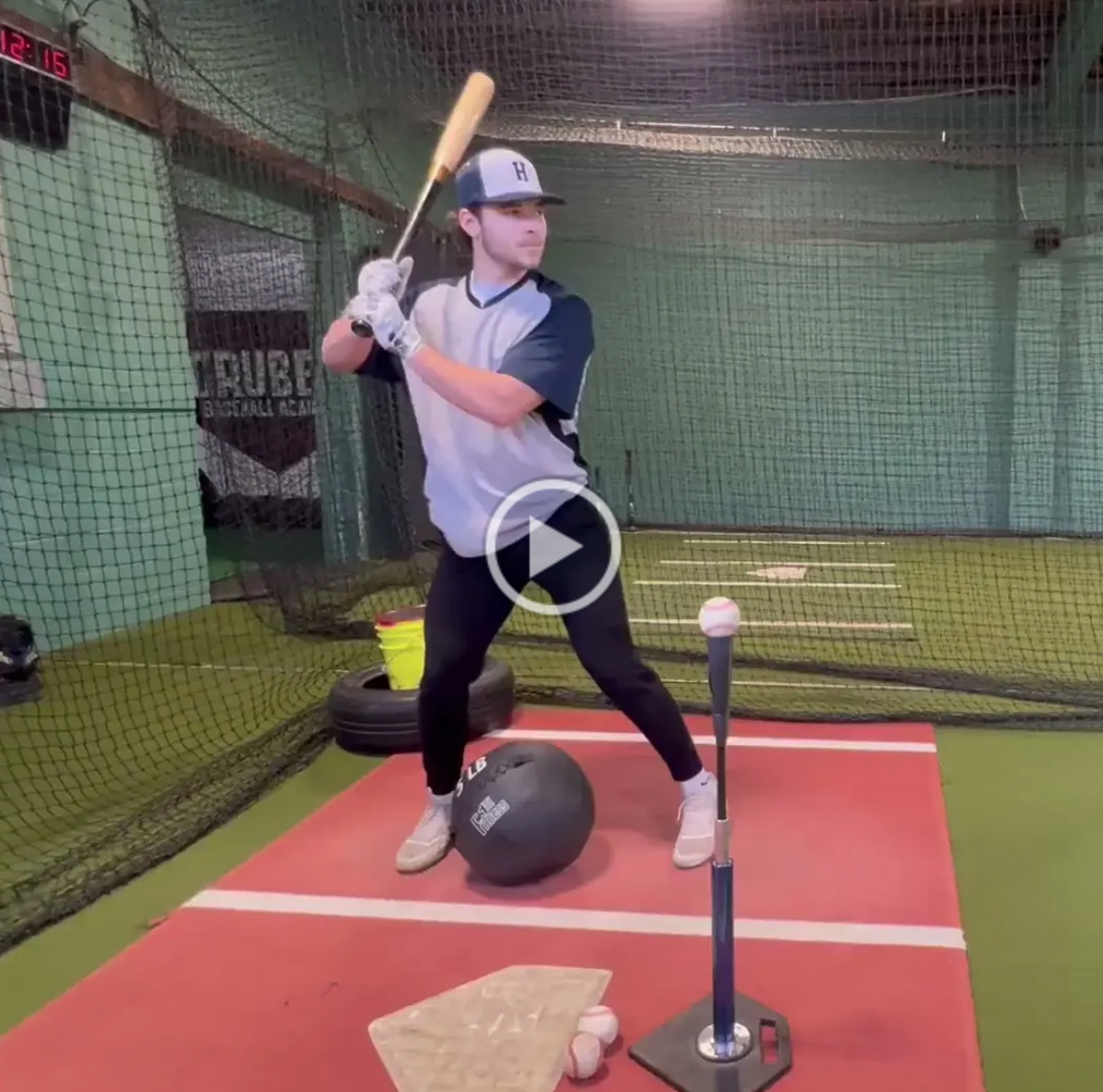
There’s a peculiar alchemy in baseball training drills—the kind that defies intuition yet forges unshakable mechanics. Among them, the “Back Knee Down” tee drill sits in a league of its own, a paradox wrapped in a paradox: it feels unnatural, even wrong, yet it’s the silent architect of swing purity. This isn’t just about keeping the back knee lowered; it’s about sculpting a kinetic chain where every joint hums in harmony, where the ground becomes an accomplice, and where the ball’s flight is dictated by the quiet obedience of a hitter’s lower half. To dismiss it as mere footwork is to overlook the ballet of physics it orchestrates. When executed with surgical precision, this drill doesn’t just refine a swing—it rewires it, turning awkwardness into artistry.
The Illusion of Constraint: Why “Wrong” Feels So Right
At first glance, the “Back Knee Down” tee drill is a rebellion against baseball’s natural order. Coaches preach balance, fluidity, and explosive rotation, yet here we are, demanding a hitter’s back knee to kiss the ground like a penitent supplicant. The discomfort is intentional. By anchoring the knee, the drill strips away the crutch of excessive hip rotation, forcing the hitter to generate power through the ground rather than the upper body. It’s a controlled descent into chaos, where the only way out is through disciplined mechanics. The magic lies in the discomfort—it’s the drill’s way of saying, “You think you’re strong? Prove it without cheating.”
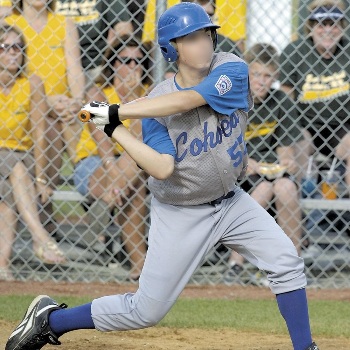
Consider the hitter’s stance: the back knee, once a dormant spectator, now becomes the fulcrum of a pendulum swing. When lowered, it elongates the stride, stretches the hip flexors, and creates a coiled spring ready to uncoil. The drill doesn’t just teach; it hypnotizes. It’s the baseball equivalent of a magician’s misdirection—while the eyes are drawn to the hands, the real sorcery happens in the legs. The back knee’s descent isn’t a restriction; it’s a revelation, exposing the hidden pathways of torque that separate good hitters from great ones.
The Ground as a Silent Partner: The Physics of a Lowered Back Knee
Baseball is a game of leverage, and the “Back Knee Down” drill is its most understated lever. When the back knee dips, it transforms the hitter’s body into a seesaw of energy. The lowered knee acts as a brake, preventing the premature rotation of the hips and ensuring the hands stay inside the ball. But the true genius lies in the ground reaction force. As the hitter loads into the back leg, the earth pushes back, creating a kinetic chain that travels up the spine, through the shoulders, and into the bat. It’s a domino effect where the smallest movement—knee down—triggers a cascade of power.
Think of the back leg as a coiled spring. When the knee drops, the hip flexors stretch, storing elastic energy. Upon contact, that energy is released in a whip-like motion, transferring through the torso and into the bat head. The drill’s brilliance is in its simplicity: by restricting the back knee, it ensures the hitter doesn’t “spin out” of the zone, a common flaw in players who over-rotate. Instead, the energy is directed forward, like a river carving its path through stone. The result? A swing that’s not just powerful but precise, a laser beam cutting through the strike zone.
The Hip Hinge: The Forgotten Art of the Back Knee’s Descent
Beneath the surface of the “Back Knee Down” drill lies a biomechanical secret: the hip hinge. This isn’t just about bending the knee; it’s about articulating the hip joint in a way that maximizes the stretch-shortening cycle. When the back knee lowers, the hitter’s torso tilts slightly forward, creating a counterbalance that prevents the upper body from flying open. The hip hinge is the unsung hero of the drill, the silent conductor of the kinetic orchestra. Without it, the back knee’s descent is just a mechanical quirk—with it, it becomes the foundation of a repeatable, high-velocity swing.
Mastering the hip hinge requires patience. It demands that the hitter feel the stretch in the glutes and hamstrings, that they understand the difference between a lazy collapse and a controlled descent. The drill forces this awareness, turning what was once an unconscious movement into a deliberate act. It’s the difference between a swing that’s powered by brute force and one that’s sculpted by precision. The hip hinge is the bridge between the ground and the bat, the moment where raw power is refined into art.
From Tee to Game: Translating Drill Perfection to Live Pitches
The true test of the “Back Knee Down” drill isn’t in the cage—it’s on the field. The challenge lies in transferring the discipline of the tee to the unpredictable chaos of a live pitch. The drill’s magic is in its ability to create muscle memory, but muscle memory alone isn’t enough. The hitter must learn to trust the mechanics even when the pitch isn’t perfect. The lowered back knee becomes a compass, guiding the swing back to the zone when instincts threaten to take over.
Consider the high fastball. Without the discipline of the drill, a hitter might be tempted to lift the back knee to “get under” the ball. But with the knee anchored, the hitter is forced to adjust within the framework of the drill, keeping the barrel on plane and driving the ball into the gap. The same principle applies to breaking balls. The drill teaches the hitter to stay balanced, to let the lower half initiate the swing, and to trust the hands to do the rest. It’s a lesson in adaptability, a reminder that greatness isn’t about reacting—it’s about preparing.
The Mental Game: Embracing the Uncomfortable
There’s a psychological dimension to the “Back Knee Down” drill that’s often overlooked. It’s not just a physical exercise; it’s a mental gauntlet. The discomfort of the lowered knee is a test of will, a reminder that greatness isn’t found in comfort but in the willingness to endure the unfamiliar. The drill forces hitters to confront their own limitations, to question their instincts, and to rebuild their swing from the ground up. It’s a humbling experience, one that separates the curious from the committed.
The drill’s unnatural feel is its greatest strength. It’s a rebellion against the status quo, a challenge to the conventional wisdom that says “just swing hard.” By embracing the awkwardness, hitters learn to trust the process. They discover that the most powerful swings aren’t the ones that look effortless but the ones that feel controlled. The “Back Knee Down” drill is a metaphor for baseball itself—a game where the difference between success and failure often comes down to the willingness to do what feels wrong in the pursuit of what’s right.
The Legacy of the Drill: Building a Swing for the Ages
The “Back Knee Down” tee drill isn’t just a training tool; it’s a legacy builder. It’s the drill that turned Barry Bonds from a power hitter into a legend, the secret weapon that helped Mike Trout refine his swing into a thing of beauty. Its appeal lies in its simplicity, its ability to distill the complex mechanics of hitting into a single, repeatable motion. But its true power is in its adaptability. Whether you’re a Little Leaguer learning the fundamentals or a big-leaguer fine-tuning your approach, the drill offers something for everyone.
In a sport where mechanics are everything, the “Back Knee Down” drill is a masterclass in efficiency. It teaches hitters to work smarter, not harder. It reminds them that the ground is their ally, that the back knee is their anchor, and that the swing is a symphony of interconnected movements. Most importantly, it instills a sense of discipline—a willingness to do the unglamorous work that separates the good from the great. In baseball, as in life, the right path isn’t always the easiest. Sometimes, it’s the one that feels wrong. And that’s exactly why it works.