The landscape of professional baseball is undergoing a metamorphosis, driven not by grand strategy shifts, but by algorithms and sensors. While the focus often centers on player statistics or grand slams, a quieter revolution is taking place behind home plate. The introduction of the Automated Ball-Strike System (ABS), a digital usher of sorts replacing the traditional human umpire in select calls, marks a pivotal moment. It represents more than just marginalizing human judgment; it’s fundamentally questioning the very nature of official judgment in baseball’s most elemental act – recognizing legal pitches. To those unfamiliar or perhaps jaded, a robot umpire might seem like a futuristic gimmick. Yet, for avid observers, the narrative behind ABS is far more compelling, hinting at a deeper conversation about accuracy, speed, and the evolving soul of the game.
Redolent Pitches and Flawed Judgment
A core tenet of baseball fandom often revolves around the quest for perfect execution. Fans pore over launch angle data, exit velocity metrics, they scrutinize every nuance of a pitcher’s delivery. However, one of the most visceral aspects of the game, the simple recognition of a pitch crossing the plate as ball or strike, is intrinsically tied to the umpire’s perception. And this perception, despite rigorous training, is not infallible. In close calls or during intense moments, human judgment can falter, influenced by subtle factors beyond control – the sun angle glinting off the leather, the sheer speed creating a perceptual lag, or even unconscious biases that might creep in over a long season. These imperfections are rarely headlines, absorbed as they are into the game’s noise, yet they gnaw at the core of fair play and the integrity of the umpiring process itself.
Algorithmic Arbiters: The Rise of Synthesized Justice
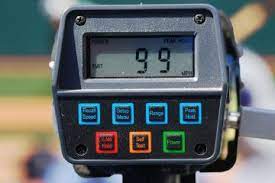
The ABS system emerges as a counterpoint to these recurring doubts. Utilizing advanced technology far removed from human fallibility, ABS integrates sensor fusion from diverse data streams. Radar guns capture precise pitch velocity and trajectory, high-definition cameras triangulate the ball’s exact location relative to the strike zone with mathematical precision, and sophisticated software algorithms process this information in milliseconds. Its defining moment is the automatic call – “Call it in the box!” – where the digital system instantly adjudicates a pitch’s legality. This shift towards automated arbitrage, towards a digitally inscribed truth, is transformative. It establishes an objective standard, theoretically immune to individual bias or fluctuating states of alertness. This technological intervention hints at a broader, perhaps unsettling, trend: the quantification of subjective experiences within athletic domains.
Consistency Across the Contested Plateau
If inconsistency stems from human variability, then ABS offers a solution of paramount importance. Across hundreds of ballparks, from expansive outdoor stadiums to compact indoor arenas, the physical makeup of the strike zone and the varying conditions under which umpires operate can introduce inconsistency. Sometimes, human effort limitations become apparent, leading to calls that might vary in stringency from one venue to another, day to night. This inconsistency, the subtle injustice players might face knowing their swing could be validated or nullified by a call made under slightly different conditions, has long been a subject of debate. ABS promises a consistent and unified standard, calibrated against objective measurements rather than subjective estimation. The notion of a ‘digital home plate,’ providing a standardized adjudication function regardless of the official’s location or fatigue level, holds profound implications for player strategy and the perceived fairness of the game.
The Cadence of Speed: Unfreezing the Game Clock
Consider the toll these subjective decisions take on the game’s rhythm. The anticipation around every pitch hangs heavy, yet the time taken by an umpire to raise a flag or hold his hand can stretch intermissions between pitches into uncomfortable pauses. These micro-delays accumulate, impacting the flow, the energy of the stadium, and sometimes, crucial moments on defense or offense. The speed of the pitch dictates a certain velocity in the game itself. ABS injects a new speed into this equation. By generating instantaneous calls, it significantly compresses the decision-making cycle. The game can continue with greater velocity, moving from thrower to action based on an external, objective timer. This acceleration, facilitated by robotic adjudicators, hints at an efficiency that could fundamentally reshape baseball’s pacing structure. It speaks of a future where the pace of the contest itself is driven, at least in part, by automated processing units.
Looming Shadow: Implications Beyond the Box
The advent of ABS doesn’t occur in a vacuum. Challenges are apparent. Players, accustomed to interpreting subtle cues from the dugout, must quickly adapt to the absolute certainty of automated calls, a shift that could impact strategic decision-making at crucial junctures. There’s also the broader philosophical question. If the core definition of a ‘strike zone’ or the ‘on-deck’ protocol is dictated by a machine, who is accountable for the system’s algorithm? How is it calibrated? This introduces a new layer of institutionalized objectivity, replacing potentially biased human observation with algorithmically determined judgment, prompting introspection about oversight and adaptability. Furthermore, the system relies on technological permanence – what happens during a system outage or software adjustment? This reliance necessitates robust fail-safes and clear accountability mechanisms, adding unseen layers of complexity to the technological integration.
Charting the Future Infield: A Constantly Evolving Landscape
The implementation of ABS signals neither a full-field automation era nor a return to completely unadorned baseball. Instead, it represents one thread in an intricate weaving of technology into the sport’s fabric. Its success could pave the way for the digitization of other calls, beyond just the immediate ball-strike determination, extending the authority of algorithms further into baseball’s judgmental framework. Pioneering leagues in Asia are exploring this expansion of automated functions. The narrative surrounding ABS is inextricably linked to the ongoing technological evolution, demanding careful consideration and likely necessitating iterative adjustments to the system itself to maintain relevance and accuracy. What might seem like a minute detail behind the plate today is possibly rewriting the rules of the game tomorrow.