The 2008 Major League Baseball season holds a peculiar place in the annals of New York Yankees history. It was a year steeped in nostalgia, marking the final farewell to the iconic Yankee Stadium, a cathedral of baseball that had hosted legends for generations. Yet, amidst the celebratory atmosphere and the emotional tributes to the “House That Ruth Built,” a stark reality emerged: for the first time since 1993, the Yankees failed to reach the postseason. This unexpected stumble ignited a protracted debate among fans and analysts alike, with a persistent narrative attributing the team’s struggles largely to an unprecedented wave of injuries. But was this merely a convenient alibi, or a genuinely debilitating factor that irrevocably altered the team’s destiny? Examining the intricate tapestry of that season reveals a complex interplay of misfortune, aging rosters, and the high stakes of October contention.
1. The Loss of Chien-Ming Wang: A Crushing Blow to the Rotation
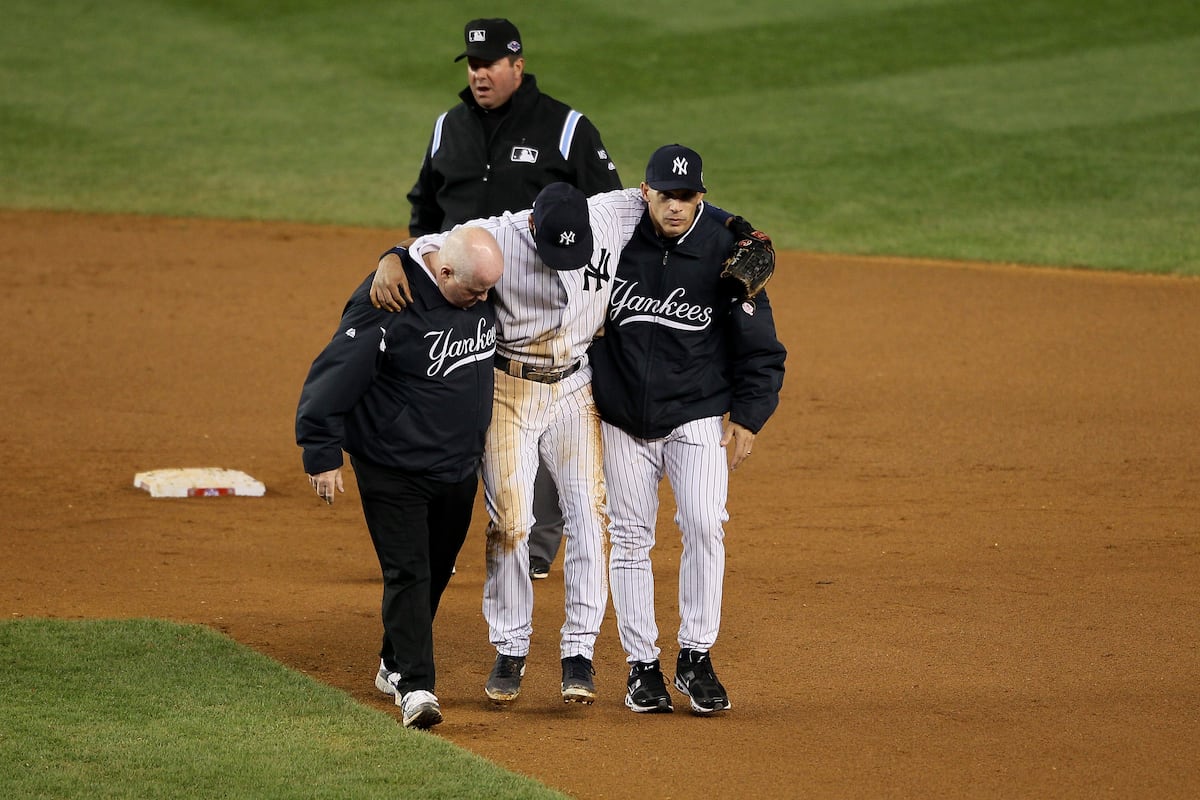
Chien-Ming Wang was slated to be the Yankees’ ace in 2008, coming off back-to-back 19-win seasons. His sinker-heavy repertoire was a ground ball machine, perfectly suited for Yankee Stadium. However, his season was tragically cut short in June when he suffered a devastating foot injury while running the bases in an interleague game against the Houston Astros. Wang was 8-2 with a 4.07 ERA at the time, and his absence removed the Yankees’ most reliable top-of-the-rotation starter, forcing immediate and often unsuccessful adjustments to the pitching staff.
2. The Vanishing Youth Movement: Hughes and Kennedy’s Setbacks
Beyond Wang, the Yankees had high hopes for young pitchers Phil Hughes and Ian Kennedy to solidify the rotation. Hughes, recovering from a hamstring issue, started the season on the DL and later developed a stress fracture in his rib cage, limiting him to just eight starts. Kennedy, another highly-touted prospect, endured aneurysm surgery on his pitching shoulder, effectively ending his promising season before it truly began. These dual blows to the Yankees’ future aces forced manager Joe Torre and later Joe Girardi to rely on a patchwork of veteran arms and unproven fill-ins.
3. Jorge Posada’s Season-Ending Shoulder Surgery: A Bat and a Brain Behind the Plate
Jorge Posada, a foundational member of the “Core Four,” was not just an offensive threat; his veteran presence and game-calling ability were invaluable. After struggling with a nagging shoulder issue, Posada underwent season-ending surgery in July. His absence left a gaping hole at catcher, forcing the team to rely on rookies like Jose Molina and Francisco Cervelli, who, while defensively capable, could not replicate Posada’s offensive production or leadership from behind the plate. The loss of his left-handed bat was particularly felt in a lineup already leaning right-handed.
4. Alex Rodriguez’s Lingering Hip Issues: A Silent Struggle
While Alex Rodriguez played in 138 games, his production, though still strong, showed subtle signs of decline compared to his MVP seasons. Later reports and his 2009 hip surgery revealed that A-Rod had been battling a significant hip injury throughout 2008. This condition likely impacted his explosive power and defensive range at third base, contributing to a season that, by his extraordinary standards, was a minor step back. The full extent of his physical struggle was not entirely public at the time, making his performance dip seem more perplexing.
5. The Bullpen’s Shifting Dynamics and Joba’s Health
The 2008 season saw the “Joba Rules” come into effect, an organizational effort to protect promising young reliever Joba Chamberlain. Despite this, Chamberlain battled shoulder tendinitis and other minor ailments, limiting his effectiveness and availability. While Mariano Rivera remained an iron horse, the cumulative effect of injuries in the starting rotation placed added strain on the bullpen, often requiring relievers to pitch more innings or in higher-leverage situations than ideal, potentially leading to fatigue or overwork.
6. The March of Time: Age Catches Up to Veterans
Beyond acute injuries, the 2008 roster featured several key veterans whose effectiveness was inevitably waning with age. Johnny Damon, Hideki Matsui, and Jason Giambi, while providing flashes of their former brilliance, were less consistent and more prone to minor aches and pains that chipped away at their overall contribution. These were not always “DL-worthy” injuries, but they impacted daily performance, contributing to a team-wide drop in overall athletic capability and resilience.
7. Defensive Lapses Exacerbated by Player Shuffles
Injuries necessitated constant shuffling of the lineup and defensive positions. With Posada out, the catching situation was tenuous. A-Rod’s hip issues affected his range. Players like Cody Ransom and Wilson Betemit were thrust into more prominent roles than intended. While not always directly leading to errors, these changes created a less cohesive and often less athletic defensive unit, allowing more opposing baserunners and extra outs, which in turn put more pressure on an already taxed pitching staff.
8. The Ripple Effect on Offensive Production
The collective absence or diminished capacity of key hitters like Posada and a compromised A-Rod had a tangible impact on the Yankees’ offense. While the team still possessed considerable power, the consistent presence of its top bats in optimal health could have created more run-scoring opportunities and reduced the pressure on individual players to carry the load. The overall depth of quality at-bats suffered, particularly against high-leverage pitching.
9. Bench and Depth Limitations Exposed
A truly deep team can often weather a storm of injuries. However, the 2008 Yankees’ bench and organizational depth proved insufficient to consistently replace the production lost to the DL. Prospects were either not ready, injured themselves, or simply lacked the major league experience to step into critical roles without a significant drop-off. This exposed a vulnerability in the Yankees’ roster construction, where a heavy reliance on stars left them susceptible when those stars fell.
10. Managerial Challenges and Lineup Inconsistencies
Manager Joe Girardi, in his first year at the helm, faced an unenviable task. Daily lineup creation became a puzzle, constantly trying to balance available healthy bodies with optimal matchups. The revolving door of injured players led to a lack of continuity, making it difficult for players to find a rhythm or for the team to establish a consistent identity. This instability, while not directly an injury, was a direct consequence of the injury epidemic.
11. The Psychological Toll on the Clubhouse
Beyond the physical impact, a season plagued by injuries can wear down a team psychologically. Watching key teammates constantly fall to the wayside, coupled with the pressure of a farewell season at Yankee Stadium and the high expectations of the New York media, created an environment of constant challenge. Maintaining morale and focus amidst such adversity is a significant hurdle, potentially impacting overall team performance and resilience in close games.
12. The Cost of Overreliance on Older Stars
The 2008 Yankees were a veteran squad, with many players on the wrong side of 30. While experience is invaluable, it often comes with increased susceptibility to injuries and slower recovery times. The roster construction, heavily invested in established stars, meant that when injuries struck, they often hit players who were either irreplaceable or whose age made their return to full strength less certain. This was a strategic vulnerability that the rash of injuries cruelly exploited.
13. The AL East Gauntlet: No Room for Error
The American League East in 2008 was a brutal division. The Tampa Bay Rays emerged as a powerhouse, and the Boston Red Sox were still formidable. In such a competitive landscape, even minor setbacks can have amplified consequences. The Yankees’ injury woes meant they were often playing at less than full strength against top-tier competition, making the task of closing the gap in the standings exponentially harder.
14. The Argument for “Bad Luck” vs. “Foreseeable Risk”
Some injuries, like Wang’s freak foot injury, can genuinely be attributed to bad luck. However, a significant portion of the Yankees’ injury list involved older players or players with pre-existing conditions (e.g., Matsui’s knees, Posada’s shoulder) where the risk of breakdown might have been higher. This raises the question of whether the extensive injury list was purely misfortune or partly a foreseeable consequence of an aging, high-mileage roster and aggressive player usage.
15. The “Last Hurrah” Pressure Cooker
Playing the final season in Yankee Stadium added an immense layer of pressure. Every game was an event, every milestone heavily scrutinized. This intense environment, while motivating, could also have subtly contributed to players pushing their bodies beyond optimal limits, potentially exacerbating minor issues into significant injuries, or at least delaying full recovery in an attempt to stay on the field.
16. The Pitching Depth Crisis
Beyond the headline injuries to Wang, Hughes, and Kennedy, the overall pitching staff lacked significant depth in the upper minors ready to step in. This meant that when injuries hit, the team was often forced to rely on pitchers who were either not performing well, were inexperienced, or were converted relievers, leading to a consistent struggle to maintain a stable and effective five-man rotation throughout the season.
17. The Financial Implications and Missed Opportunities
The Yankees, despite their vast resources, had significant financial commitments to many of these injured players. While they could acquire talent, the budget was already heavily allocated. Injuries meant that expensive players were sidelined, and the team was effectively paying for production it wasn’t receiving, while simultaneously having to invest in stop-gap solutions, potentially limiting flexibility for other necessary acquisitions.
18. Conclusion: A Valid, Yet Not Sole, Explanation
Ultimately, to dismiss injuries as merely an “excuse” for the 2008 Yankees would be a disservice to the legitimate challenges faced by the club. The severe losses of Chien-Ming Wang and Jorge Posada, coupled with the myriad of other physical setbacks to key players, undeniably stripped the team of vital talent, depth, and continuity. These injuries were a valid and significant factor in their failure to reach the postseason. However, it’s also crucial to acknowledge that an aging core, a challenging division, and some strategic vulnerabilities in roster construction played their part. The injuries were not the sole reason, but they certainly turned an already arduous task into an almost insurmountable one, marking 2008 as a season defined by “what ifs” and the cruel hand of fate.