The Eric Hosmer rookie card market is a fascinating microcosm of baseball’s broader collectibles ecosystem, where nostalgia, performance, and scarcity intersect to determine value. For collectors, investors, and casual fans alike, the decision to buy, sell, or hold Hosmer’s early cardboard hinges on a nuanced understanding of his career trajectory, the card’s production details, and the ever-shifting tides of the sports memorabilia market. Whether you’re a seasoned numismatist or a newcomer lured by the allure of a first-baseman’s potential, Hosmer’s rookie cards offer a compelling case study in how a player’s legacy is monetized before, during, and after their prime. This isn’t just about flipping cardboard for profit—it’s about betting on a narrative, and Hosmer’s story is one of unfulfilled promise, redemption, and quiet consistency.
The Allure of the Rookie Card: Why Hosmer’s First Cards Still Matter
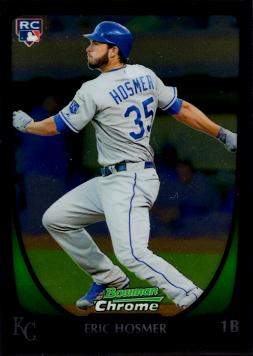
In the pantheon of baseball cards, rookie cards occupy a sacred space. They are the first tangible artifacts of a player’s journey into the majors, capturing a moment before fame—or infamy—has fully crystallized. Eric Hosmer’s rookie cards, particularly his 2011 Bowman and Bowman Chrome issues, are no exception. These cards represent the genesis of a career that began with sky-high expectations: a first overall draft pick in 2010, a prodigious left-handed hitter with a glove that promised Gold Glove caliber defense. The 2011 Bowman Chrome, in particular, is a dazzling specimen—its refractor parallels and autograph variants adding layers of desirability for those who chase the shimmer of premium parallels.
But why do these cards still command attention a decade and a half after Hosmer’s debut? The answer lies in the psychology of collecting. Rookie cards are time capsules, frozen moments that collectors revisit to relive the optimism of a player’s early days. For Hosmer, that optimism was tempered by the harsh realities of big-league baseball: injuries, inconsistent power, and the merciless gaze of Kansas City fans who once saw him as the franchise’s savior. Yet, the card’s value isn’t solely tied to Hosmer’s on-field success. It’s also about the card’s own pedigree—Bowman’s reputation for high-quality production, the scarcity of autographed copies, and the emotional pull of owning a piece of history that predates the player’s full story.
Grading and Condition: The Make-or-Break Factors in Hosmer’s Card Value
No discussion of Hosmer’s rookie cards is complete without addressing grading, the great equalizer (and sometimes divider) in the collectibles market. A PSA 10 Gem Mint Bowman Chrome Hosmer refractor can fetch five figures, while a PSA 7 in “Good” condition might linger in bargain bins. The difference isn’t just aesthetic—it’s existential. Grading services like PSA, BGS, and SGC don’t just evaluate condition; they validate a card’s authenticity and assign it a numerical score that becomes its de facto currency.
For Hosmer’s cards, the devil is in the details. Centering must be near-perfect, with minimal deviation from the 60/40 split that graders demand. Corners should be sharp enough to cut glass, and surface quality must be flawless, free of print defects, scratches, or the dreaded “print lines” that plague some Bowman issues. The autograph, if present, must be crisp and fully inked, with no fading or smudging. Even the slightest imperfection can plummet a card’s grade, and with it, its market value. Collectors chasing top-tier copies often employ professional graders, a costly but necessary step to ensure their investment doesn’t crumble under scrutiny.

Market Trends: Where Hosmer’s Cards Stand in 2024
The baseball card market is a fickle beast, prone to booms and busts that mirror the broader economy and the whims of pop culture. Hosmer’s cards have ridden these waves with a mix of resilience and volatility. In the post-pandemic surge of 2020–2021, when collectors flushed with stimulus cash and nostalgia flooded the market, Hosmer’s Bowman Chrome refractors saw dramatic price spikes. A PSA 10 refractor that sold for $200 in 2019 might have fetched $1,200 by 2021—a sixfold increase in two years. But as the market cooled, Hosmer’s cards didn’t crash so much as they settled into a new normal, their values stabilizing at levels that reflect their true collector appeal rather than speculative frenzy.
Today, the market for Hosmer’s rookie cards is segmented into distinct tiers. The top-tier copies—PSA 10 refractors, autographed variants, and limited-edition parallels—remain in high demand, particularly among investors who view them as long-term holds. Mid-tier cards, such as ungraded copies or lower-grade PSA 8s, cater to budget-conscious collectors or those seeking filler pieces for team sets. The lower end of the market is where Hosmer’s cards often find their footing as “gateway” collectibles, appealing to fans who want a piece of a player’s legacy without breaking the bank. Auction houses like Heritage and Goldin have become battlegrounds for these cards, with prices fluctuating based on the ebb and flow of bidding wars.
Buy, Sell, or Hold? A Strategic Breakdown for Different Collector Profiles
The decision to buy, sell, or hold Hosmer’s rookie cards isn’t one-size-fits-all. It depends on your goals, risk tolerance, and the specific card in question. For investors, the calculus is relatively straightforward: if you own a PSA 10 refractor or an autographed copy, holding might be the safest bet, as these cards tend to appreciate over time, albeit at a slower pace than in the market’s peak years. Selling now could mean locking in gains, but it also risks missing out on future upside if Hosmer’s legacy undergoes a reevaluation—perhaps through a Hall of Fame nod or a resurgence in his on-field performance.
For collectors, the decision is more nuanced. If you’re a Kansas City Royals fan, Hosmer’s cards are more than investments; they’re emotional touchstones. Holding a piece of the team’s 2015 World Series-winning era—even if Hosmer’s role was controversial—can be a source of pride. Conversely, if you’re a completist chasing every Hosmer variant, buying might make sense, especially if you’re targeting lower-grade copies or team-specific issues that are harder to find. The key is to avoid overpaying for hype. The market for Hosmer’s cards isn’t as liquid as, say, Mike Trout’s, so patience is crucial.
For those considering selling, timing is everything. The post-2021 market correction means that prices are more realistic now than they were during the speculative bubble. If you’re sitting on a PSA 9 or a high-grade autograph, selling now could be prudent, as these grades are less likely to see dramatic appreciation. On the other hand, if you’re holding a raw, ungraded copy, getting it graded could unlock hidden value—assuming the grade comes back favorably.
The Wild Card: Hosmer’s Legacy and Its Impact on Card Values
Eric Hosmer’s career arc is a study in contrasts. Drafted as the face of the Royals’ franchise, he delivered on the defensive end with a Gold Glove in 2017 but struggled to live up to the offensive expectations that come with a first overall pick. His .278 career batting average and modest power numbers (192 home runs in 13 seasons) don’t scream Hall of Fame credentials, but they do paint the picture of a player who was far more than a one-dimensional slugger. His postseason heroics, including a .286 average in the 2014 and 2015 playoffs, added a layer of postseason mystique that some collectors find irresistible.
For Hosmer’s rookie cards, this legacy is a double-edged sword. On one hand, his career doesn’t have the transcendent appeal of a Derek Jeter or a Ken Griffey Jr., which limits the ceiling for his cards. On the other, his understated consistency and postseason contributions give his cards a narrative depth that goes beyond raw statistics. Collectors who appreciate the “everyman” aspect of Hosmer’s career might find his cards more compelling than those of flashier players whose careers were cut short by injuries or off-field controversies.
The wildcard in Hosmer’s legacy is the Hall of Fame ballot. While he’s not a serious candidate—his career WAR of 27.5 and lack of MVP-level seasons make him a long shot—even a cursory mention on a ballot could spark renewed interest in his cards. Collectors love a good “what if” story, and Hosmer’s career is ripe with them: what if he had stayed healthy? What if he had developed into the power hitter scouts projected? These hypotheticals add a layer of intrigue that keeps his cards relevant, even if they’re not appreciating at the same rate as a Trout or a Mookie Betts.
Alternatives and Complements: Diversifying Your Hosmer Collection
For collectors looking to expand beyond Hosmer’s rookie cards, the market offers a wealth of alternatives and complements. His 2011 Bowman Draft Picks & Prospects (DPP) autograph cards, for example, are highly sought after, especially in high grades. These cards feature Hosmer’s autograph alongside other top prospects from the 2011 draft class, making them a fun “what could have been” piece for collectors. Similarly, his 2010 Bowman Prospects autographs—issued the year before his MLB debut—are a fascinating time capsule of his pre-rookie status.
Another angle to explore is Hosmer’s postseason cards and memorabilia. His 2014 and 2015 World Series rings, though not cards, are coveted by Royals fans and could appreciate in value over time. Autographed jerseys, game-used bats, and even his 2015 Topps Heritage autograph card offer collectors a way to diversify their Hosmer holdings beyond the standard rookie issues. These pieces often carry a premium due to their scarcity and the emotional connection to Hosmer’s most memorable moments.
For those interested in parallels and refractors, Hosmer’s 2011 Bowman Chrome Superfractor and Black Refractor cards are the crown jewels of his early issues. These ultra-rare variants are produced in limited quantities and often command prices that dwarf their base refractor counterparts. Owning one isn’t just about the card’s condition—it’s about the bragging rights that come with owning a piece of Hosmer’s most exclusive cardboard.
Final Verdict: To Buy, Sell, or Hold?
The Eric Hosmer rookie card market is a microcosm of the broader baseball card hobby: unpredictable, nostalgic, and deeply personal. For investors, the safest play is likely to hold onto top-tier graded copies, as these cards have proven their resilience in a volatile market. For collectors, the decision hinges on emotional connection—whether Hosmer’s cards resonate with you on a deeper level than mere financial gain. And for those looking to enter the market, patience and selectivity are key. The days of rapid, speculative appreciation are behind us, but that doesn’t mean there isn’t value to be found in Hosmer’s cardboard legacy.
Ultimately, the choice to buy, sell, or hold Hosmer’s rookie cards is less about the cards themselves and more about the story you want to tell with them. Are they an investment in a player’s legacy? A piece of your favorite team’s history? Or simply a beautiful artifact of a bygone era in baseball? Whatever your motivation, Hosmer’s cards offer a compelling entry point into the world of sports collectibles—one where the past and present collide in a dazzling array of cardboard and ink.