The crack of the bat, the arc of a line drive, the torque of a pitcher’s windup—these are the balletic moments where baseball’s raw power meets human finesse. Yet beneath the spectacle lies an unsung hero: the hips. Like the coiled spring of a vintage pocket watch, they store and unleash rotational energy, transforming static stances into explosive drives. For baseball players, mastering hip mobility isn’t just about flexibility—it’s about unlocking the kinetic chain that turns a swing into a home run or a pitch into a strikeout. This is the art of stretching hips for rotational power, where science meets athleticism in a dance of sinew and strategy.
The Hip’s Role in Baseball’s Kinetic Symphony
Imagine the hips as the fulcrum of a lever, where the body’s kinetic energy pivots before catapulting outward. In baseball, this lever is everything. When a batter loads their back leg, the hips coil like a spring, storing elastic energy. As the swing initiates, this energy uncoils through the torso, transferring force into the arms and bat. The hips don’t just move—they *orchestrate*. A study in the Journal of Strength and Conditioning Research found that players with greater hip mobility generate up to 20% more bat speed, a statistic that separates good hitters from legends. The hips are the silent conductors of baseball’s most explosive plays.
But the hips’ role extends beyond hitting. Pitchers rely on them to generate torque in their delivery, while fielders use them to explode into throws. The hip joint, a ball-and-socket marvel, is designed for multiplanar movement—flexion, extension, abduction, adduction, and rotation. Baseball demands all of them. When these movements are restricted, power leaks like air from a punctured tire. The solution? A deliberate, targeted stretching regimen that primes the hips for peak performance.
The Anatomy of Rotational Power: Muscles That Matter
To stretch effectively, you must first understand the players. The primary movers in hip rotation include the gluteus maximus, piriformis, tensor fasciae latae, and the deep six external rotators. These muscles act as both stabilizers and accelerators. The glutes, for instance, are the powerhouses of hip extension, while the piriformis—a small but mighty muscle—plays a critical role in external rotation. When these muscles are tight or weak, the body compensates, leading to inefficiencies that sabotage performance.
Consider the piriformis, often overshadowed by its larger counterparts. Tightness here can compress the sciatic nerve, causing pain that radiates down the leg—a condition known as piriformis syndrome. For a baseball player, this isn’t just discomfort; it’s a career-threatening limitation. Meanwhile, the tensor fasciae latae, a muscle that blends into the iliotibial band, can become a source of lateral knee pain if overworked. The key to avoiding these pitfalls lies in targeted stretching that addresses each muscle’s unique function.
Dynamic vs. Static Stretching: The Pre-Game Divide
Not all stretches are created equal. Static stretching—holding a position for 20-30 seconds—has its place, but it’s the dynamic warm-up that truly awakens the hips for baseball’s demands. Dynamic stretches, like leg swings and hip circles, increase blood flow and synovial fluid production, preparing the joints for the high-velocity movements of the game. Static stretches, on the other hand, are better suited for post-game cooldowns, where they help lengthen muscles and improve long-term flexibility.
Picture a pitcher on the mound, his body a coiled spring. Before he delivers, he performs a series of dynamic hip openers—lateral lunges, walking knee hugs, and controlled torso twists. These movements aren’t just warm-ups; they’re the difference between a 90-mph fastball and a 95-mph missile. Research from the International Journal of Sports Physical Therapy confirms that dynamic stretching improves hip range of motion by up to 15%, directly correlating with increased pitch velocity and bat speed. The hips, it turns out, are the ultimate performance multipliers.
The Piriformis Puzzle: Unlocking Deep Hip Rotation
Few muscles in the body are as misunderstood as the piriformis. Nestled deep within the gluteal region, it’s a muscle of contradictions—both a stabilizer and a mover, a potential pain generator and a power source. For baseball players, the piriformis is the gatekeeper of rotational power. When tight, it restricts internal rotation of the hip, forcing the body to seek movement elsewhere. This compensation can lead to a cascade of issues: lower back strain, knee valgus, and even shoulder impingement.
To address this, players must incorporate stretches that specifically target the piriformis. The classic figure-four stretch is a start, but for baseball’s rotational demands, a deeper approach is needed. Try the seated piriformis stretch with a thoracic twist: sit on the ground, cross one ankle over the opposite knee, and gently lean forward while rotating your torso toward the bent leg. This not only stretches the piriformis but also engages the thoracic spine, which is crucial for generating rotational force in the swing.
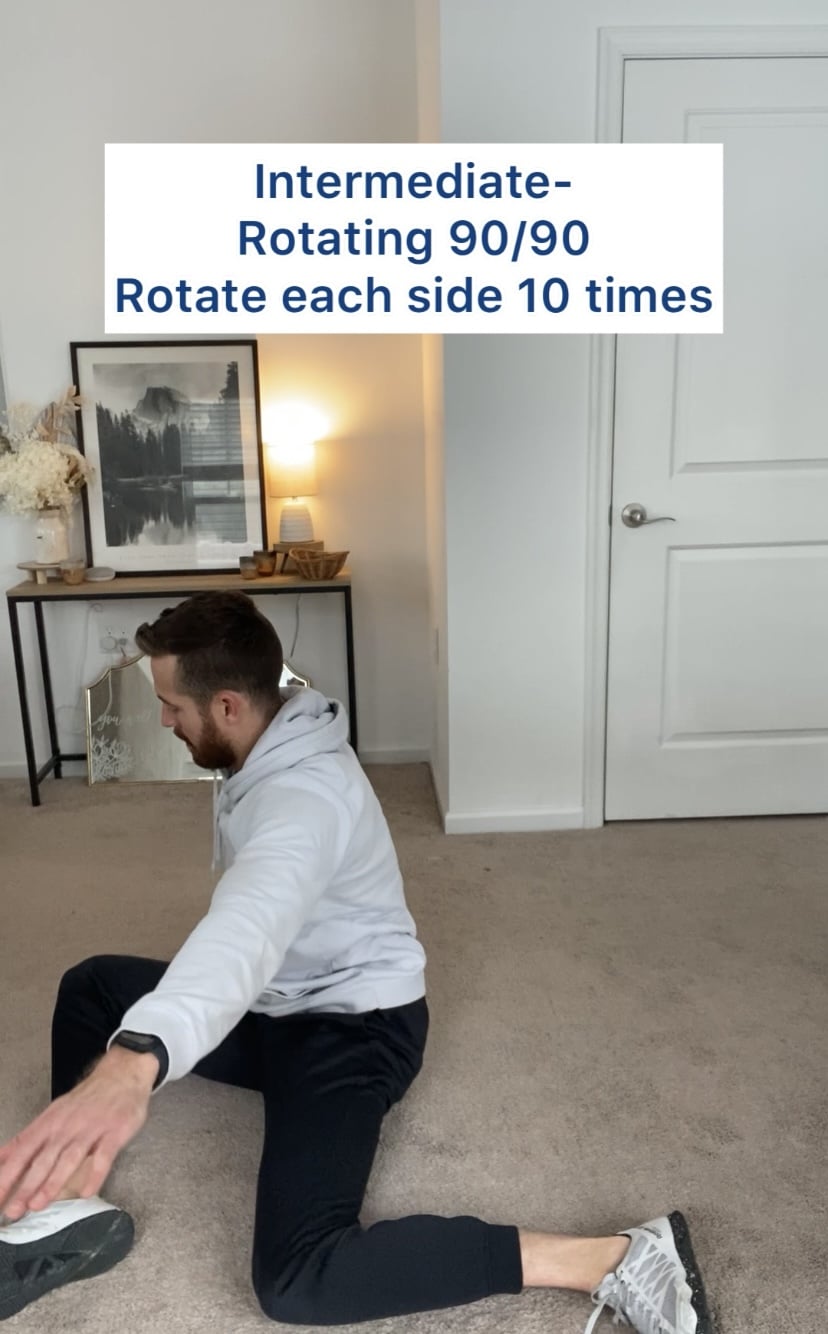
Another effective technique is the 90/90 hip stretch, a dynamic movement that improves both internal and external rotation. Sit with one leg bent at 90 degrees in front of you and the other at 90 degrees to the side. Lean forward into the stretch, then rotate your torso toward the front leg. This stretch mimics the rotational demands of a baseball swing, making it a game-changer for players looking to optimize their power.
Glute Activation: The Foundation of Hip Power
The glutes are the powerhouse of the posterior chain, yet they’re often underutilized in baseball players. Weak or inactive glutes force the body to rely on smaller, less efficient muscles, leading to energy leaks and increased injury risk. To combat this, players must prioritize glute activation drills that wake up these dormant muscles before stretching.
One of the most effective drills is the banded monster walk. Place a resistance band around your thighs and assume an athletic stance. Take small, controlled steps sideways, keeping tension on the band. This not only activates the glutes but also strengthens the hip abductors, which are critical for maintaining stability during the swing. Pair this with the couch stretch—a deep hip flexor stretch that also engages the glutes—and you’ve got a powerhouse routine for rotational dominance.
For a more advanced approach, try the single-leg Romanian deadlift. This exercise not only stretches the hamstrings and glutes but also challenges balance and stability, mimicking the demands of a baseball swing. The key is to keep the movement slow and controlled, focusing on the eccentric (lengthening) phase to maximize muscle engagement.
Mobility Drills for the Modern Baseball Athlete
In the era of data-driven training, mobility drills have become the secret weapon of elite baseball players. These drills aren’t just about flexibility; they’re about control, precision, and the ability to move efficiently in all planes of motion. One such drill is the Copenhagan adductor stretch, a dynamic movement that targets the inner thighs and hips. Start in a half-kneeling position, then extend one leg out to the side and shift your weight toward the bent leg. This stretch not only improves adductor mobility but also enhances the ability to generate lateral force, crucial for fielding ground balls.
Another game-changing drill is the world’s greatest stretch, a full-body mobility sequence that incorporates hip openers, thoracic rotations, and dynamic lunges. This drill is particularly effective for baseball players because it addresses multiple joints and muscle groups in a single movement. Start in a lunge position, place your opposite hand on the ground, and rotate your torso toward the front leg. Then, reach your same-side arm overhead and lean into the stretch. This sequence not only improves hip mobility but also enhances thoracic spine rotation, a key component of a powerful swing.
For players looking to take their mobility to the next level, the deep squat hold with hip internal rotation is a must. Sit deep in a squat, then gently press your knees outward with your elbows. This stretch not only improves hip mobility but also strengthens the muscles of the lower body, making it a dual-purpose drill for both flexibility and power.
The Recovery Ritual: Stretching for Longevity
Stretching isn’t just a pre-game ritual; it’s a post-game necessity. The recovery phase is where the body repairs and adapts, and targeted stretching can accelerate this process. After a game or intense training session, the hips are often fatigued and tight. Ignoring this can lead to chronic tightness, decreased performance, and increased injury risk.
Start with the kneeling hip flexor stretch, a classic that targets the often-overlooked hip flexors. Kneel on one knee, tuck your pelvis slightly, and lean forward into the stretch. Hold for 30 seconds, then switch sides. This stretch not only relieves tightness but also improves posture, which is crucial for maintaining optimal swing mechanics.
Next, try the seated butterfly stretch, a gentle yet effective way to open the hips and inner thighs. Sit on the ground, bring the soles of your feet together, and gently press your knees toward the ground with your elbows. This stretch is particularly beneficial for players who spend long hours in a seated position, such as catchers or coaches.
Finally, incorporate the supine twist, a spinal mobility drill that also stretches the hips and lower back. Lie on your back, hug one knee to your chest, and gently guide it across your body while extending your opposite arm. This stretch not only improves rotational mobility but also promotes relaxation, making it a perfect way to end a long day on the field.
The Mental Game: Stretching as a Ritual of Focus
Beyond the physical benefits, stretching is a ritual of focus and intention. In baseball, where split-second decisions dictate outcomes, the ability to center oneself is paramount. Stretching provides a moment of mindfulness, a chance to tune out distractions and connect with the body’s capabilities. When a player steps onto the field, their hips aren’t just loose—they’re primed, both physically and mentally.
Consider the routine of a major league hitter. Before stepping into the batter’s box, they might perform a series of dynamic hip stretches, each movement a deliberate step toward unlocking their power. This isn’t just superstition; it’s a strategy. The mind-body connection is real, and when the hips are free to move, the swing becomes an extension of the player’s will.
In the end, stretching the hips for rotational power is about more than just performance—it’s about longevity, resilience, and the relentless pursuit of excellence. The hips are the engine of baseball’s most explosive plays, and those who master their mechanics will find themselves at the top of the game. So stretch wisely, train deliberately, and let the hips do the talking.


![Why I’m Fading [Highly Ranked Pitcher] Due to Injury History](https://zellspinstripeblog.com/wp-content/uploads/2026/04/Running-injury-not-healing-RunTeach.jpg)