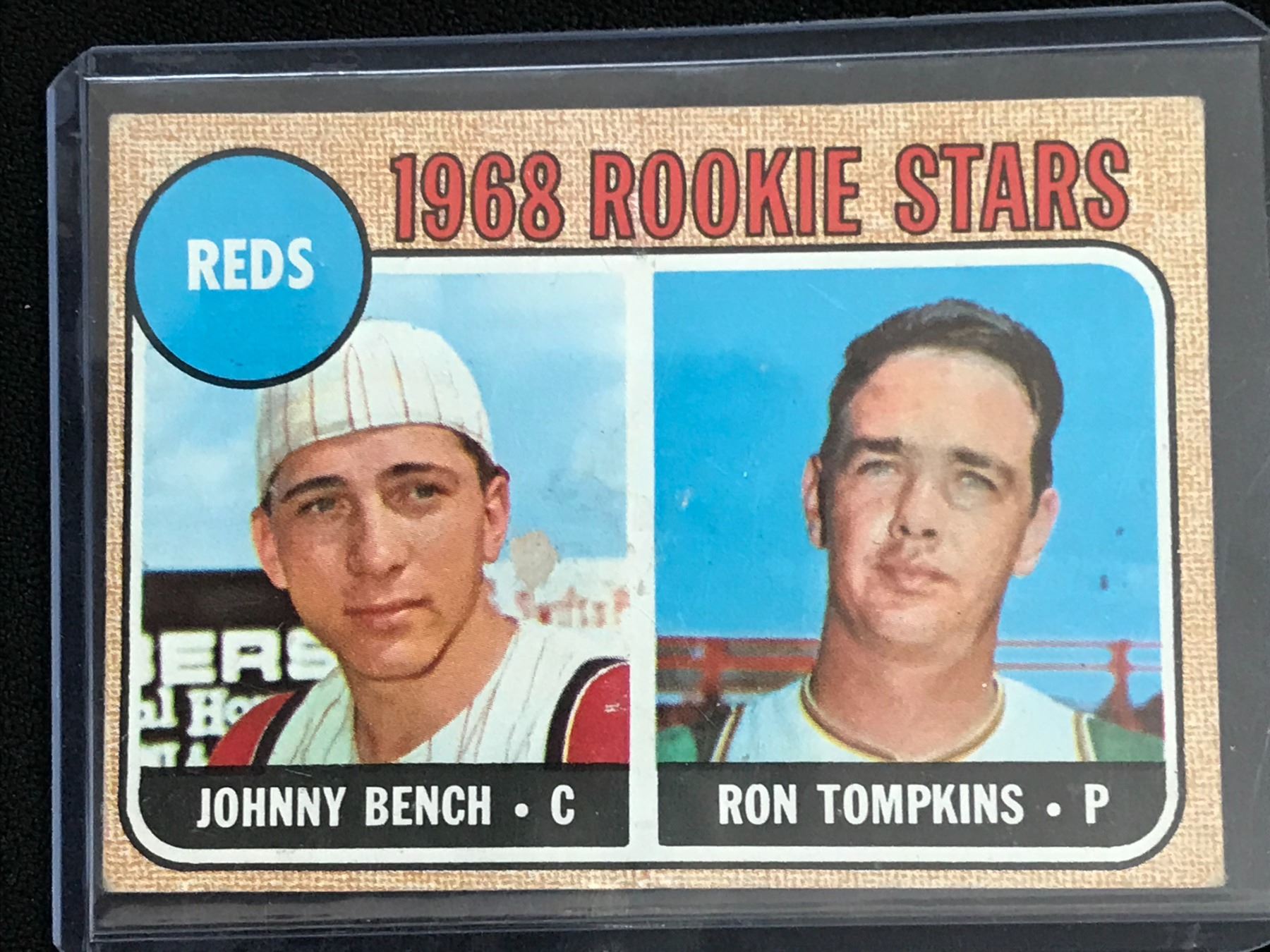
The Johnny Bench rookie card isn’t just a piece of cardboard—it’s a time capsule, a silent witness to the golden age of baseball when legends were forged in the crucible of the diamond. For collectors, this card represents more than nostalgia; it’s a tangible connection to a player whose legacy transcends mere statistics. But why does the 1968 Topps Johnny Bench rookie card command such reverence—and, more importantly, what makes its value a moving target that keeps enthusiasts on the edge of their seats? The answer lies not just in the player’s Hall of Fame pedigree, but in the alchemy of rarity, condition, and the ever-shifting tides of the sports memorabilia market. Whether you’re a seasoned numismatist or a newcomer dazzled by the allure of vintage cardboard, understanding the nuances of this card’s worth could redefine your collecting journey.
The Genesis of a Legend: Why Johnny Bench Matters
Johnny Bench wasn’t just another catcher—he was a revolution wrapped in a uniform. When he debuted in 1967, the baseball world witnessed the birth of a defensive virtuoso whose glove was as legendary as his bat. By 1968, his rookie card arrived in packs like a promise: here was a player who would redefine the position for generations. Bench’s 1968 Topps card captures him in the prime of his youth, before the weight of greatness settled on his shoulders. For collectors, this isn’t just a card; it’s a first glimpse of a titan in the making. The card’s historical significance is underscored by Bench’s eventual accolades—10 Gold Gloves, two World Series rings, and a place in the Hall of Fame. But its value isn’t static; it’s a living entity, shaped by the ebb and flow of demand among those who recognize that some cards aren’t just investments—they’re heirlooms.
The Rarity Factor: Why Supply and Demand Collide
Every collector knows the golden rule: rarity breeds value. The 1968 Topps Johnny Bench rookie card, however, plays by its own set of rules. Unlike modern parallels or limited-edition inserts, this card’s scarcity isn’t artificially manufactured—it’s a relic of a bygone era when Topps produced cards in bulk, unaware of their future worth. Yet, not all Bench rookie cards are created equal. The market distinguishes between high-grade specimens (PSA 9 or higher) and those showing the battle scars of time. A PSA 10 can fetch five figures, while a PSA 4 might linger in the triple digits. The disparity isn’t just about condition; it’s about perception. Collectors don’t just buy a card—they buy a story, and the best stories are told by the sharpest corners and the crispest colors. This dynamic creates a paradox: the more desirable the card becomes, the harder it is to find in pristine condition, driving prices upward like a fastball rising in the late innings.
The Grading Gambit: How Condition Reshapes Value
Grading is where the rubber meets the road—or, in this case, where the card meets the microscope. Professional grading services like PSA, BGS, and SGC dissect each specimen with the precision of a surgeon, evaluating centering, corners, edges, and surface quality. A card’s grade isn’t just a number; it’s a verdict that can catapult its value from modest to monumental. Consider the difference between a PSA 7 and a PSA 8: the former might sell for a few thousand, while the latter could command six figures at auction. The grading process is unforgiving, but for collectors, it’s the ultimate equalizer. A high-grade Bench rookie card isn’t just a collectible; it’s a trophy, a badge of honor among peers. The pursuit of perfection in grading has spawned a secondary market where raw cards are treated like raw diamonds—unpolished, but brimming with potential.
The Market’s Mood Swings: Trends That Keep Collectors Guessing
The sports memorabilia market is a fickle beast, swayed by trends, nostalgia, and the whims of wealthy bidders. The Johnny Bench rookie card is no exception. In the early 2000s, it was a hidden gem, trading hands for modest sums. By the 2010s, as vintage baseball cards surged in popularity, prices skyrocketed. Today, the card’s value is influenced by broader economic currents—recessions can dampen demand, while auctions featuring iconic cards can send shockwaves through the hobby. The rise of online platforms like eBay and Heritage Auctions has democratized access, but it’s also intensified competition. Collectors now vie not just with each other, but with algorithms and institutional investors who view cards as alternative assets. The Bench rookie card’s value isn’t just about baseball anymore; it’s about the intersection of sport, art, and finance.
The Investment Angle: Is It Worth the Gamble?
For those who view collecting as a financial strategy, the Johnny Bench rookie card presents a tantalizing proposition. Unlike stocks or bonds, its value isn’t tied to quarterly earnings or interest rates—it’s tied to intangibles: nostalgia, prestige, and the enduring appeal of a Hall of Famer. Historical data suggests that high-grade vintage cards have outperformed the S&P 500 over the past two decades, though past performance is no guarantee of future results. The key for investors is diversification. A Bench rookie card shouldn’t be your sole portfolio; it should be the crown jewel of a carefully curated collection. The risks are real—condition degradation, market saturation, or a shift in collecting trends—but for those who believe in the card’s timeless allure, the rewards can be substantial. The question isn’t just whether to buy, but when to buy, and how to navigate the treacherous waters of resale.

The Emotional Quotient: Why Some Collectors Pay Premiums
Numbers tell part of the story, but the heart of the matter lies in emotion. The Johnny Bench rookie card isn’t just a financial asset; it’s a conduit to the past. For baby boomers who watched Bench dominate in the 1970s, it’s a touchstone to their youth. For younger collectors, it’s a bridge to a legendary era they never experienced firsthand. The card’s value, then, is partly sentimental—a currency of memories. This emotional resonance explains why some buyers are willing to pay top dollar for a card that, on paper, might not justify the price. It’s the same phenomenon that drives people to pay millions for a Beatles record or a vintage comic book. The Bench rookie card isn’t just a piece of cardboard; it’s a vessel for stories, a trigger for nostalgia, and a testament to the power of sport to shape lives.
The Future of the Bench: What’s Next for Its Value?
Predicting the future is a fool’s errand, but the Johnny Bench rookie card’s trajectory suggests a bright horizon. As long as baseball remains America’s pastime—and as long as new generations discover the legends of yesteryear—the demand for vintage cards will persist. The card’s value could continue to climb as Baby Boomers pass their collections to heirs, or as younger collectors seek tangible connections to history. Alternatively, a major shift in collecting trends—perhaps toward modern autographs or digital collectibles—could disrupt the market. Yet, the Bench rookie card’s status as a cornerstone of the hobby seems secure. Its value isn’t just a reflection of the player’s greatness; it’s a mirror held up to the collecting community itself, revealing our collective obsession with preserving the past.
The Johnny Bench rookie card is more than a collectible; it’s a narrative device, a conversation starter, and a silent partner in the stories of those who own it. Its value isn’t static—it’s a living, breathing entity, shaped by the hands that hold it, the eyes that inspect it, and the hearts that cherish it. Whether you’re in it for the thrill of the hunt, the joy of ownership, or the potential for financial gain, one thing is certain: this card will continue to captivate, challenge, and inspire for decades to come. The real question isn’t whether you should add it to your collection—it’s whether you’re ready to join the ranks of those who’ve already fallen under its spell.