In the pantheon of modern baseball cards, few names command the same reverence as Mike Trout. The generational talent, the five-tool virtuoso, the man who made the Angels’ uniform synonymous with both brilliance and heartbreak—his rookie card isn’t just cardboard and ink. It’s a relic. A talisman. A piece of Americana frozen in time. And in 2025, that rookie card isn’t just a collectible; it’s a blue-chip asset, trading hands for sums that would make even the most seasoned investors blink twice.
Walk into any major sports card show or scroll through a high-end auction site, and you’ll find it: the 2009 Bowman Chrome Superfractor Mike Trout rookie, graded PSA 10, selling for north of $4 million. Not $400,000. Not $1.4 million. Four. Million. Dollars. And it’s not an anomaly. Even lower-grade versions—PSA 9s, BGS 9.5s—are fetching six-figure sums with the consistency of a Trout home run swing. What’s driving this frenzy? Is it just hype, or is there something deeper, something almost mythic, about owning a piece of the game’s brightest star at the exact moment his legend began to crystallize?
The Allure of the First Cut: Why Rookie Cards Matter More Than Ever
Baseball cards have always been more than collectibles; they’re time capsules. But rookie cards occupy a sacred tier in that hierarchy. They’re not just the first professional issue of a player’s career—they’re the visual birth certificate of a legend. When you hold a Mike Trout rookie card, you’re not just holding a piece of cardboard. You’re holding the moment before the world knew his name, the instant before the highlight reels, the draft day uncertainty distilled into a glossy finish and a sharp corner.
In an era where players are traded, rehabbed, and retired with alarming speed, the rookie card becomes a permanent anchor. It’s the one artifact that predates the accolades, the injuries, the controversies. It’s pure potential. And in Trout’s case, that potential wasn’t just realized—it was transcended. He didn’t just become great. He became a generational icon, a player so dominant that even casual fans know his .300 average, his 400+ home runs, his three MVPs. The rookie card, then, isn’t just a collectible. It’s a piece of the origin story, the Genesis chapter of a baseball Bible.
Collectors aren’t just buying cardboard. They’re buying narrative. And Trout’s narrative—from small-town New Jersey prodigy to the face of MLB—is one of the most compelling in modern sports. That’s why a PSA 10 Trout rookie isn’t just a card. It’s a cultural artifact, a conversation starter, a reason to tell someone, “This is where it all began.”
The Grading Gold Rush: Why PSA 10s Are Trading Like Rare Coins
Not all Mike Trout rookie cards are created equal. The market has spoken with unmistakable clarity: condition is king. A raw, ungraded Trout rookie might fetch a few thousand dollars. A professionally graded PSA 10? That’s where the real money lives. And in 2025, the scarcity of pristine Trout rookies has turned grading into a high-stakes gamble—and a lucrative one.
PSA 10s are the unicorns of the hobby. They’re not just rare; they’re vanishingly so. The 2009 Bowman Chrome Superfractor Mike Trout rookie PSA 10 is one of the most coveted cards in existence, with fewer than 100 copies believed to exist in that grade. When one hits the market, it doesn’t just sell—it detonates. Auction houses report bidding wars that escalate into the seven figures within minutes. Why? Because collectors aren’t just chasing a card. They’re chasing perfection. And in a world where condition reports can make or break a sale, a PSA 10 isn’t just a grade. It’s a status symbol.
But here’s the twist: grading itself has become a bottleneck. The major grading companies—PSA, BGS, SGC—are overwhelmed with submissions. Turnaround times stretch into months. Some collectors are turning to private graders or even “pre-grading” their cards to ensure they hit the sweet spot. The irony? The more difficult it becomes to secure a PSA 10, the more valuable those cards become. It’s a self-fulfilling prophecy of scarcity, and Trout’s rookie card is at the epicenter.
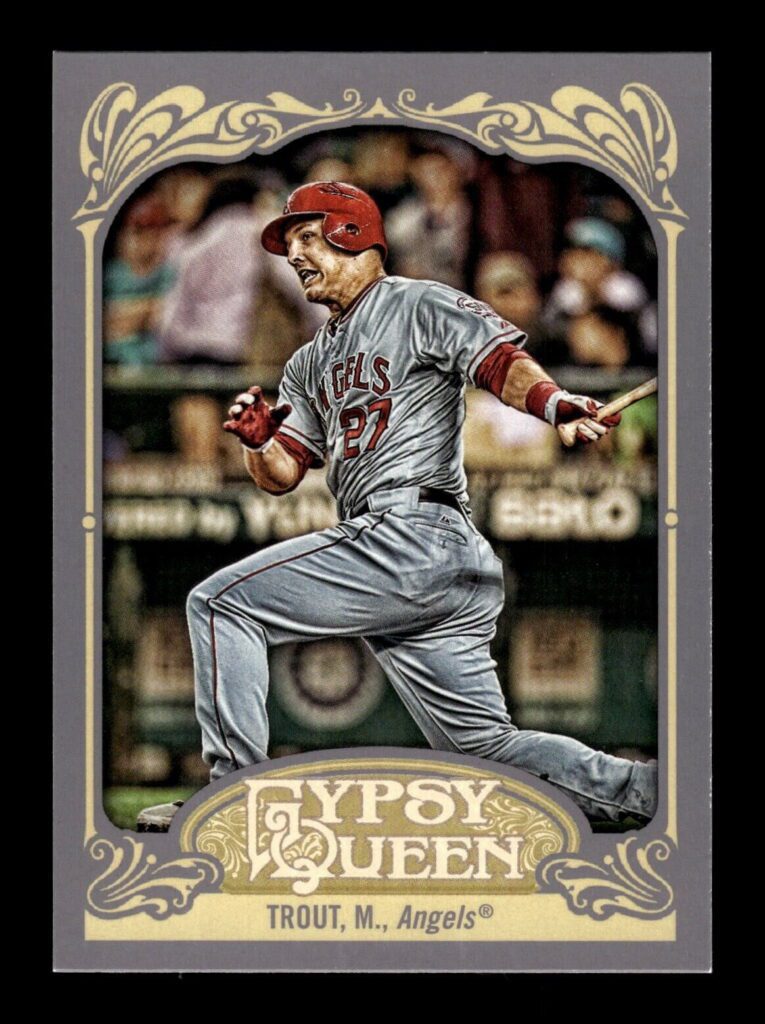
This card isn’t just a collectible—it’s a cultural artifact, a piece of baseball’s modern mythology.
The Investment Angle: Why Trout’s Rookie Card Is a Blue-Chip Asset
Baseball cards have evolved from childhood pastimes to legitimate investment vehicles. And in 2025, Mike Trout’s rookie card isn’t just a collectible—it’s a blue-chip asset, akin to a blue-chip stock in a diversified portfolio. Financial advisors specializing in alternative investments now include graded rookie cards in their pitch decks, touting them as inflation-resistant, historically appreciating, and—most importantly—liquid.
The data backs it up. Over the past decade, the value of a PSA 10 Mike Trout rookie has appreciated at a compound annual growth rate that rivals top-tier real estate markets. In 2015, a PSA 10 could be had for $50,000. Today, it’s a million-dollar-plus proposition. And the trend shows no signs of slowing. Why? Because Trout’s legacy is still being written, and the rookie card is the first chapter. As long as he remains active—and especially if he reaches Cooperstown—demand will only intensify.
But it’s not just about Trout’s future. It’s about the past. The rookie card market has matured. Gone are the days of speculative flipping. Today’s collectors are savvy, informed, and patient. They understand that a Trout rookie isn’t a get-rich-quick scheme—it’s a generational hold. And in an era of algorithmic trading and meme stocks, that kind of stability is rare. It’s the hobby equivalent of a dividend aristocrat.
The Psychological Pull: Why We’re Drawn to the “What If” of Trout’s Rookie Card
There’s something almost existential about owning a Mike Trout rookie card. It’s not just about the player. It’s about the fan. It’s about the collector who watched Trout’s debut in 2011, who remembers the first time they saw him crush a 450-foot home run, who felt a pang of disappointment every time the Angels failed to surround him with talent. The rookie card is a tangible connection to that emotional journey—a reminder of the player who could have been anything, and became everything.
Collecting isn’t just about acquisition. It’s about nostalgia. It’s about the stories we tell ourselves. And Trout’s rookie card is a vessel for those stories. It’s the card you pull out when you want to remember why you fell in love with the game. It’s the card you show a kid and say, “This is where legends start.” It’s the card that makes you wonder: What if he had stayed in New Jersey? What if the Angels had drafted better? What if, what if, what if?
That uncertainty is part of the appeal. The rookie card isn’t just a piece of history. It’s a mirror. It reflects our own hopes, our own dreams, our own “what ifs.” And in a world that moves faster than ever, that kind of emotional resonance is priceless.
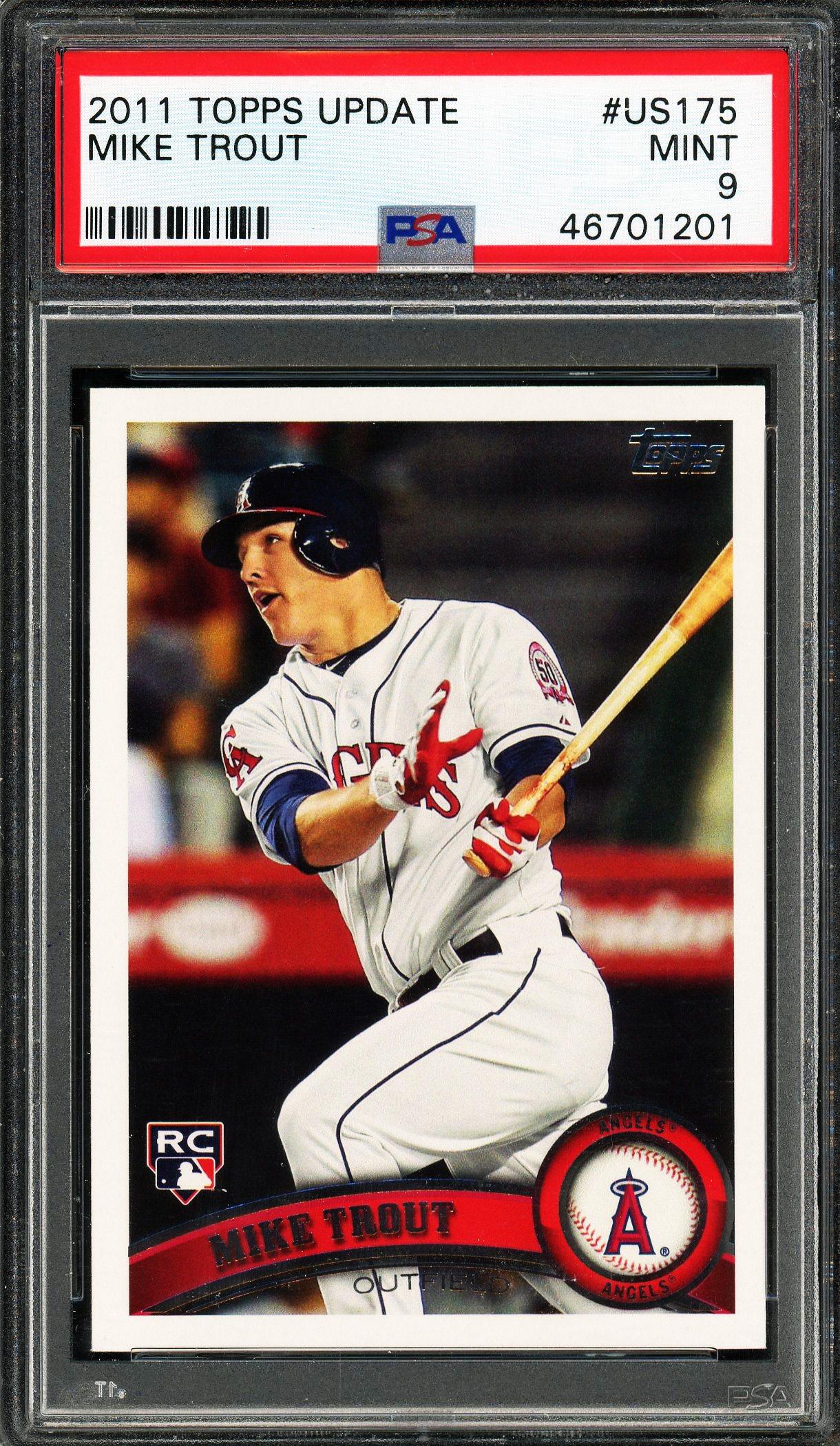
The rookie card market isn’t just about condition—it’s about capturing the essence of a player’s first professional moments.
The Future of the Trout Rookie: What’s Next for Collectors?
As Mike Trout approaches the twilight of his career, the rookie card market is bracing for a seismic shift. When he retires—and especially when he’s inducted into the Hall of Fame—the demand for his rookie cards will likely reach a fever pitch. The 2009 Bowman Chrome Superfractor PSA 10 could eclipse $10 million. The lower-grade versions will see exponential growth. And the raw cards? They’ll become the new frontier for grading companies and investors alike.
But the real story isn’t just about price tags. It’s about legacy. The next generation of collectors—kids who grew up watching Trout dominate—will see his rookie card as a bridge between eras. It’s the card that connects the Mike Trout of 2011 to the Mike Trout of 2025. And when he’s gone, that card will become a relic of a golden age, a tangible reminder of a player who made us believe in the impossible.
So why are collectors paying big in 2025? Because they’re not just buying a card. They’re buying a piece of history. They’re buying a story. They’re buying a future Hall of Famer at the exact moment his legend began to take shape. And in a world where everything is digital, where memories are fleeting, that kind of tangibility is worth every penny.
The Mike Trout rookie card isn’t just a collectible. It’s a time machine. A status symbol. A cultural touchstone. And in 2025, it’s the ultimate investment—not just in cardboard, but in the enduring magic of baseball itself.