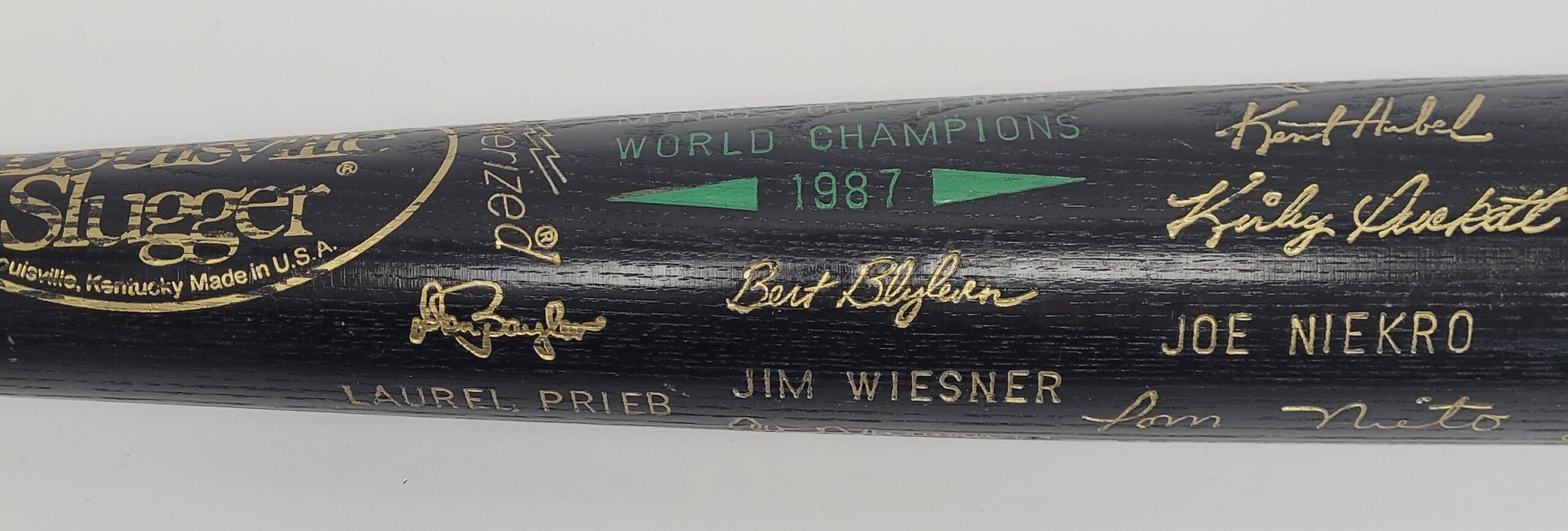
In the annals of baseball history, few teams have defied expectations as dramatically as the 1987 Minnesota Twins. A franchise that had languished in the lower echelons of the American League for much of the decade, they entered the season with modest ambitions and a roster that few pundits tipped for glory. Yet, against all odds, they not only captured the World Series but did so with a brand of baseball that felt like a revelation—a symphony of grit, timing, and unshakable belief. This is the story of how a team of underdogs, dismissed as also-rans, transformed into champions, rewriting the narrative of what it meant to be a contender in the modern game.
The Underdog’s Gambit: A Roster Forged in Fire
The 1987 Twins were not built on the backs of superstars but on the collective resilience of players who had been overlooked, traded, or discarded by other franchises. Their roster was a patchwork of misfits and late bloomers, a team that had been written off so many times that their own fans had grown accustomed to disappointment. Yet, under the guidance of manager Tom Kelly—a man whose no-nonsense demeanor masked a tactical brilliance—they became something greater than the sum of their parts.
At the heart of their success was a core of players who thrived in the shadows. Kent Hrbek, the first baseman with the unassuming demeanor, was the emotional anchor of the team, his clutch hitting and defensive prowess making him indispensable. Meanwhile, Kirby Puckett, a rookie in 1984, had blossomed into a superstar, his infectious enthusiasm and relentless work ethic setting the tone for the clubhouse. And then there was Gary Gaetti, the third baseman whose cannon arm and fearless play at the hot corner became the stuff of legend.
But perhaps the most intriguing aspect of this roster was its depth. Players like Dan Gladden, a speedster who could change a game with a single stolen base, and Greg Gagne, a shortstop who delivered in the clutch, were not household names. Yet, their contributions were pivotal. This was a team that played not with the arrogance of entitlement but with the humility of those who knew they had something to prove.
The Home Field Advantage: A Fortress in the Metrodome
The Metrodome, with its artificial turf and cavernous dimensions, was not the most aesthetically pleasing ballpark in baseball. Yet, for the 1987 Twins, it was a fortress—a place where their strengths were magnified and their opponents were intimidated. The team’s record at home was a staggering 56-25, a testament to their ability to dominate in front of their own fans.
What made the Metrodome so formidable was not just its physical layout but the intangible aura that surrounded it. The crowd, a raucous mix of die-hard fans and casual spectators, created an atmosphere that was electric. The players fed off this energy, their play becoming more precise, more aggressive, as the season wore on. Opponents often spoke of the Twins’ home-field advantage as if it were a living, breathing entity—something that could not be quantified but was undeniably real.
Even on the road, the Twins carried a quiet confidence. They were not intimidated by the grandeur of bigger markets or the star power of their opponents. Instead, they played with a chip on their shoulder, as if every game were a personal challenge to prove that they belonged among the elite.
The Art of the Comeback: A Season Defined by Resilience
The 1987 season was not a smooth ride. The Twins stumbled out of the gate, losing six of their first ten games, and by mid-May, they found themselves in the basement of the AL West. Yet, rather than crumble under the weight of expectations, they did something extraordinary: they refused to quit. A 12-3 stretch in late May and early June propelled them back into contention, and from there, they never looked back.
What set this team apart was their ability to win games they had no business winning. They were masters of the late-inning rally, a team that thrived in the most pressure-packed moments. Whether it was a walk-off home run by Hrbek or a clutch two-out single by Puckett, the Twins seemed to have an uncanny knack for manufacturing runs when they mattered most.
This resilience was not just a product of talent but of mentality. The players believed in each other, and their trust in one another was palpable. Even when they were down, they never panicked. Instead, they leaned on their strengths—speed, defense, and a refusal to back down from a fight—and let their opponents unravel under the pressure.
The World Series: A David vs. Goliath Showdown
When the Twins faced the St. Louis Cardinals in the World Series, they were decided underdogs. The Cardinals, led by the legendary Ozzie Smith and a pitching staff that included future Hall of Famer John Tudor, were a team built for October. Yet, the Twins approached the series with the same fearless attitude that had defined their season.
Their first victory in Game 1 was a statement—a 10-1 drubbing that announced their arrival on the grandest stage. But it was Game 6 that would become the stuff of legend. Trailing by a run in the bottom of the ninth inning, the Twins staged one of the most improbable comebacks in World Series history. With two outs and the bases loaded, Gene Larkin delivered a walk-off single that sent the Metrodome into a frenzy and forced a Game 7.
In the decisive game, the Twins’ pitching staff, led by Frank Viola and Juan Berenguer, stifled the Cardinals’ offense, while their offense continued to grind out runs. When the final out was recorded, the celebration that erupted was not just for a championship but for the vindication of a team that had been counted out at every turn.
The Legacy: A Blueprint for the Unconventional Champion
The 1987 Twins’ World Series victory was more than just a triumph on the field—it was a cultural shift. It proved that baseball, a game often dominated by money and star power, could still be won by a team that played with heart, hustle, and an unshakable belief in itself. Their story resonated far beyond the diamond, becoming a metaphor for perseverance in the face of adversity.
In the years that followed, the Twins’ blueprint was studied by underdog teams across the sport. Their emphasis on defense, speed, and clutch hitting became a model for teams looking to defy expectations. Even today, their legacy endures as a reminder that greatness is not always about the biggest names or the deepest pockets but about the will to fight when the odds are stacked against you.
For the players who wore that uniform in 1987, the championship was the culmination of a journey that began with doubt and ended in glory. It was a season that redefined what it meant to be a champion—and in doing so, it left an indelible mark on the game.