In the rarefied air of baseball card collecting, few names command the same reverence as Sandy Koufax. The left-handed legend, whose career was as meteoric as it was brief, left an indelible mark on the diamond—one that now translates into stratospheric values for his vintage cardboard. For collectors, Koufax’s cards aren’t just pieces of history; they’re portals to an era when baseball was raw, unfiltered, and brimming with mythic potential. But which of his cards are the true treasures? And what makes them worth more than a small fortune today? Buckle up, because we’re about to dissect the Koufax card market with the precision of a surgeon’s scalpel—and the passion of a lifelong fan.
The 1955 Topps Koufax Rookie Card: The Crown Jewel of the Hobby
No discussion of Sandy Koufax’s baseball cards begins—or should begin—without the 1955 Topps rookie card. This isn’t just a card; it’s the Mona Lisa of the hobby, a relic from the golden age of cardboard when Topps ruled the roost with unchallenged dominance. Printed on flimsy, waxy stock with a design that feels almost whimsical by modern standards, the 1955 Koufax RC captures the young pitcher in a crisp white uniform, his left arm cocked back in a windup that looks as effortless as it does timeless. The card’s scarcity today is a testament to its age—Topps overproduced these by the millions, yet only a fraction survived the ravages of time in high-grade condition.
What makes this card a blue-chip investment? Condition is king, but so is provenance. A PSA 9 or 10 1955 Koufax can fetch anywhere from $20,000 to over $100,000, depending on eye appeal and centering. The back of the card, with its quaint 1950s typography and stats that read like a baseball almanac from another century, adds to its allure. Collectors aren’t just buying a piece of Koufax’s legacy; they’re acquiring a slice of the hobby’s DNA. And with Koufax’s mystique only growing as his Hall of Fame status cements his place among the immortals, this card’s value isn’t just stable—it’s on a one-way elevator to the stratosphere.
The 1961 Topps Koufax: The Forgotten Gem with Explosive Potential
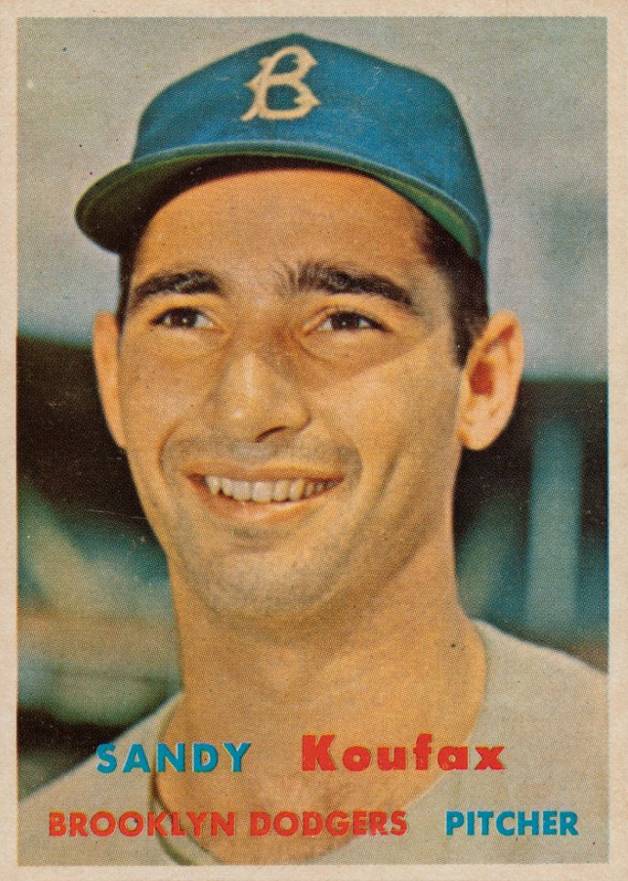
Here’s where things get interesting. While the 1955 rookie card hogs the spotlight, the 1961 Topps Koufax is the underrated sleeper that could quietly become the next big thing. This card, part of Topps’ classic design that featured bold colors and a player portrait framed in a vibrant border, depicts Koufax mid-pitch, his signature high leg kick frozen in time. What sets it apart? For starters, it’s scarcer than its rookie counterpart in high grades. Topps printed fewer of these in 1961, and many were lost to the ravages of time or tucked away in shoeboxes, forgotten by all but the most dedicated collectors.
The 1961 Koufax isn’t just a card; it’s a time capsule of Koufax’s prime. By this point, he was already a two-time World Series champion and a three-time Cy Young winner, his dominance on the mound undeniable. A PSA 8 or 9 in sharp condition can command $5,000 to $15,000, but the real money lies in pristine, untouched copies. The market for this card is still in its adolescence—most collectors haven’t caught on to its potential, but that’s about to change. As more investors realize that Koufax’s peak years are underrepresented in the cardboard market, the 1961 Topps could become the next big vintage play.
The 1963 Topps Koufax: The Year of the Unstoppable Force
If the 1961 card is the sleeper, then the 1963 Topps Koufax is the crown jewel of his mid-career output. This is the year Koufax threw 11 shutouts, won the Cy Young unanimously, and cemented his legacy as one of the game’s most dominant pitchers. The card itself is a stunner: Koufax in a navy blue uniform, his gaze intense, his posture radiating controlled power. The 1963 Topps design is a masterclass in mid-century aesthetics—clean, bold, and uncluttered, with a player photo that pops against the stark white background.
What makes this card a ticking time bomb? Scarcity. Topps printed fewer of these in 1963 compared to other years, and the ones that survived in high grades are vanishingly rare. A PSA 9 has sold for over $30,000, and a PSA 10—if one ever surfaces—could shatter records. The 1963 Koufax isn’t just a collectible; it’s a trophy for those who understand that Koufax’s peak wasn’t just good—it was otherworldly. For investors, this card represents a rare opportunity to acquire a piece of Koufax’s most dominant season at a fraction of the cost of his rookie card. And with Koufax’s cultural cachet only growing, the 1963 Topps is poised to become a must-have for serious collectors.
The 1965 Topps Koufax: The Final Masterpiece
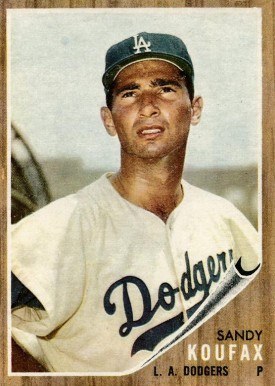
Koufax’s career ended abruptly after the 1966 season due to arthritis, but his final full year in 1965 was nothing short of legendary. He won another Cy Young, led the Dodgers to a World Series title, and posted a 2.04 ERA that still makes pitchers weep. The 1965 Topps Koufax card captures him in a white uniform, his left arm extended in a follow-through that looks like a ballet dancer’s grace. The card’s design is simple, elegant, and timeless—just like Koufax himself.
This is where the market gets tricky. The 1965 Koufax isn’t as scarce as its 1961 or 1963 counterparts, but high-grade examples are still elusive. A PSA 9 can fetch $3,000 to $8,000, while a PSA 10—if it exists—would be a white whale worth a small fortune. The 1965 card is a sentimental favorite for many collectors, a final snapshot of Koufax at his zenith. But for investors, it’s also a calculated play. Koufax’s legacy is only growing, and as the hobby evolves, the 1965 Topps could become a key piece in any serious vintage collection.
The Graded vs. Ungraded Debate: Where’s the Value?
Here’s a question that divides collectors: Is it better to chase a high-grade Koufax card or take a chance on an ungraded gem? The answer depends on your goals. Graded cards—especially those slabbed by PSA, BGS, or SGC—offer certainty. You know exactly what you’re getting, and the market rewards consistency. A PSA 9 or 10 Koufax card is a liquid asset, easy to sell, and always in demand. But ungraded cards? They’re the wild cards of the hobby. A raw Koufax in exceptional condition can outperform a graded copy in eye appeal, but the risk is high. Without a professional opinion, you’re rolling the dice on centering, surface wear, and print quality.
For most collectors, the smart play is to focus on graded cards. The peace of mind is worth the premium, and the market has spoken: high-grade Koufax cards appreciate faster and more reliably. That said, the thrill of the hunt can’t be ignored. There’s something magical about holding a raw Koufax in your hands, imagining the hands it passed through before yours. Just be prepared to pay a premium for the privilege—and to accept that you might be wrong about its condition.
The Future of Koufax Cards: A Market on the Rise
The Koufax card market isn’t just stable—it’s on fire. Prices have climbed steadily over the past decade, and there’s no sign of slowing down. Why? Because Koufax’s legacy is only growing. Younger fans, raised on highlight reels and advanced metrics, are discovering the mystique of his dominance. His refusal to pitch on Yom Kippur, his perfect game in 1965, his retirement at 30—these aren’t just stats; they’re stories that resonate across generations. And in an era where baseball cards are as much about nostalgia as they are about investment, Koufax’s cards are the ultimate blend of both.
Looking ahead, the 1955 and 1963 Topps cards will likely remain the blue chips of the market, but don’t sleep on the 1961 and 1965 issues. As more collectors diversify their Koufax holdings, these cards could see explosive growth. And with the vintage market showing no signs of cooling, now is the time to act. Whether you’re a seasoned collector or a newcomer to the hobby, Koufax’s cards offer a rare opportunity to own a piece of baseball history—and to watch your investment soar as the legend of Sandy Koufax continues to grow.
The next time you hold a Koufax card in your hand, remember this: you’re not just holding cardboard and ink. You’re holding a piece of a pitcher who defied the odds, who dazzled the world with his fastball and his humility, and who left the game too soon. And in the world of baseball cards, that’s priceless.