The Dominican Republic’s dominance in Major League Baseball isn’t just a fluke—it’s a cultural phenomenon, a socioeconomic catalyst, and a testament to the island’s unyielding passion for the game. While other nations produce elite athletes, few can match the Dominican Republic’s ability to churn out MLB talent at an almost industrial pace. This isn’t merely about raw skill; it’s about the fusion of history, economics, infrastructure, and an almost spiritual connection to baseball. To understand why Dominicans excel in baseball, we must dissect the layers beneath the surface: the cultural bedrock, the economic realities, the developmental pipelines, and the psychological resilience that sets them apart. This is the untold story of how a small Caribbean nation became the beating heart of America’s pastime.
The Cultural Alchemy: Baseball as a Way of Life
In the Dominican Republic, baseball isn’t just a sport—it’s a lifeline, a language spoken in every barrio, and a vehicle for upward mobility. The game’s roots run deep, tracing back to the late 19th century when Cuban exiles fleeing political turmoil introduced it to the island. Over generations, baseball evolved from a pastime into a cultural identity, woven into the fabric of daily life. Children grow up hearing stories of legends like Juan Marichal and Pedro Martínez, their exploits immortalized in local lore. The sport transcends class; whether in the dusty fields of San Pedro de Macorís or the concrete courts of Santo Domingo, the crack of a bat echoes the same promise: a chance to rewrite one’s destiny.
This cultural obsession is reinforced by the island’s social structures. Baseball clubs serve as communal hubs, where fathers teach sons the nuances of the game, where pickup games in vacant lots become proving grounds, and where scouts lurk like modern-day talent hunters in ancient epics. The Dominican passion for baseball is less about leisure and more about survival—a way to channel energy, ambition, and even frustration into something tangible. For many, the dream isn’t just to play professionally; it’s to become the first in their family to escape poverty, to send money back home, to build a legacy. This collective mindset transforms baseball from a game into a communal contract, where every pitch, every swing, carries the weight of generations.
The Economic Engine: Baseball as a Path Out of Poverty
The Dominican Republic’s baseball economy is a paradox: a $100 million industry that thrives on the backs of teenagers earning poverty wages. Yet, for thousands of families, it represents the only viable escape from economic hardship. The reality is stark—MLB academies dot the landscape like modern-day plantations, where young prospects toil under the watchful eyes of scouts, their families pinning their hopes on a single contract. The financial incentives are undeniable: a minor-league deal can mean $1,000 a month, a signing bonus can buy a home, and a big-league contract can transform a family’s future overnight.
This economic desperation fuels an unrelenting work ethic. Prospects train year-round, often in makeshift facilities with cracked bats and deflated balls, driven by the knowledge that failure isn’t an option. The system is ruthless—only the most resilient survive, weeded out by injuries, language barriers, or the sheer pressure of expectations. Yet, for those who make it, the rewards are life-changing. The Dominican baseball pipeline isn’t just about talent; it’s about the willingness to endure hardship in pursuit of a dream that, for most, remains just out of reach. This economic calculus ensures that only the most driven, the most adaptable, and the most talented rise to the top.
The Developmental Crucible: Academies as Baseball Factories
MLB academies in the Dominican Republic operate like high-performance laboratories, where raw talent is sculpted into polished gems. These facilities, owned by major-league teams, are where the magic happens—or where dreams go to die. The best academies, like those run by the Los Angeles Dodgers or the New York Yankees, offer state-of-the-art training, nutrition plans, and English classes, all designed to groom prospects for the big leagues. But the process is far from glamorous. Players live in Spartan dorms, wake at dawn for grueling workouts, and spend their days refining mechanics under the watchful eyes of coaches who speak in baseball’s arcane language.
The academies also serve as cultural assimilation centers. Many prospects arrive with little to no English, unfamiliar with American customs, and unprepared for the mental rigors of professional baseball. The best academies don’t just teach hitting and fielding; they teach resilience, discipline, and the art of navigating a foreign system. Scouts and coaches become surrogate fathers, mentors, and sometimes even therapists, guiding players through the emotional minefield of chasing a dream. The academies’ success rate is low—only a fraction of prospects ever reach the majors—but those who do often become the backbone of MLB rosters. The system’s brutality ensures that only the most adaptable, the most coachable, and the most mentally tough survive.
The Genetic and Athletic Advantage: Nature Meets Nurture
Dominican baseball players aren’t just products of their environment; they’re beneficiaries of a unique genetic and athletic profile. Studies suggest that Dominicans, on average, possess a higher percentage of fast-twitch muscle fibers, which translates to explosive power in the batter’s box and blistering speed on the basepaths. Their compact, muscular builds are ideal for the demands of modern baseball, where bat speed and defensive agility are prized above all else. But genetics alone don’t explain the phenomenon. It’s the combination of these physical traits with the island’s baseball culture that creates an unstoppable force.
The Dominican approach to baseball is also deeply tactical. Unlike players from other regions who may rely on raw power or sheer athleticism, Dominicans often excel in the nuances of the game—small-ball tactics, defensive versatility, and an innate understanding of situational play. This is partly due to the island’s baseball traditions, where players learn the game in pickup games that emphasize creativity over rigid structure. The result is a breed of athlete who can adapt to any role, whether it’s a speedy outfielder turning a double play or a scrappy infielder manufacturing runs. It’s not just about being good at baseball; it’s about being good at the game in all its forms.
The Psychological Edge: Grit, Grind, and Glory
Dominican baseball players possess a mental fortitude that’s as much a part of their success as their physical gifts. The journey from the barrios to the majors is paved with rejection, homesickness, and the crushing weight of expectations. Yet, Dominicans have developed a unique psychological resilience, forged in the fires of competition and survival. They embrace the grind—the endless reps, the language barriers, the cultural isolation—with a stoicism that borders on the mythic. For many, baseball isn’t just a career; it’s a test of character, a way to prove their worth in a world that often overlooks them.
This mental toughness is also reflected in their playing style. Dominicans are known for their fearlessness at the plate, their willingness to swing at pitches in the dirt, and their ability to thrive under pressure. They play with a swagger, a confidence that borders on arrogance, but it’s not unfounded—it’s the result of years of proving themselves against the best. The psychological edge isn’t just about talent; it’s about the ability to perform when the stakes are highest, to turn adversity into opportunity. In a league where mental errors can cost games, Dominicans bring a rare combination of skill and mental acuity that sets them apart.
The Global Impact: How Dominicans Are Reshaping MLB
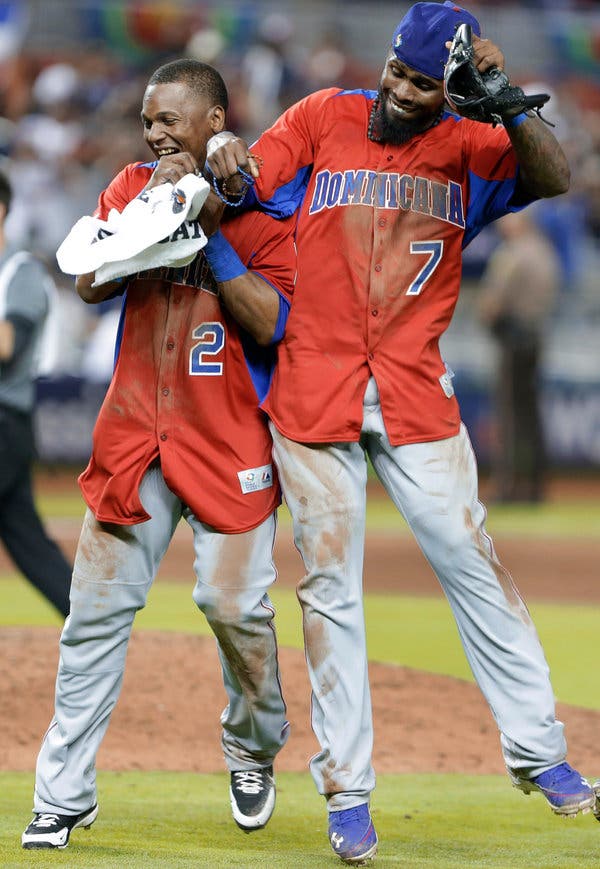
The Dominican Republic’s influence on MLB extends far beyond the players themselves. It’s reshaping the way the game is played, scouted, and marketed. Teams now prioritize Dominican talent in the draft, investing millions in academies and development programs. The influx of Dominican players has also changed the cultural landscape of MLB, bringing a vibrancy and flair that was previously lacking. From the infectious energy of José Bautista’s bat flip to the defensive wizardry of Francisco Lindor, Dominicans have brought a new dimension to the game.
This global impact isn’t just about performance; it’s about economics. The Dominican baseball industry is now a multi-million-dollar enterprise, with agents, trainers, and scouts all vying for a piece of the pie. The success of Dominican players has also opened doors for other Latin American countries, creating a ripple effect that’s transforming the global baseball landscape. Yet, for all its success, the system remains flawed—exploitative, cutthroat, and unsustainable for many. The challenge now is to ensure that the next generation of Dominican players doesn’t just chase the dream but thrives within it.