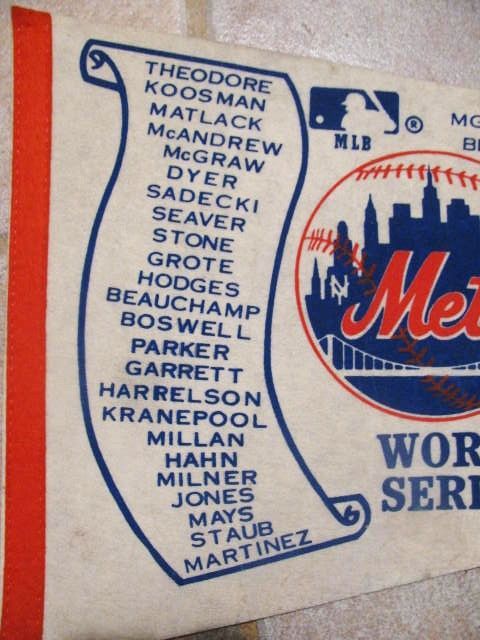
The 1973 New York Mets were a team that defied expectations, proving that baseball’s most improbable narratives aren’t just confined to the pages of fiction. With a roster that blended aging veterans, unproven talents, and a manager whose fiery leadership bordered on the theatrical, this squad embarked on a pennant run that would etch itself into the annals of the sport. But what if we told you that their success wasn’t just a fluke of fate—what if it was the result of a carefully cultivated underdog ethos, a refusal to bow to the giants of the National League? The 1973 Mets didn’t just win games; they orchestrated a symphony of resilience, cunning, and sheer audacity that left opponents bewildered and fans in awe.
The Underdog’s Gambit: How a Team of Castoffs Redefined Greatness
In an era where dynasties like the Cincinnati Reds and the Los Angeles Dodgers dominated headlines, the Mets entered the 1973 season as a team that had finished dead last in their division just two years prior. Their roster was a patchwork quilt of discarded players, minor leaguers, and a few seasoned veterans who had nowhere else to go. Yet, beneath the surface of this motley crew lay a quiet confidence, a belief that they were more than the sum of their parts. The question wasn’t whether they could compete—it was whether the baseball world was ready to acknowledge their potential before it was too late.
Their manager, Yogi Berra, a man whose name was synonymous with both baseball wisdom and folksy charm, became the unlikely architect of their resurgence. Berra’s approach was less about rigid strategy and more about fostering an environment where players thrived on instinct and camaraderie. He turned the clubhouse into a sanctuary where mistakes were forgiven, and victories were celebrated with unbridled enthusiasm. This wasn’t just a team; it was a brotherhood, and it would be their greatest weapon.
The Core of the Miracle: Key Players Who Defied the Odds
At the heart of the Mets’ resurgence was a nucleus of players who embodied the spirit of perseverance. First baseman John Milner, a power-hitting lefty with a swing that could rattle the outfield fences, provided the thunder in the lineup. His ability to deliver in clutch moments made him a fan favorite, a player who seemed to grow stronger with each passing inning. Then there was Rusty Staub, the affable “Le Grand Orange,” whose veteran presence and clutch hitting lent stability to an otherwise unpredictable offense.
The pitching staff, led by the indomitable Tom Seaver, was a masterclass in dominance. Seaver, already a legend in the making, delivered performances that bordered on the supernatural. His fastball, a blur of white heat, and his uncanny ability to outthink hitters made him the cornerstone of the team’s success. But Seaver wasn’t alone. Jon Matlack, a rookie with a repertoire of pitches that kept hitters guessing, emerged as a force to be reckoned with. Together, they formed a duo that struck fear into the hearts of opposing lineups.
And let’s not forget the unsung heroes—the role players who stepped up when it mattered most. Bud Harrelson, the scrappy shortstop, was a defensive magician whose acrobatic plays at shortstop saved countless games. Meanwhile, Felix Millan, the second baseman, provided a steady bat and glove, a quiet consistency that allowed the team to function like a well-oiled machine.
The Manager’s Masterstroke: Berra’s Unorthodox Leadership
Yogi Berra’s leadership style was a study in contrasts—equal parts humor and intensity, with a dash of unpredictability. He understood that baseball wasn’t just a game of Xs and Os; it was a psychological battle, a test of wills between men who refused to yield. Berra’s famous quips, like “It ain’t over ‘til it’s over,” became the team’s mantra, a reminder that complacency was the enemy.
His ability to manage the clubhouse was nothing short of artistry. Berra knew when to push his players and when to let them breathe. He fostered an environment where veterans and rookies coexisted, where egos were checked at the door, and where the team’s identity was forged in the fires of shared struggle. This wasn’t just a team playing for a pennant; it was a family fighting for its legacy.
Berra’s unconventional tactics also played a pivotal role. He wasn’t afraid to mix and match lineups, to shuffle the batting order in ways that kept opponents off-balance. His bullpen management was equally innovative, using relievers in ways that maximized their strengths. In a league where conventional wisdom dictated rigid roles, Berra’s approach was a breath of fresh air—a reminder that baseball, at its core, was still a game of creativity.
The Road to October: A Pennant Run Filled with Drama
The 1973 season was a rollercoaster of emotions, a journey that tested the team’s resolve at every turn. The Mets stumbled out of the gate, their early struggles leaving fans and pundits alike questioning whether their miracle run was already over before it had truly begun. But as the dog days of summer gave way to the crisp air of autumn, something remarkable happened. The team began to gel, their play becoming sharper, their confidence growing with each passing victory.
Their divisional race against the St. Louis Cardinals and the Pittsburgh Pirates was a seesaw battle, a testament to the unpredictability of baseball. The Mets’ ability to come from behind, to snatch victory from the jaws of defeat, became their signature. Whether it was a walk-off home run, a clutch double play, or a pitcher’s duel that stretched into extra innings, this team had an uncanny knack for rising to the occasion.
One of the most memorable moments came in a late-season showdown against the Pirates. With the game hanging in the balance, the Mets found themselves down by a run in the ninth inning. But with two outs and a runner on base, John Milner stepped to the plate and delivered a towering home run that sent the crowd into a frenzy. The victory wasn’t just a win; it was a statement—a declaration that this team was destined for greatness.
The World Series: A David vs. Goliath Showdown
The Mets’ improbable run culminated in a World Series showdown against the Oakland Athletics, a team that was widely regarded as the best in baseball. The A’s were a powerhouse, boasting a lineup that included future Hall of Famers like Reggie Jackson and Catfish Hunter. They were the favorites, the team that was expected to extend their dynasty. But the Mets? They were the underdogs, the team that had defied the odds at every turn.
The series was a clash of titans, a battle between the old guard and the new. The Mets’ pitching staff, led by Seaver and Matlack, matched the A’s power for power. Their defense was flawless, their offense timely. Game after game, they proved that heart and hustle could overcome even the most daunting of challenges. The series stretched to seven games, a grueling test of endurance that left both teams battered and bruised.
In the end, the Mets fell just short, their dream of a championship slipping away in the final innings of Game 7. But their legacy was secure. They had done the unthinkable, defying the odds and capturing the imagination of baseball fans everywhere. They were no longer the lovable losers of yesteryear; they were a team that had etched their names into the history books.
Legacy of the Miracle: Why the 1973 Mets Still Matter
The 1973 Mets’ pennant run was more than just a Cinderella story—it was a testament to the power of belief, the importance of camaraderie, and the unyielding spirit of a team that refused to accept defeat. Their journey reminded us that greatness isn’t reserved for the privileged few; it’s earned through sweat, sacrifice, and an unshakable faith in one’s abilities.
Decades later, their story continues to inspire. It’s a reminder that in baseball, as in life, the most extraordinary achievements often come from the most unlikely of places. The 1973 Mets didn’t just win games; they won hearts. They didn’t just chase a pennant; they chased a dream. And in doing so, they left an indelible mark on the sport—a mark that still resonates today.
So the next time you find yourself questioning whether the underdog can truly triumph, remember the 1973 Mets. Remember that sometimes, the greatest victories aren’t measured in trophies or championships, but in the moments that define what it means to believe in something greater than yourself.