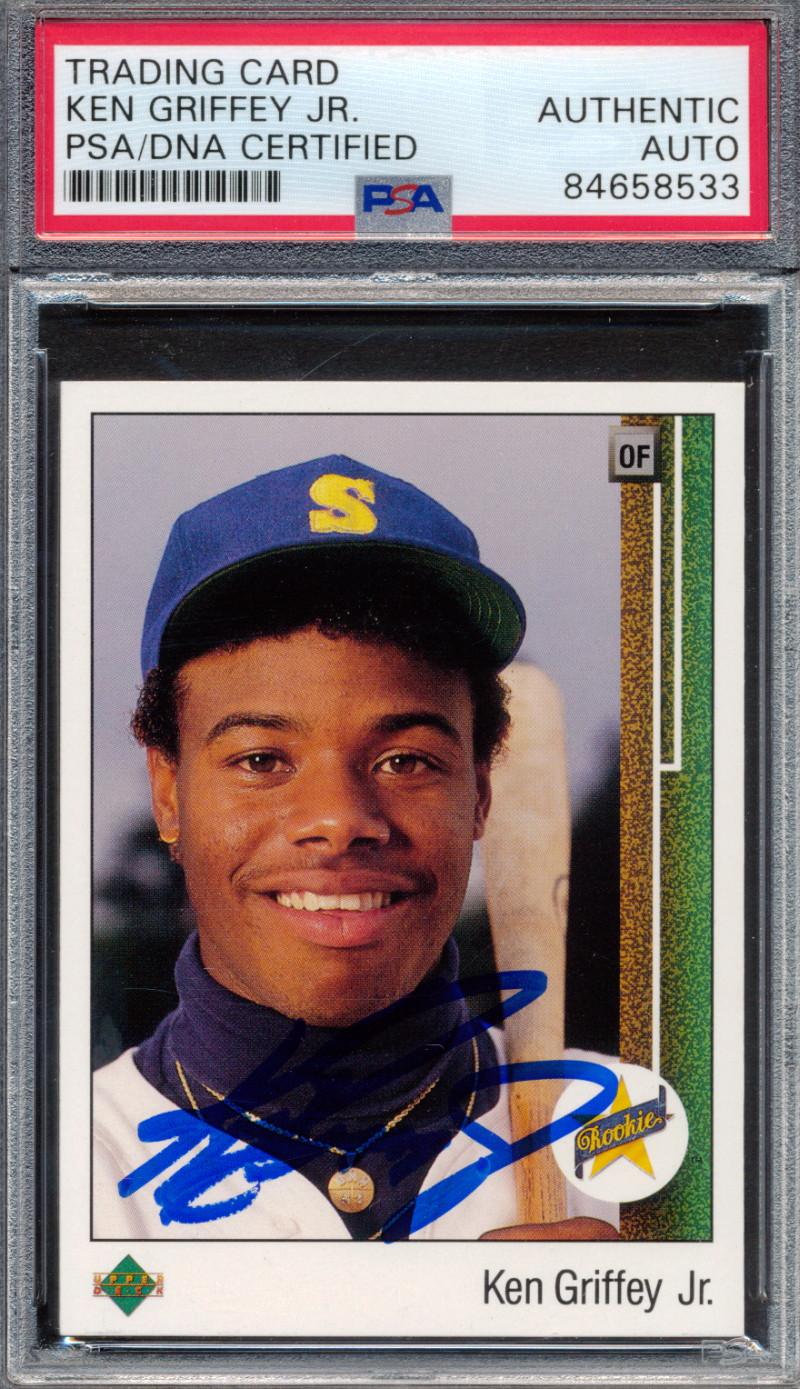
The 1989 Upper Deck Ken Griffey Jr. rookie card isn’t just a piece of cardboard—it’s a cultural artifact, a frozen moment where baseball’s golden era collided with the dawn of modern collecting. Decades after its release, it still commands reverence, often overshadowing even the most pristine modern parallels. Why does this card, issued in a year when Upper Deck revolutionized the industry with holograms and premium aesthetics, remain untouchable in the hearts of collectors and fans alike? The answer lies not just in its pristine condition or rarity, but in the confluence of artistry, timing, and the mythos surrounding one of the game’s most transcendent talents.
The Aesthetic Revolution: More Than Just a Card
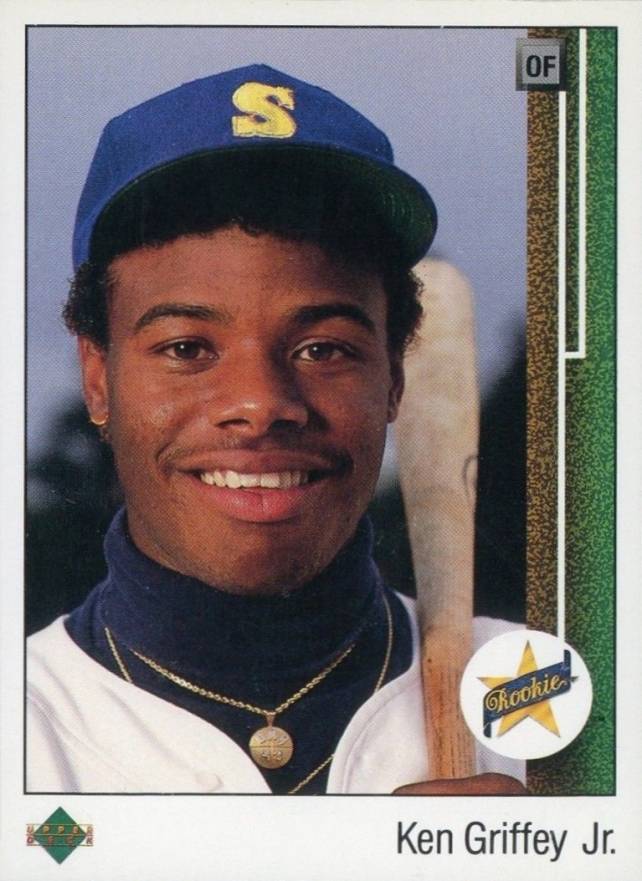
Upper Deck didn’t just print baseball cards in 1989—they crafted them. The 1989 set introduced a level of visual sophistication that felt almost cinematic. Glossy surfaces, sharp photography, and a clean white border made each card feel like a collectible rather than a sticker. But it was the Ken Griffey Jr. rookie card that became the visual manifesto of this new era. His photo, captured mid-swing with that effortless grace, exudes motion and confidence. The card’s design doesn’t just frame a player; it immortalizes a legend in the making.
Contrast this with the cardboard monotony of the 1980s Topps sets, where players often appeared stiff and lifeless. Upper Deck’s innovation wasn’t merely technical—it was emotional. The Griffey card didn’t just document a player; it celebrated the artistry of the game itself. The hologram sticker, though often debated, added a layer of prestige, signaling that this wasn’t just another insert—it was the crown jewel of a premium set.
The Timing: A Perfect Storm of Hype and Hope
1989 was a year of baseball’s resurgence. The steroid era loomed on the horizon, but for now, the game was still pure, still human. Ken Griffey Jr. arrived like a comet—young, charismatic, and impossibly talented. His rookie season was a revelation: 48 doubles, 22 home runs, and a Rookie of the Year award that felt inevitable. The Upper Deck card hit shelves just as his legend was beginning to crystallize.
Collecting cards in 1989 wasn’t just a hobby; it was an act of faith. Kids saved allowance money, traded duplicates, and dreamed of pulling the Griffey card from a pack. The scarcity of the card—Upper Deck’s print run was limited compared to Topps—only amplified its mystique. Unlike today’s mass-produced relics, this card was a tangible promise: that greatness could be held in your hands.
The Myth of the Kid: Why Griffey’s Persona Mattered
Griffey wasn’t just a great player—he was the perfect hero for a generation. With his toothy grin, effortless style, and Seattle’s underdog narrative, he embodied the optimism of the late ’80s. The Upper Deck card captured that essence. It wasn’t just a baseball card; it was a talisman of youthful possibility.
Compare this to modern superstars, whose cards often feel like corporate endorsements. Griffey’s rookie card wasn’t about endorsements or social media—it was about raw talent and authenticity. Collectors didn’t just want the card because it was rare; they wanted it because it represented something pure. In an era of rampant commercialization, the Griffey card was a reminder of baseball’s soul.
The Condition Conundrum: Why Graded Copies Rule
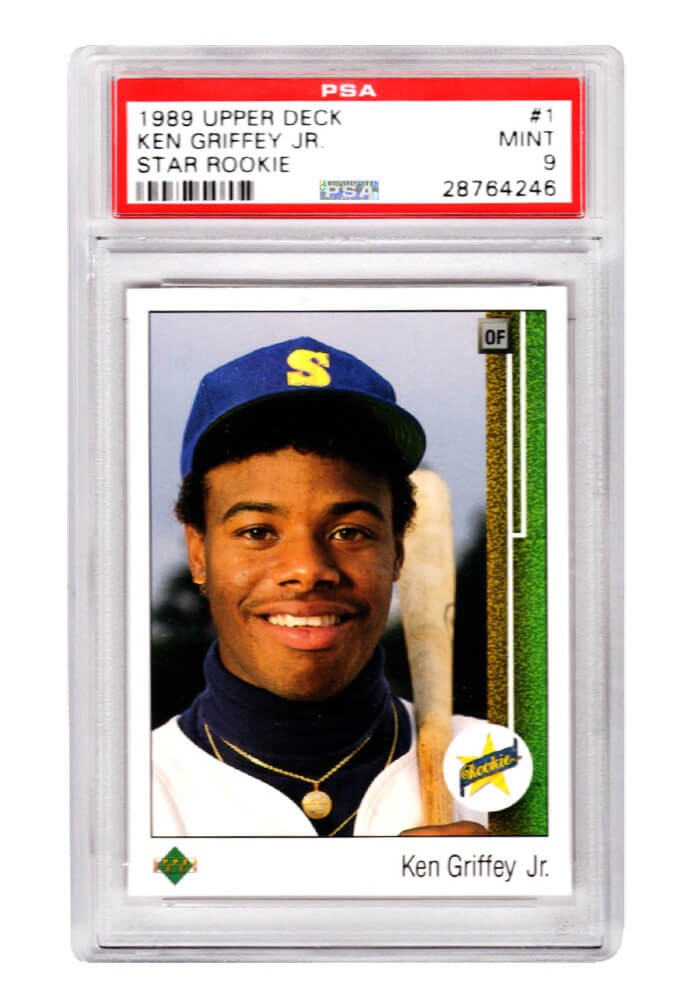
Part of the Griffey card’s enduring allure is its relationship with grading. A PSA 10 isn’t just a high-grade card—it’s a unicorn. The pristine white borders, the sharp corners, the vibrant colors—all of these elements are magnified in a gem mint copy. The card’s design, which was already striking, becomes almost hyper-real in top-tier condition.
But why does grading matter so much? Because the Griffey card is a time capsule. Every scratch, every ding, every fingerprint tells a story. A PSA 10 is a frozen moment of perfection, untouched by the wear of decades. It’s not just a card; it’s a relic preserved in amber.
The Market’s Obsession: Why Prices Keep Climbing
The market for the 1989 Upper Deck Griffey rookie card has defied logic. Even as modern cards shatter records with flashy serial numbers and autographs, the Griffey card remains the gold standard. Its value isn’t just about scarcity—it’s about legacy. Collectors aren’t buying it as an investment; they’re buying it as a piece of history.
Auction houses report consistent demand, with high-grade copies selling for tens of thousands. But the real story isn’t in the numbers—it’s in the emotional pull. This card isn’t just a collectible; it’s a bridge to a simpler time, when baseball was about heroes, not analytics, and cards were about dreams, not depreciation.
The Legacy: Why It Will Always Be King
The 1989 Upper Deck Ken Griffey Jr. rookie card endures because it transcends its medium. It’s not just a card—it’s a cultural touchstone. It represents the intersection of art, sport, and nostalgia. In a hobby that often prioritizes novelty over tradition, the Griffey card remains a constant, a reminder of why we fell in love with collecting in the first place.
Its design, its timing, and its mythos all contribute to its legendary status. It’s a card that collectors chase not because it’s the rarest, but because it’s the most meaningful. And in a world where everything is disposable, that’s a rare and precious thing.
Decades from now, when the latest Mike Trout or Shohei Ohtani rookie card has faded into obscurity, the Griffey card will still shine. It will still be the one that collectors dream about, the one that defines what it means to be a baseball card. Because some legacies aren’t just built—they’re etched in time.