Is a David Cone rookie card the kind of collectible that could make you the envy of your fantasy league—or just another overpriced piece of cardboard gathering dust in a shoebox? As we stand in 2025, the baseball card market is a labyrinth of nostalgia, speculation, and shifting tastes. Cone, the flame-throwing Yankees legend whose fastball once shattered bats like kindling, has left behind a paper trail of cardboard that ranges from the mundane to the magnificent. But here’s the twist: while Cone’s on-field heroics are etched in lore, his rookie cards occupy a curious middle ground—neither the crown jewel of the 1980s nor the forgotten relic of a bygone era. So, is it worth sinking your hard-earned cash into a Cone rookie card this year? Let’s unpack this conundrum with the precision of a 95-mph cutter slicing the outside corner.
The Card That Started It All: What Makes a Cone Rookie Card?
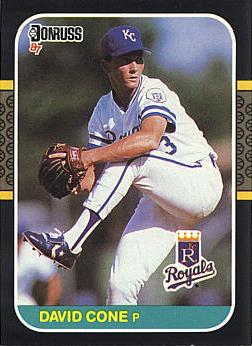
David Cone’s rookie card isn’t just one card—it’s a constellation. The most coveted entry in this celestial lineup is the 1987 Donruss #502, a card that burst onto the scene during the halcyon days of the junk wax era. Printed on cheap, glossy stock with the kind of color saturation that makes modern collectors wince, this card is a time capsule of 1980s baseball aesthetics. The front features Cone in a crisp Royals uniform, his delivery frozen mid-windup, eyes locked in on the target. The back? A statistical smorgasbord that feels almost quaint by today’s data-driven standards.
But here’s where things get interesting. The 1987 Donruss set is often dismissed as the red-headed stepchild of the rookie card world, overshadowed by the more polished offerings from Topps and Fleer. Yet, for Cone fans, it’s the holy grail—a tangible link to his rookie season, when he was still a projectable young arm rather than the Cy Young winner and World Series hero he’d later become. The card’s scarcity today isn’t just about age; it’s about the sheer volume of Donruss cards that were printed and subsequently discarded. Finding one in gem mint condition is like stumbling upon a pristine 1952 Mickey Mantle in a shoebox at a garage sale.

The Market’s Verdict: Is Cone’s Rookie Card a Sleeper or a Stinker?
To answer whether Cone’s rookie card is worth your investment in 2025, we need to dissect the market’s mood swings. As of this year, the baseball card market is a paradox: high-end vintage cards are fetching record sums, while mid-tier commons and semi-hall of famers are struggling to find buyers. Cone’s Donruss rookie sits squarely in the latter camp. PSA 10 copies have seen their values stagnate, with recent sales hovering around the $100–$150 mark—a far cry from the $300+ peaks of 2021. But is this a temporary lull or a sign of deeper disinterest?
The challenge here is Cone’s legacy. While he’s undeniably a Yankees legend and a 1990s icon, his rookie card predates his most famous moments. Cone didn’t win a Cy Young until 1994, and his no-hitter in 1996 came on a Topps card, not his rookie. This creates a disconnect: collectors who want Cone memorabilia often gravitate toward his later, more iconic cards, while rookie card enthusiasts might overlook him in favor of bigger names from the same era, like Barry Bonds or Ken Griffey Jr. The result? A card that’s caught in a no-man’s-land of demand.
Yet, there’s a glimmer of hope. The market for 1980s rookies has shown resilience, particularly for players who bridged the gap between the junk wax era and the modern game. Cone’s card benefits from his later success, even if it’s not the primary driver of its value. For collectors who appreciate the raw, unfiltered charm of the 1980s, the Donruss #502 is a gateway drug—a way to own a piece of baseball history without mortgaging the house.
The Grading Gamble: Condition is King, But Is It a King’s Ransom?
If you’re considering a Cone rookie card, the first question you’ll face is: to grade or not to grade? Professional grading services like PSA, BGS, and SGC have turned the hobby into a high-stakes game of chance, where a single point on the 10-point scale can mean the difference between a profitable flip and a heartbreaking loss. For Cone’s Donruss rookie, a PSA 9 is the sweet spot—a card that’s crisp, centered, and free of major flaws, but not so pristine that it demands a premium. A PSA 10, on the other hand, is a unicorn. Fewer than 100 copies have achieved this status, and their values have plateaued in recent years.
The grading gamble is compounded by the card’s original printing quality. Donruss rookies from the 1980s are notorious for off-center prints, print lines, and surface wear. Even a card that looks flawless to the naked eye might reveal a fatal flaw under the loupe. This makes the grading process a high-wire act—one where the cost of submission ($25–$50 per card) can eat into your potential profits. For investors, the math is simple: if the card isn’t a PSA 9 or better, it’s unlikely to appreciate significantly in the near term.
For collectors who aren’t chasing profit, the grading process offers another layer of engagement. There’s something almost meditative about examining a card’s centering, the crispness of its corners, and the depth of its colors. Cone’s Donruss rookie, with its bold hues and dynamic action shot, rewards close inspection. It’s a card that demands you slow down and appreciate the craftsmanship—or lack thereof—of the era.
The Cone Conundrum: Nostalgia vs. Investment Potential
At its core, the decision to collect Cone’s rookie card hinges on one question: are you buying for love or for profit? If it’s the former, then the Donruss #502 is a worthy addition to any collection. It’s a tangible piece of Cone’s journey, a relic from the days when baseball cards were as much about the thrill of the chase as they were about the player’s accomplishments. The card’s flaws—the waxy sheen, the slightly blurred focus—are part of its charm, a reminder of an era when perfection was a luxury few could afford.
But if you’re eyeing this card as an investment, the outlook is murkier. Cone’s legacy, while impressive, lacks the universal appeal of a Mantle or a Mays. His rookie card doesn’t carry the same historical weight as a 1952 Topps Mickey Mantle or a 1933 Goudey Babe Ruth. Instead, it’s a card that appeals to a niche audience—Yankees fans, Cone enthusiasts, and 1980s junk wax collectors. The market for such cards is smaller, and liquidity can be an issue. Selling a Cone rookie card might require patience, and the pool of willing buyers is shallower than you’d find for a more iconic name.
There’s also the question of Cone’s cultural footprint. While he’s beloved in New York and respected in baseball circles, his name doesn’t carry the same cachet as a Derek Jeter or a Mariano Rivera. This limits the card’s appeal to casual collectors who might be drawn in by a flashy design or a famous player, but not by a pitcher who spent the bulk of his career in the shadows of bigger stars. For Cone’s rookie card to see a resurgence in value, it would likely need a catalyst—perhaps a Hall of Fame induction (though he’s not yet eligible) or a surge in interest in 1980s baseball players.
The Wildcard: Cone’s Later Cards and the Halo Effect
One factor that could indirectly boost Cone’s rookie card’s value is the halo effect from his later, more iconic cards. The 1994 Topps #419, for example, captures Cone at the peak of his powers, his arm cocked in a classic windup. This card is far more desirable to most collectors, and its success could trickle down to his rookie card. It’s a phenomenon seen with other players: as their later cards gain traction, interest in their earlier issues follows suit.
Additionally, Cone’s connection to the Yankees—one of the most storied franchises in sports—could play a role in his cards’ long-term appeal. Yankees memorabilia has a built-in fanbase, and Cone’s contributions to the team’s 1990s dynasty give his cards a narrative that extends beyond his individual achievements. If the Yankees continue to dominate headlines, it’s possible that Cone’s cards, including his rookie, could benefit from the team’s enduring popularity.
Of course, this is all speculative. The baseball card market is notoriously unpredictable, and Cone’s rookie card may never achieve the kind of value that makes collectors swoon. But for those who love the chase, the thrill of the hunt, and the joy of owning a piece of baseball history, the Donruss #502 is a card worth considering—even if it’s not the kind of investment that will make you rich overnight.
So, is a David Cone rookie card worth collecting in 2025? The answer, as with most things in life, is: it depends. If you’re a fan who wants to own a piece of Cone’s journey, then yes—absolutely. The card’s charm, its connection to a pivotal era in baseball, and its role in the broader narrative of the sport make it a worthy addition to any collection. But if you’re an investor looking for a sure thing, you might want to temper your expectations. Cone’s rookie card is a sleeper, not a slam dunk. It’s a card that rewards patience, passion, and a willingness to embrace the unpredictable nature of the hobby.
In the end, the true value of a baseball card isn’t just in its price tag—it’s in the stories it tells, the memories it evokes, and the joy it brings. And for Cone fans, that’s a value that can’t be quantified.