In the vast, sun-bleached fields of baseball card collecting, where legends are immortalized in cardboard and ink, one name echoes with the resonance of a no-hitter: Orel Hershiser. The “Bulldog,” as he was affectionately known, carved his name into the annals of the sport with a 59-inning scoreless streak in 1988—a record that still stands like a monolith. But what about his rookie cards? Are they the kind of hidden gems that slip through the cracks, or just another overpriced relic of a bygone era? Let’s dive into the world of Orel Hershiser’s rookie cards, where nostalgia and investment potential collide in a high-stakes game of supply and demand.
The Allure of the Rookie Card: Why Hershiser’s First Appearances Still Captivate
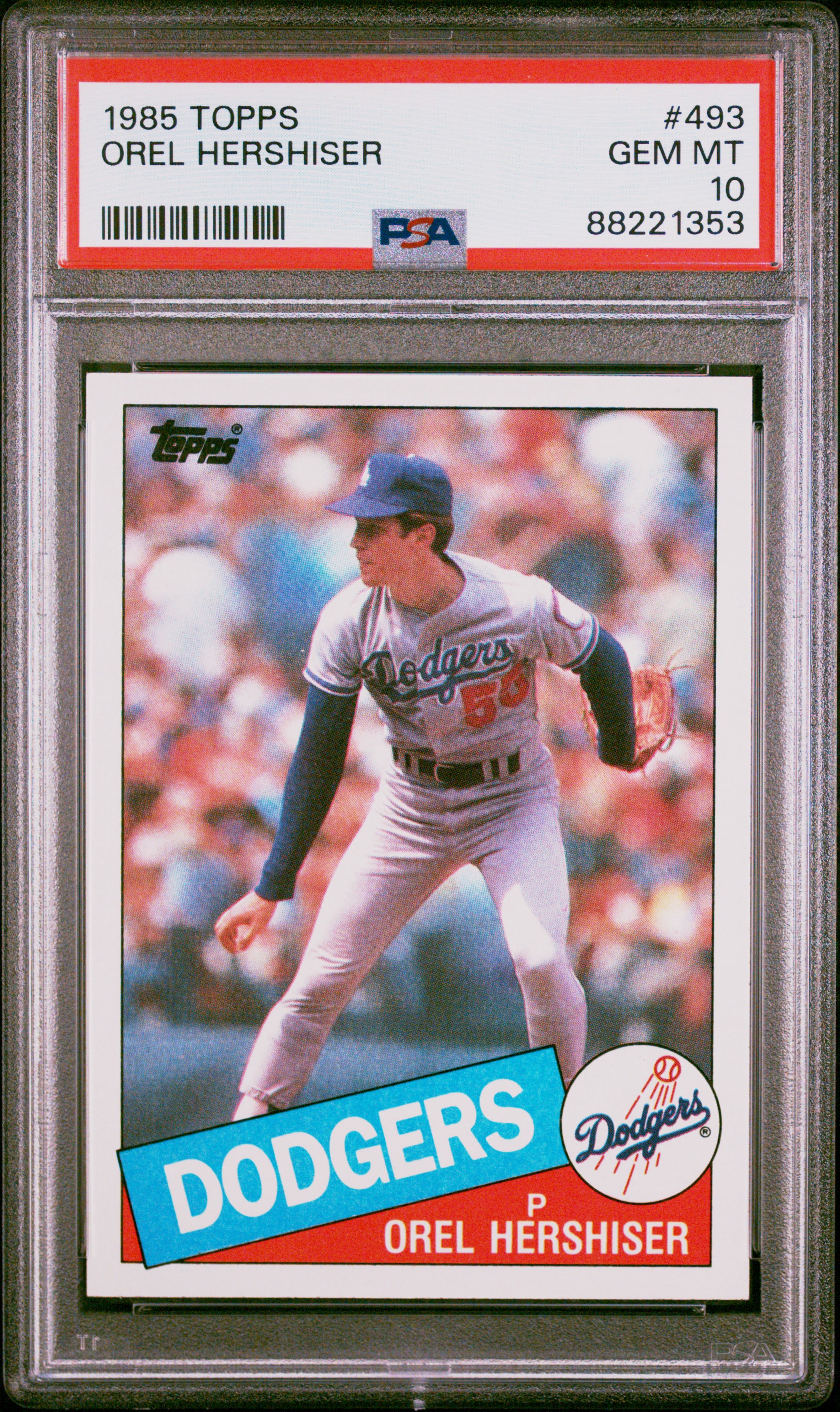
Rookie cards are the holy grails of baseball card collecting, the first tangible link between a player’s raw potential and their eventual legacy. For Orel Hershiser, whose career spanned 18 seasons and included a World Series MVP in 1988, his rookie cards are more than just cardboard—they’re time capsules. The 1985 Topps #493 and 1985 Fleer #371 are the two most coveted cards from his debut year, each offering a different snapshot of the pitcher’s early promise. The Topps card, with its classic design and bold colors, feels like a vintage Polaroid of Hershiser in his prime, while the Fleer card captures a grittier, more candid moment, as if the photographer caught him mid-windup.
But here’s the rub: not all rookie cards are created equal. The market for Hershiser’s cards is a labyrinth of condition, scarcity, and nostalgia. A PSA 10 Gem Mint Topps card can fetch upwards of $500, while a lower-grade version might languish in a shoebox. The Fleer card, often overshadowed by Topps’ dominance, can be a sleeper pick for collectors who appreciate its understated charm. The question isn’t just about value—it’s about whether these cards are worth the investment, or if they’re merely sentimental tokens for die-hard fans.
Condition and Scarcity: The Double-Edged Sword of Card Grading
Grading is the great equalizer in the baseball card world, a system that turns chaos into order—or at least tries to. For Orel Hershiser’s rookie cards, condition is everything. A card that’s been tucked into a bike spoke or left to bake on a dashboard will never command the same respect as one that’s been tucked into a penny sleeve and stored in a temperature-controlled closet. The difference between a PSA 7 and a PSA 9 isn’t just a few points—it’s the difference between a card that’s merely collectible and one that’s a blue-chip asset.
Scarcity adds another layer of complexity. The 1985 Topps set is one of the most widely distributed in history, which means high-grade copies of Hershiser’s card are more common than, say, a 1952 Mickey Mantle. The Fleer set, on the other hand, is a different beast entirely. Printed in smaller quantities and often overlooked by casual collectors, the 1985 Fleer #371 is a rare bird in the wild. For those willing to hunt, it could be the kind of card that appreciates quietly over time, like a fine wine that’s been stored in the right cellar.
Market Trends: Are Hershiser’s Cards a Steal or a Stumble?
The baseball card market is a fickle beast, swayed by trends, player legacies, and the whims of collectors. Orel Hershiser’s rookie cards have seen their share of ups and downs. In the late 2010s, as vintage cards surged in popularity, Hershiser’s cards rode the wave, with prices climbing steadily. But as the market cools and new players enter the fray, the question remains: are these cards still a smart buy, or are they overpriced relics of a nostalgia-fueled bubble?
One factor working in Hershiser’s favor is his Hall of Fame status. Inducted in 2019, his legacy is secure, and that luster rubs off on his cards. Collectors who want a piece of history—something tangible that connects them to the golden age of baseball—often turn to rookie cards like his. But here’s the twist: Hershiser’s peak was so meteoric that his rookie cards might not fully capture his greatness. Unlike a Derek Jeter or a Mike Trout, whose rookie cards feel like the start of something epic, Hershiser’s early cards are more like the calm before the storm. That could make them a tougher sell to casual collectors who crave instant iconography.
The Wildcard: Autographed and Parallel Cards
For those looking to add a twist to their Hershiser collection, autographed and parallel cards offer a tantalizing alternative. A signed rookie card, especially one authenticated by a reputable grading company, can command a premium. The problem? Hershiser’s autographs aren’t as plentiful as those of other stars, which drives up demand—and prices. A PSA 10 autographed Topps card can easily fetch $1,000 or more, making it a high-stakes gamble for collectors.

Parallel cards, those shimmering variants with unique borders or color schemes, are another rabbit hole to explore. Hershiser’s parallels—like the Topps Tiffany or Fleer Ultra versions—are often overlooked but can be surprisingly affordable. They’re the kind of cards that appeal to collectors who love the chase, the thrill of finding something rare without breaking the bank. The catch? Their value appreciation is less predictable, making them a gamble for investors.
Is It a Hidden Gem or Just a Pretty Face?
So, where does that leave us? Are Orel Hershiser’s rookie cards a hidden gem, waiting to be discovered by the next generation of collectors, or are they just another overhyped piece of cardboard? The answer depends on what you’re looking for. If you’re a fan of the Bulldog’s legacy, if you love the idea of owning a piece of 1980s baseball history, then these cards are worth every penny. They’re not just investments; they’re talismans, objects that carry the weight of a player’s greatest achievements.
But if you’re an investor looking for the next big thing, you might want to tread carefully. Hershiser’s rookie cards are solid, but they’re not the kind of cards that double in value overnight. They’re more like a steady hand in a volatile market, a safe bet for those who appreciate the art of collecting over the thrill of quick profits. The real gem here might not be the card itself, but the stories it tells—the memories of a pitcher who defied expectations, who turned a humble rookie card into a symbol of perseverance.
In the end, Orel Hershiser’s rookie cards are what you make of them. They’re a bridge between the past and the present, a reminder that even in a world of digital highlights and instant replays, there’s still magic in a piece of cardboard. Whether you’re a collector, an investor, or just a fan of the game, these cards offer something rare: a connection to a player who made his mark not just on the field, but in the hearts of those who watched him pitch.