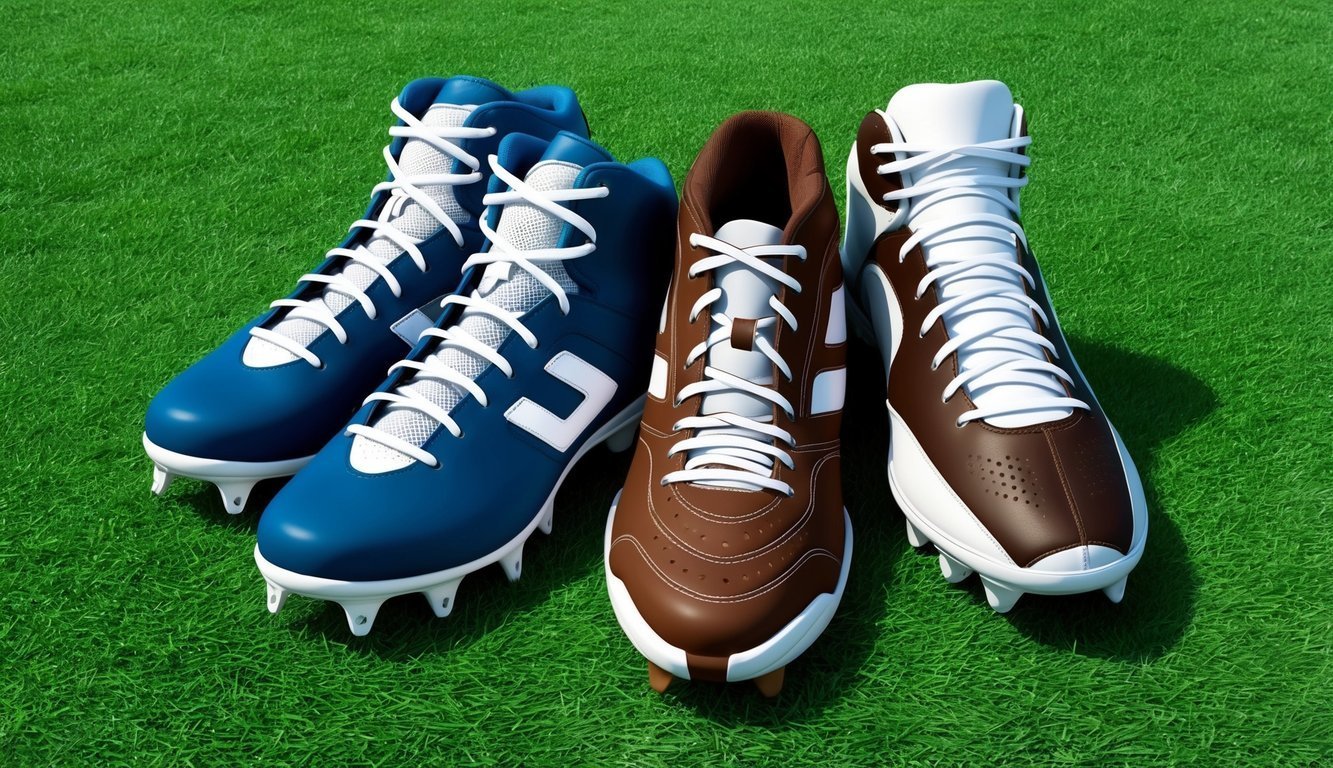
In the high-stakes world of sports footwear, few debates ignite as much passion as the clash between football cleats and baseball cleats. These specialized shoes are not merely accessories; they are the unsung heroes of performance, dictating traction, agility, and safety on the field. Whether you’re a gridiron gladiator sprinting down the sideline or a diamond dynamo rounding third base, the wrong cleats can turn a game-changing play into a career-threatening misstep. This guide dives deep into the nuances that separate these two titans of turf, equipping players with the knowledge to make an informed choice that elevates their game.
The Anatomy of a Cleat: Decoding the Engineering Behind Performance
At first glance, football and baseball cleats may appear interchangeable, but their internal architecture tells a different story. Football cleats are engineered for explosive, multidirectional movements, featuring a sturdier toe cap and a higher cut to provide ankle support during collisions and sudden pivots. Baseball cleats, on the other hand, prioritize lightweight flexibility, with a lower profile to enhance speed and a design that accommodates the repetitive, linear strides of base running. The cleat patterns themselves are a study in specialization: football cleats boast a mix of conical and bladed studs to grip grass and turf, while baseball cleats often feature a single, elongated front cleat for digging into dirt and a series of smaller, angled cleats for lateral stability. Understanding these distinctions is the first step toward unlocking peak performance.
Traction and Grip: The Silent Architects of Victory
Traction is the invisible force that separates the extraordinary from the mediocre. Football cleats are designed to conquer the unpredictable surfaces of artificial turf and natural grass, where sudden stops and explosive starts are par for the course. Their stud configuration—often a blend of short, dense cleats and longer, strategically placed spikes—ensures maximum grip without sacrificing mobility. Baseball cleats, however, are tailored for the nuanced demands of the diamond. The front cleat, typically a single, elongated spike, digs into the batter’s box, providing the leverage needed for a powerful swing. Meanwhile, the lateral cleats prevent skidding during quick turns, a critical factor for infielders and outfielders alike. Choosing the wrong cleat for the surface can result in a loss of traction, turning a routine play into a costly error.
Weight and Agility: The Delicate Balance of Speed and Stability
The weight of a cleat is a double-edged sword: too heavy, and you’re weighed down like an anchor; too light, and you risk instability. Football cleats lean toward the heavier side, with reinforced materials to withstand the brutal collisions and high-impact plays that define the sport. This added weight provides a sense of security, but it can also hinder quick lateral movements. Baseball cleats, conversely, are featherlight by design, crafted from advanced synthetics and mesh to shave off every unnecessary ounce. This minimalist approach allows players to accelerate with blistering speed, whether stealing a base or chasing down a fly ball. The trade-off? Less protection in high-contact situations. Players must weigh their priorities: brute force or lightning-fast agility.
Position-Specific Considerations: Tailoring Cleats to the Role
Not all cleats are created equal, and neither are the positions they serve. A lineman’s cleats are built like tanks, with reinforced soles to withstand the relentless push-and-pull of the trenches. Meanwhile, a wide receiver’s cleats are optimized for sudden bursts of speed, with a focus on lightweight construction and responsive traction. Baseball players face a similar spectrum of specialization. Pitchers benefit from cleats with extra arch support to maintain balance during their windup, while middle infielders require cleats with a low, snug fit to facilitate quick direction changes. Outfielders, often the fleetest of foot, gravitate toward cleats that prioritize speed and comfort over brute durability. Recognizing these subtleties ensures that each player can step onto the field with confidence, knowing their footwear is an extension of their skill set.
Material Matters: From Leather to Synthetics
The evolution of cleat materials has revolutionized performance, blending durability with comfort. Traditional leather cleats, once the gold standard, are now reserved for purists who value their natural feel and break-in period. Modern synthetic cleats, however, offer unparalleled water resistance and lightweight support, making them a favorite among players who demand consistency in all weather conditions. Hybrid models, which combine leather uppers with synthetic overlays, strike a balance between tradition and innovation. The choice of material can also influence breathability—a critical factor for players who log long hours on the field. While leather molds to the foot over time, synthetics provide a more immediate, snug fit. Understanding these material differences empowers players to select cleats that align with their playing style and environmental demands.
Weather and Surface Adaptations: Cleats for Every Condition
The elements are an unpredictable adversary, and cleats must rise to the challenge. Football cleats designed for wet conditions feature deeper, more aggressive cleat patterns to channel away moisture and prevent slippage. In contrast, baseball cleats for dry, hard-packed infields often have shallower cleats to avoid unnecessary drag. Some cleats even incorporate removable studs, allowing players to adapt to shifting field conditions mid-game. The surface itself plays a pivotal role: artificial turf demands cleats with shorter, more numerous studs to prevent excessive wear, while natural grass benefits from longer cleats that dig in for maximum grip. Players who compete across multiple surfaces must invest in versatile cleats or maintain a rotation to ensure optimal performance.
Injury Prevention and Long-Term Foot Health
Beyond performance, cleats play a crucial role in safeguarding a player’s most valuable asset—their body. Poorly fitted cleats can lead to blisters, sprains, and even chronic conditions like plantar fasciitis. Football cleats, with their higher ankle collars, reduce the risk of sprains but can restrict circulation if too tight. Baseball cleats, with their lower profile, offer greater freedom of movement but leave ankles more vulnerable to twists. Orthotic inserts and custom insoles can provide additional support, particularly for players with preexisting foot conditions. Regularly inspecting cleats for wear and tear is also essential, as worn-down studs can compromise traction and increase the risk of injury. Investing in high-quality cleats and maintaining them properly is an investment in a player’s longevity and career.
The Future of Cleat Technology: Innovations on the Horizon
The arms race of cleat technology shows no signs of slowing down. Emerging materials like graphene-infused synthetics promise unparalleled strength-to-weight ratios, while 3D-printed cleats offer bespoke fits tailored to an individual’s biomechanics. Smart cleats, equipped with embedded sensors, are already being tested to provide real-time feedback on impact forces and gait analysis. These innovations hint at a future where cleats are not just tools but intelligent partners in performance optimization. As the boundaries of design and engineering continue to expand, players can look forward to footwear that not only meets the demands of their sport but anticipates them.