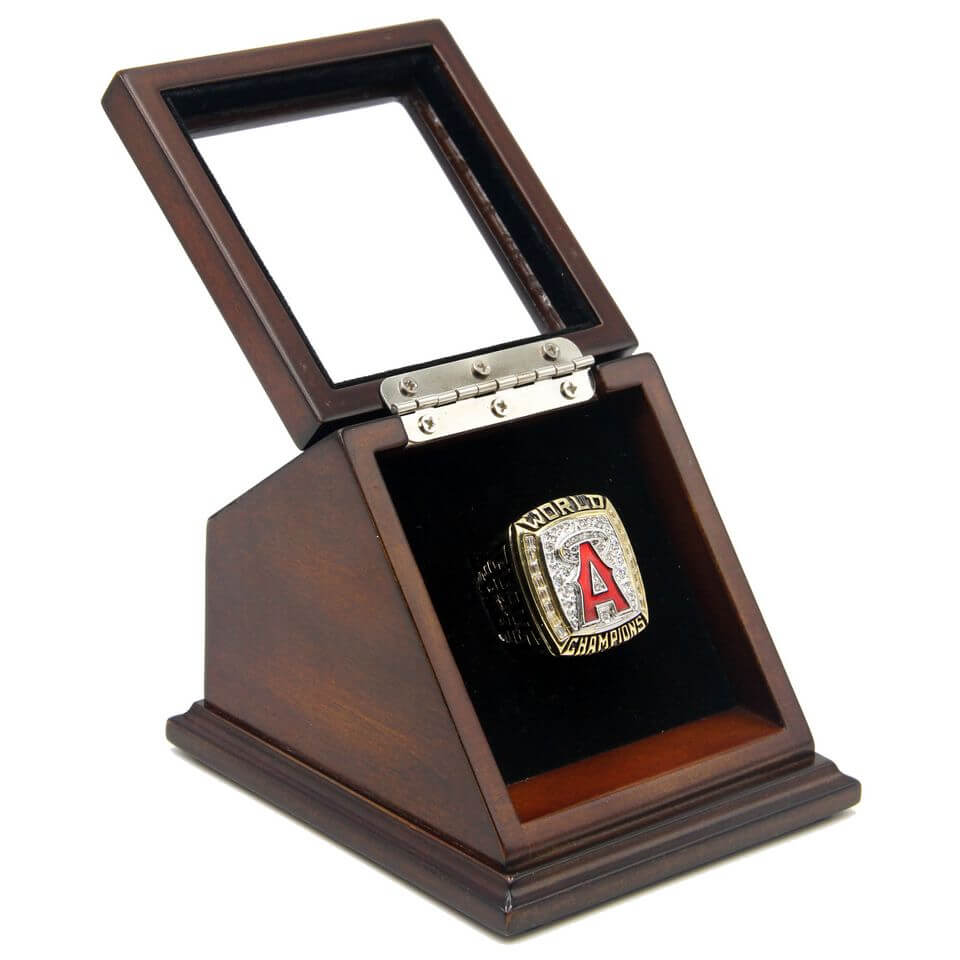
The 2002 Los Angeles Angels of Anaheim were not supposed to win the World Series. Not by the book, not by the odds, and certainly not by the expectations of a baseball world that had long since crowned its own kings. Yet, against the backdrop of a sport steeped in tradition and predictability, this team emerged as an improbable force—a squad of underdogs who rewrote the narrative of what it meant to be champions. Their journey was less a march and more a symphony of resilience, strategy, and sheer audacity, culminating in a victory that would echo through the annals of the game. To understand how this team defied gravity, one must first peel back the layers of their composition, their challenges, and the moments that defined their improbable rise.
The Underdog Alchemy: How a Team of Role Players Became Legends
At first glance, the 2002 Angels were a team of misfits—players who had been overlooked, undervalued, or dismissed as afterthoughts. The roster was a patchwork of talent, stitched together by a front office that dared to see potential where others saw limitations. Names like Tim Salmon, Scott Spiezio, and Darin Erstad were not household words in the way that Barry Bonds or Alex Rodriguez were. Yet, it was precisely this lack of star power that became their greatest strength. The Angels thrived on chemistry, a rare alchemy that transformed a collection of individuals into a cohesive unit.
Their offense was a masterclass in situational hitting, where sacrifice flies and stolen bases mattered as much as home runs. The pitching staff, led by the unassuming but dominant Jarrod Washburn and the enigmatic Ramon Ortiz, operated with a precision that belied their modest reputations. Even the bullpen, anchored by the towering figure of Troy Percival, became a fortress in the late innings. This was not a team built on superstars but on the quiet efficiency of players who understood their roles and executed them flawlessly.
The Manager’s Gambit: Mike Scioscia’s Blueprint for Success
Mike Scioscia, the former All-Star catcher turned manager, was the architect of this improbable triumph. His leadership style was a blend of old-school discipline and innovative thinking, a combination that allowed the Angels to thrive in an era dominated by analytics and power pitching. Scioscia’s ability to manage a pitching staff that lacked a true ace was nothing short of remarkable. He leveraged matchups, trusted his bullpen, and instilled a sense of belief that permeated the clubhouse.
Scioscia’s most audacious move may have been his decision to platoon Garret Anderson and Tim Salmon in the outfield, a strategy that maximized both players’ strengths while keeping their bats in the lineup. This unconventional approach extended to the bench, where players like Bengie Molina and Jose Molina became unsung heroes, their defensive prowess and clutch hitting often the difference in tight games. Scioscia’s genius lay in his refusal to be bound by convention, a trait that would define the Angels’ entire postseason run.
The Postseason Odyssey: A Series of Near-Disasters and Triumphant Escapes
The Angels’ path to the World Series was anything but smooth. In the American League Division Series against the New York Yankees, they found themselves on the brink of elimination after losing the first two games. Yet, they rallied to win three straight, including a dramatic Game 5 victory in which they erased a 6-0 deficit in the seventh inning. This resilience became their trademark—a team that refused to accept defeat, no matter the odds.
Their next obstacle was the Minnesota Twins in the American League Championship Series. The Twins, a team that had shocked the baseball world by defeating the Oakland Athletics, pushed the Angels to the brink once again. In Game 6, the Angels faced elimination, trailing by a run in the ninth inning. With one swing, Scott Spiezio’s three-run homer turned the tide, sending the Angels to the World Series. The image of Spiezio’s bat connecting with the ball, the roar of the crowd, and the sheer improbability of the moment became etched in baseball lore.
The World Series Showdown: A Battle Against the Giants and the Weight of History
The Giants, led by the indomitable Barry Bonds, were heavy favorites. Bonds, fresh off a season in which he shattered the single-season home run record, was the most feared hitter in the game. The Angels, meanwhile, were dismissed as a fluke, a team that had lucked into their success. Yet, the World Series would prove to be a clash of ideologies—power versus precision, tradition versus innovation.
The series opened in Anaheim, where the Angels’ home-field advantage became a psychological weapon. Game 1 saw them ride a wave of momentum, defeating the Giants 4-3 in a game that featured a late-inning rally sparked by a David Eckstein single. The momentum carried into Game 2, where they took a commanding 2-0 lead in the series. The Giants, however, fought back, winning the next three games to take a seemingly insurmountable 3-2 series lead.
What followed was one of the most dramatic comebacks in World Series history. In Game 6, the Angels faced elimination once more. Trailing by a run in the seventh inning, they rallied to tie the game on a Bengie Molina RBI single. The game would stretch into extra innings, where Troy Glaus’s solo home run in the 10th inning sealed the victory and forced a decisive Game 7. The stage was set for a finale that would either cement the Angels’ legacy or consign them to the footnotes of history.
The Final Act: A Championship Forged in the Fire of Adversity
Game 7 was a microcosm of the Angels’ entire season—a game of inches, where every play mattered and every decision carried weight. The Giants struck first, but the Angels answered with a run of their own in the third inning, thanks to a crucial two-run single by Troy Glaus. The game remained tight, a chess match between two evenly matched teams. In the eighth inning, with the Angels clinging to a one-run lead, Troy Percival struck out David Bell to preserve the victory and send the Angels into a frenzied celebration.
The image of the Angels storming the field, their jerseys drenched in champagne and joy, became the defining moment of their championship run. They had not just won a World Series; they had redefined what it meant to be a champion. Their victory was a testament to the power of belief, the importance of chemistry, and the audacity to defy expectations.
The Legacy of the 2002 Angels: A Team That Changed the Game
The 2002 Los Angeles Angels of Anaheim were more than just a team that won a World Series. They were a cultural phenomenon, a group of players who proved that heart and hustle could triumph over hype and pedigree. Their legacy extended beyond the field, inspiring a generation of underdogs to believe in the impossible. In an era where baseball was increasingly dominated by analytics and power, the Angels reminded the world of the beauty of the game’s intangibles.
Years later, their championship remains a touchstone for fans who remember the sheer joy of watching a team defy the odds. It was a reminder that in baseball, as in life, the most improbable stories are often the ones that resonate the deepest. The 2002 Angels did not just win a title; they won the hearts of a city and left an indelible mark on the game.