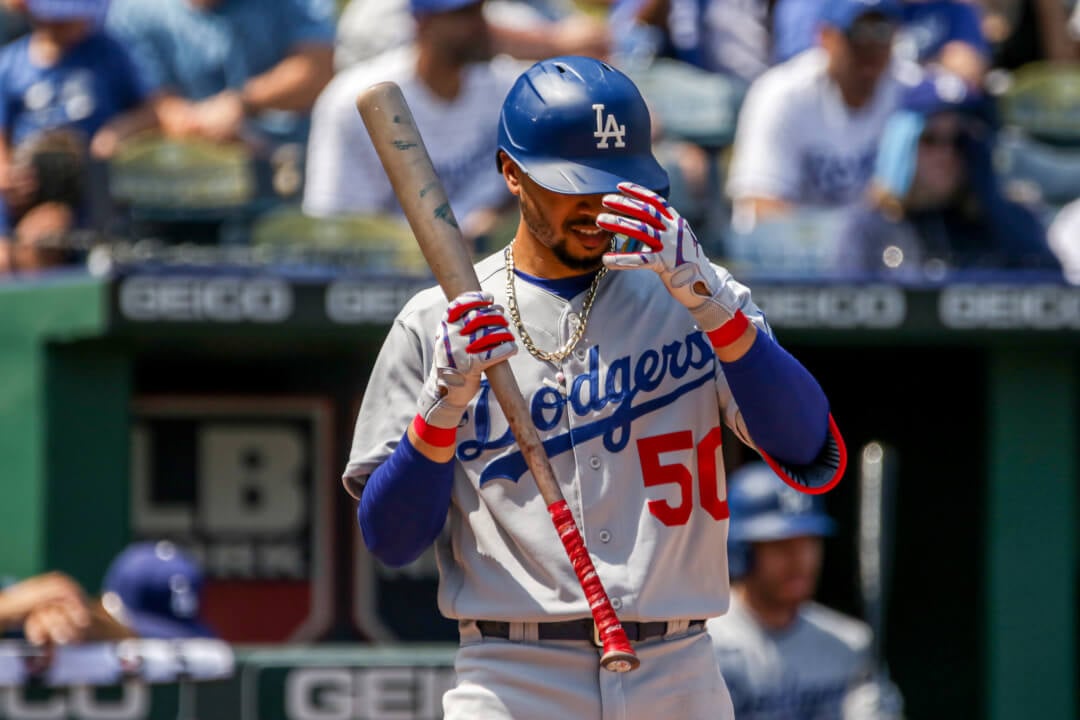
In the high-stakes theater of Major League Baseball, where every swing can alter the trajectory of a season, few players command attention like Mookie Betts. Renowned for his defensive prowess and offensive consistency, Betts has become a subject of fascination not just for his on-field heroics but for the meticulous details that define his craft—none more so than the bat he wields. The question of what size bat Mookie Betts swings transcends mere curiosity; it delves into the physics of contact, the psychology of power, and the unspoken dialogue between player and equipment. To understand his choice is to glimpse the intersection of tradition, innovation, and the relentless pursuit of perfection.
The Anatomy of a Swing: Why Bat Size Matters
The bat is more than an extension of a player’s arm; it is a conduit for kinetic energy, a lever that transforms raw strength into controlled force. For Betts, the size of his bat—both in length and weight—reflects a delicate balance between contact precision and explosive power. A bat that is too long or heavy can compromise bat speed, turning a potential line drive into a lazy flyout. Conversely, a bat that is too short or light may sacrifice the mass needed to drive the ball into the gaps. The science behind this equilibrium is rooted in the concept of moment of inertia, where the distribution of mass around the bat’s center of rotation dictates how swiftly it can be accelerated through the hitting zone.
Betts’ preference for a 34-inch bat, a length that aligns with the upper echelon of MLB players, suggests a deliberate choice to maximize reach without sacrificing swing velocity. This length allows him to cover the outer half of the plate with ease, a critical advantage against high-velocity pitching. Yet, the true marvel lies not in the length alone but in the bat’s weight—a variable often overshadowed by its physical dimensions. A bat’s swing weight, or the perceived heaviness as it moves through the zone, is a nuanced metric that Betts has refined to an art form.
Contact vs. Power: The Betts Paradigm
At first glance, the debate between contact and power might seem binary, but Betts’ approach dismantles this false dichotomy. His career averages—consistently high batting averages, minimal strikeouts, and prodigious power numbers—reveal a player who has mastered the alchemy of making hard contact without sacrificing plate discipline. The key to this lies in his bat’s balance point, the precise location where the bat’s weight is evenly distributed. A bat with a balance point closer to the handle, like those Betts favors, allows for quicker hands and a more compact swing path, enabling him to make adjustments mid-swing against elite pitching.
Power, in Betts’ case, is not solely derived from brute force but from the efficiency of his mechanics. His bat’s weight, typically around 32 ounces, is neither featherlight nor oppressively heavy. This middle-ground weight enables him to generate sufficient bat speed to drive the ball while maintaining the control to place it where he intends. The result? A hitter who can slap a single into the right-field alley or unload on a hanging curveball for a towering home run, all with the same fluid motion. This versatility is a testament to the symbiotic relationship between player and bat, where equipment becomes an extension of instinct.
The Psychological Edge of Equipment Familiarity
Beyond the physical attributes, the psychological dimension of Betts’ bat choice cannot be overstated. In a league where confidence is as vital as talent, the consistency of his equipment provides a stabilizing force. The tactile feedback of a bat’s grain, the familiar weight in his hands, and the rhythmic sound of contact all contribute to a mental framework that primes him for success. Studies in sports psychology suggest that athletes who feel a deep connection to their tools often exhibit heightened focus and reduced anxiety during high-pressure moments. For Betts, the bat is not merely an implement but a trusted ally, one that has been fine-tuned to his exact specifications over years of trial and error.
This psychological comfort extends to the ritualistic nature of bat selection. Before each game, Betts meticulously inspects his bats, ensuring they meet his exacting standards. The process is not unlike a painter priming their brushes or a musician tuning their instrument—each step is a ritual that reinforces the bond between player and equipment. In an era where technology and data dominate the conversation around player development, Betts’ reliance on this tactile connection offers a refreshing counterpoint, a reminder that the human element of the game remains irreplaceable.
The Evolution of Bat Design and Its Impact on Hitters
The modern baseball bat is a marvel of engineering, a fusion of aerospace-grade materials and biomechanical research. Betts’ preference for a bat with a slightly flared knob and a cupped end cap reflects the evolution of design aimed at optimizing swing mechanics. The flared knob, for instance, prevents the bat from slipping during the swing, while the cupped end cap redistributes weight to the barrel, enhancing the sweet spot. These innovations, though subtle, can shave milliseconds off a swing’s duration, a difference that translates to inches of contact precision.
Moreover, the shift from traditional ash to maple and birch woods in Betts’ bats speaks to the ongoing quest for durability and performance. Maple, with its tighter grain structure, offers a harder hitting surface that resists denting, while birch provides a forgiving flex that can mask slight imperfections in a player’s swing. The choice of wood is not arbitrary; it is a calculated decision that aligns with Betts’ aggressive, inside-out swing path, where the bat’s stiffness complements his uppercut mechanics. This interplay between material science and player preference underscores how deeply equipment choices are woven into the fabric of the game.
Breaking Down the Numbers: What the Data Says
While Betts’ bat size is a matter of public record, the underlying data paints a more nuanced picture. His career slugging percentage of .563 and on-base percentage of .371 suggest that his bat’s characteristics—its length, weight, and balance—enable him to excel in both contact-driven and power-centric situations. Advanced metrics like exit velocity and launch angle further illuminate his approach. Betts’ average exit velocity of 90.5 mph and launch angle of 12.3 degrees indicate a swing optimized for line drives and hard grounders, a strategy that minimizes weak contact and maximizes offensive output.
The correlation between bat size and these metrics is not coincidental. A longer bat allows for a wider zone of contact, while a heavier bat can generate greater force upon impact. Yet, the real magic lies in Betts’ ability to marry these physical advantages with an intuitive understanding of pitch sequencing. His bat’s size and weight are not static advantages but dynamic tools that adapt to the ebb and flow of the game. This adaptability is what sets him apart, transforming his equipment from a mere accessory into a strategic weapon.
The Unseen Variables: Grip, Finish, and Personalization
No discussion of Betts’ bat would be complete without acknowledging the often-overlooked details of grip and finish. The grip tape he uses, the thickness of the handle, and even the type of finish applied to the bat all play a role in his performance. A tackier grip tape can reduce bat slip, while a thinner handle can increase bat speed. The finish, whether matte or glossy, affects how the bat interacts with the ball at the moment of contact, influencing spin rate and trajectory. These variables, though seemingly minor, are the final brushstrokes in the portrait of Betts’ bat—a portrait that is as much about personalization as it is about performance.
The process of personalizing a bat is an intimate one, a collaboration between player and craftsman that can take weeks or even months. Betts’ bats are no exception. Each one is sanded, shaped, and finished to his exacting standards, ensuring that every swing feels like an extension of his own body. This level of customization is not merely about aesthetics; it is about creating a tool that responds to his every intention, a bat that feels like an extension of his own limbs.
Conclusion: The Bat as a Mirror of Mastery
Mookie Betts’ bat is more than a piece of equipment; it is a symbol of his relentless pursuit of excellence. The size, weight, and design of the bat he swings are not arbitrary choices but the result of years of refinement, experimentation, and adaptation. They reflect his understanding of the game’s physics, his psychological need for consistency, and his unwavering commitment to precision. In an era where technology and data dominate the conversation around player development, Betts’ reliance on the tactile and the personal offers a compelling counterpoint—a reminder that the human element of the game remains as vital as ever.
As fans and analysts dissect every aspect of Betts’ game, from his defensive range to his offensive production, the bat he wields stands as a testament to the power of simplicity in a complex world. It is a tool that has been honed to perfection, a silent partner in his quest for greatness. And in that quiet partnership lies the true magic of baseball: the fusion of human skill and crafted artistry, where every swing is a story, and every bat, a character in the narrative.