Ever watched a pitcher rear back and unleash a pitch that seems to defy physics, leaving hitters swinging at thin air? That, my friends, is the slider—a pitch so deceptive it’s earned the nickname “the nastiest” in baseball. But what does a slider pitch actually look like? More importantly, how does it dance past batters with such sinister grace? Buckle up, because we’re diving into the mechanics, the deception, and the sheer audacity of this pitch that’s baffled hitters for generations.
The Slider’s Signature: A Pitch That Lies Like a Politician
A slider isn’t just a fastball with a haircut—it’s a pitch that splits the difference between velocity and movement, a hybrid of deception and brute force. Visually, it begins like any other pitch: the pitcher grips the ball with a firm, slightly off-center hold, fingers tucked just so to impart spin. But here’s where the magic happens. As the ball leaves the hand, it’s not just a straight line to the plate—it’s a bullet with a side hustle. The spin axis tilts, creating a late-breaking movement that sends the ball darting away from the hitter’s bat like a greased pig at a county fair.
The key to its visual identity? The late break. Unlike a curveball, which starts high and dives, or a fastball that stays true, the slider appears to hang in the zone before suddenly veering off course. Hitters swear it’s moving sideways, as if the baseball itself has developed a personal vendetta against their swing path. This is the slider’s calling card: a pitch that looks hittable until it isn’t, a masterclass in misdirection.
The Grip: Where the Magic Starts (And Your Fingers Might Blister)
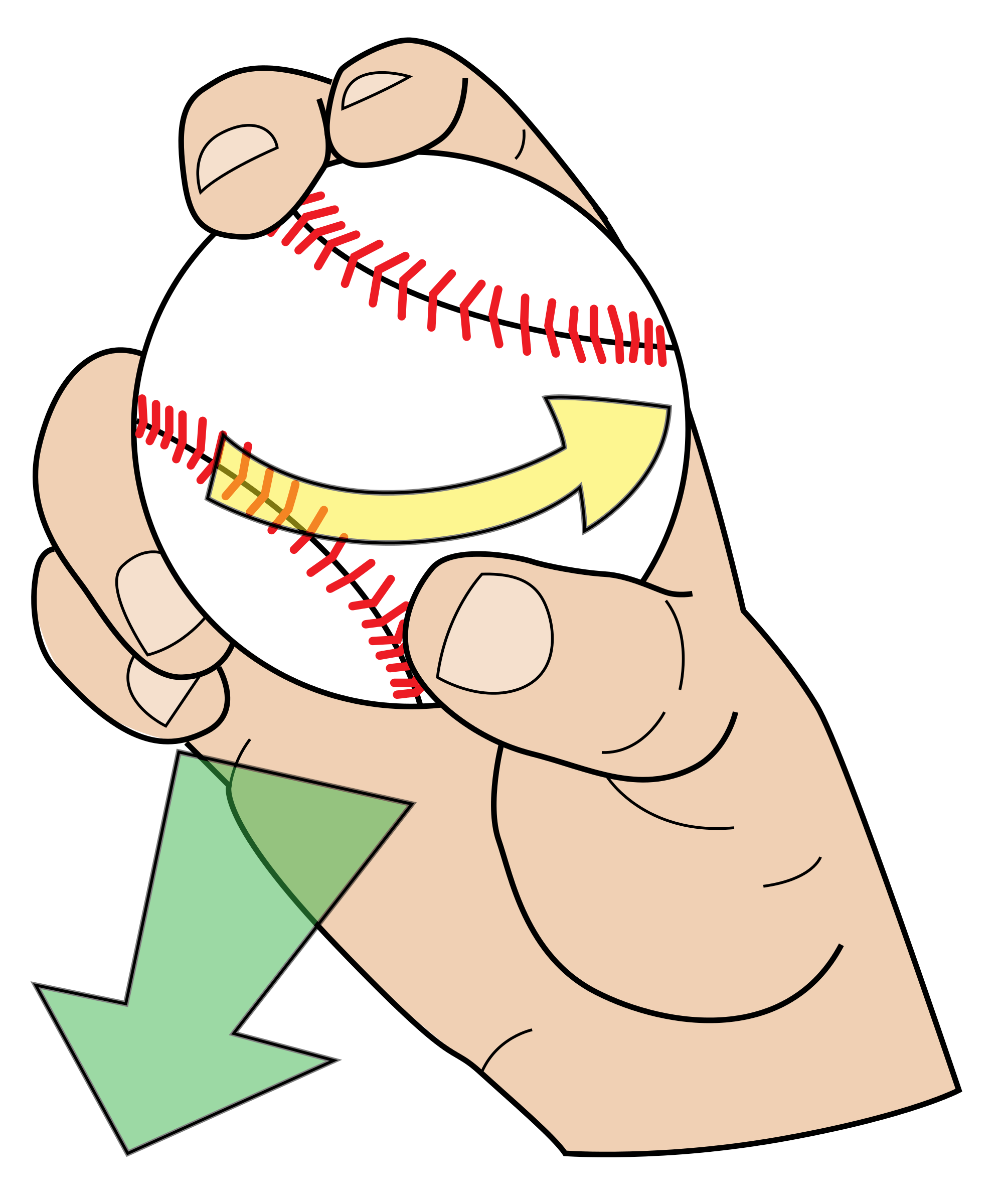
If the slider were a spell, its incantation would be the grip. Unlike the straightforward four-seam fastball or the loopy curveball, the slider demands a precise, almost surgical hold. Most pitchers use a variation of the “slider grip,” where the index and middle fingers are placed slightly off-center, with the thumb providing counterbalance. The goal? To create a tight, gyroscopic spin that generates that signature horizontal break.
But here’s the catch: the grip isn’t one-size-fits-all. Some pitchers favor a tighter grip for more break, while others loosen up for extra velocity. The pressure must be just right—too loose, and the pitch floats like a lazy pop fly. Too tight, and it becomes a slurve (a hybrid of slider and curveball), losing its identity entirely. It’s a Goldilocks scenario: the grip must be *just right* to produce that devilish movement.
Pro tip: Watch a pitcher’s hand as they release the ball. If you see their fingers “pull” down the side of the ball, that’s the telltale sign of a slider in motion. It’s like watching a magician’s sleight of hand—except the trick is real, and the batters are the ones getting fooled.
The Physics of Deception: Why Hitters Can’t Resist Swiping
At its core, the slider is a pitch of contradictions. It’s fast enough to make a hitter think they can time it, but slow enough to give the break time to work its voodoo. The average slider clocks in around 80-90 mph, a speed that lulls hitters into a false sense of security. They see the velocity, assume it’s a fastball, and commit to the swing—only for the ball to dart out of the zone at the last second.
But the real villain here is the spin rate. A slider generates a high spin rate (often over 2,500 RPM), which creates a Magnus force that pushes the ball sideways. The late break is the coup de grâce. Hitters, trained to track fastballs that stay straight, are caught flat-footed as the slider peels away. It’s like trying to catch a greased pig—just when you think you’ve got it, it’s gone.
Even the best hitters fall for it. The slider’s deception is so effective that it’s one of the most common pitches to result in swinging strikes. In fact, some of the game’s most dominant pitchers—think Clayton Kershaw or Corey Kluber—built their reputations on a slider that looks like a fastball until it’s too late.
The Slider vs. The Curveball: A Sibling Rivalry in the Mound
If the slider is the sly trickster, the curveball is its dramatic older sibling. Both pitches rely on spin to create movement, but their approaches couldn’t be more different. The curveball is the showboat—it starts high, drops like a stone, and leaves hitters flailing at air. The slider, meanwhile, is the silent assassin. It doesn’t need to drop; it just needs to move sideways, like a knife slipping between ribs.
Where the curveball is a pitch of power and drama, the slider is a pitch of precision and subtlety. A curveball might be thrown at 70 mph with a 12-to-6 break, while a slider could be 85 mph with a 3-to-9 break. The curveball is the grand illusion; the slider is the sleight of hand. Both are effective, but the slider’s ability to mimic a fastball before breaking makes it uniquely deadly.
Some pitchers even blend the two, throwing a “slurve” that combines the best (or worst) of both worlds. But purists will tell you: the slider stands alone. It doesn’t need to drop. It just needs to lie.
The Art of Hitting a Slider: A Fool’s Errand?
Hitting a slider is like trying to solve a Rubik’s Cube blindfolded. The best hitters in the game will tell you: you don’t hit a slider. You hope to foul it off or hope the umpire calls it a ball. The pitch is designed to be swung at and missed, to turn a hitter’s aggression against them.
So how do you hit one? The short answer: you don’t. The long answer? You shorten your swing, recognize the spin early, and pray the pitch stays in the zone long enough to make contact. Even then, a well-placed slider is often a called strike or a weak ground ball. It’s the ultimate test of a hitter’s discipline—and most fail.
That’s why pitchers love it. The slider is the ultimate weapon in their arsenal, a pitch that forces hitters into a no-win scenario. Swing, and you might miss. Don’t swing, and the umpire might ring you up. It’s a pitch that turns the game into a psychological chess match, where the pitcher holds all the cards.
Why the Slider Rules the Modern Game
In an era where pitchers are throwing harder and hitters are swinging faster, the slider has emerged as the great equalizer. It’s the pitch that keeps hitters honest, the one that forces them to respect the zone. Without it, baseball would be a game of straight fastballs and tape-measure home runs. With it? It’s a chess match played at 90 mph.
Teams that master the slider—whether through analytics, coaching, or sheer brute force—dominate the game. The pitch is a staple in every bullpen, a weapon for starters and relievers alike. It’s the reason why strikeout rates are higher than ever, why no-hitters are becoming more common, and why hitters spend hours in the cage trying to figure it out.
The slider isn’t just a pitch. It’s a philosophy. It’s the embodiment of baseball’s relentless pursuit of deception, a reminder that the game is as much about mind games as it is about athleticism. And if you’re a hitter, it’s the pitch that keeps you up at night, wondering when it’s going to break—and whether you’ll be ready when it does.