There’s a quiet ritual that unfolds in ballparks from Little League fields to the grand stages of the majors—a ritual where numbers and symbols dance across a scorecard like a secret language. It’s the art of baseball scoring, a practice that transforms a chaotic game of speed, strategy, and split-second decisions into a meticulous narrative etched in ink. To the uninitiated, a scorecard might look like hieroglyphics; to the initiated, it’s a living archive of the game’s soul. Yet, despite its elegance, baseball scoring remains one of the sport’s most underappreciated crafts. Why does this seemingly mundane task captivate those who master it? Perhaps because, in those carefully notated boxes, lies the essence of baseball itself: precision within chaos, memory within motion, and storytelling without words.
The Language of the Diamond: Decoding the Symbols
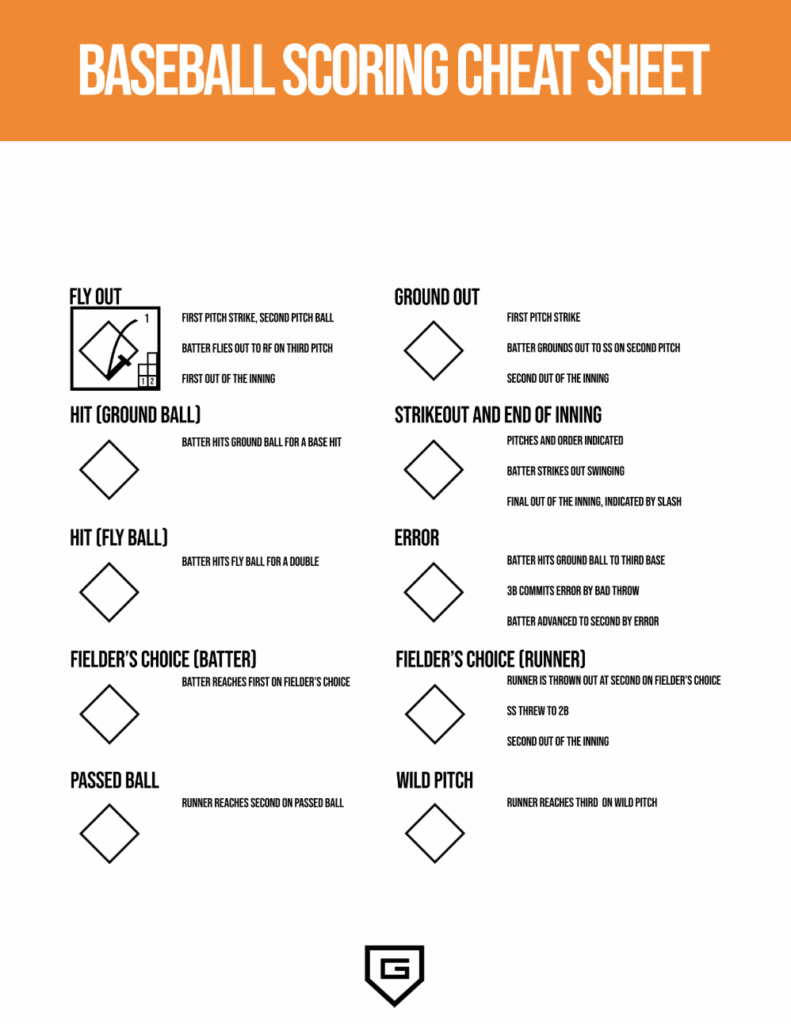
Baseball scoring is not merely about tracking runs and outs; it is about capturing the geometry of the game. Every symbol on a scorecard is a brushstroke in a larger portrait. A simple “K” denotes a strikeout, but it also whispers of a pitcher’s dominance, a batter’s futility, or a duel that stretched deep into the count. A “6-4-3” play isn’t just a sequence of outs—it’s a testament to infield synergy, a ballet of gloves and feet that unfolds in seconds. The symbols—1B for a single, HR for a home run, E5 for an error—are the lexicon of a silent conversation between scorer and game. To learn them is to unlock a door to baseball’s inner sanctum, where every mark tells a story older than the sport itself.
The Scorecard as Time Machine: Preserving Moments in Ink
Consider the scorecard as a temporal artifact. Each game is a fleeting spectacle, a series of moments that vanish into the ether the instant they occur. Yet, the scorer’s pen arrests time. A bloop single that falls just beyond the shortstop’s glove becomes immortalized as a “5-7” hit, its trajectory etched in blue ink. A walk-off grand slam, the climax of a ninth-inning rally, is preserved not just as a run scored but as a “HR 4 RBI,” a shorthand that encapsulates the drama. This preservation is more than nostalgia; it’s a bridge between eras. Flip through the scorecards of Babe Ruth’s era, and the symbols are nearly identical to those used today. In a sport that prides itself on tradition, the scorecard is a thread connecting past and present, a tangible link to the legends who once stood in the same batter’s box.
There’s a peculiar satisfaction in holding a scorecard from a game decades old, its edges frayed, its lines filled with the handwriting of a stranger. It’s a reminder that baseball is not just a game played in the moment but a continuum, a tapestry woven by countless hands over generations. The scorer, in this sense, is both archivist and storyteller, their work ensuring that no play is ever truly forgotten.
The Psychology of the Scorer: Why It’s More Than Numbers
To outsiders, baseball scoring might seem like a mechanical exercise—tallying runs, marking positions, and moving players’ names across a grid. But to those who embrace it, scoring is a psychological exercise, a test of focus and intuition. The scorer must anticipate plays before they happen, predicting whether a ground ball will be fielded cleanly or whether a fly ball will drift just out of reach. This mental agility is what separates the casual observer from the dedicated scorer. It’s a game within the game, a parallel narrative unfolding in the scorer’s mind.
There’s also an element of catharsis in scoring. The act of putting pen to paper slows the frenetic pace of the game, forcing the scorer to pause and reflect. In an era dominated by instant replays and real-time stats, the scorecard offers a rare moment of slowness, a chance to savor the game rather than consume it. It’s a form of mindfulness, a way to engage with baseball on a deeper level. The scorer doesn’t just watch the game; they participate in it, their pencil moving in rhythm with the ebb and flow of play.
From Novice to Virtuoso: Mastering the Craft
Learning to score a baseball game is akin to learning a musical instrument. The beginner starts with the basics—how to mark a strikeout, how to notate a double play—while the virtuoso weaves a symphony of symbols that captures the game’s subtleties. The journey from novice to expert is marked by milestones: the first time you score a complete game without error, the first time you recognize a pitcher’s pattern in the strike zone, the first time you realize that a seemingly random sequence of numbers and letters tells a coherent story.
For those willing to put in the time, the rewards are manifold. Scoring becomes a meditative practice, a way to deepen one’s appreciation for the sport. It also fosters a unique camaraderie among scorers, who share tips, debate notations, and marvel at the beauty of a perfectly scored game. There’s a quiet pride in knowing that your scorecard is a testament to your understanding of the game—a silent badge of honor worn by those who have taken the time to truly *see* baseball.
The Unwritten Rules: Etiquette and Tradition
Baseball scoring is governed not just by the rulebook but by an unwritten code of etiquette. The scorer’s chair is a sacred space, a throne from which the game is observed and recorded. It’s a place of solitude, where distractions are minimized and concentration is paramount. There’s an understanding among scorers that the game must be respected, that the scorecard is not just a personal record but a communal artifact. Sharing a scorecard with a fellow fan is an act of trust, a way to compare notes and celebrate the game together.
There are also traditions that elevate scoring from a hobby to an art form. Some scorers use colored pens to denote different types of plays, while others employ a system of shorthand that’s entirely their own. The most dedicated scorers treat their scorecards like works of art, framing them after the game or preserving them in scrapbooks. These traditions are a testament to the scorer’s passion, a way to honor the game’s history while adding their own chapter to its story.
Why It Matters: The Enduring Allure of Baseball Scoring
In an age where data analytics and real-time updates dominate the conversation around baseball, the art of scoring might seem quaint, even obsolete. But that’s precisely why it endures. Scoring is a rebellion against the cold, impersonal nature of modern sports culture. It’s a return to the fundamentals, a celebration of the game’s tactile and visual elements. There’s a romance in the act of scoring—a romance that speaks to baseball’s soul.
Perhaps the fascination with baseball scoring lies in its paradoxical nature. It is both a science and an art, a mechanical task and a creative endeavor. It is a way to engage with the game on a deeper level, to slow down and truly *see* what’s happening on the field. And in doing so, it reminds us that baseball is more than just a sport. It’s a story, a tradition, and a timeless ritual that connects us to the past while shaping the future.
For those who take up the scorer’s pen, the rewards are not just in the final tally but in the journey itself. Every game is a new canvas, every play a new brushstroke, and every scorecard a masterpiece in the making. That’s the magic of baseball scoring—it transforms the ordinary into the extraordinary, one symbol at a time.