Have you ever held a baseball in your hands and wondered, “Just how heavy is this little sphere of sporting prowess?” It may seem like a trivial question, but the exact weight of a baseball is more than just a number—it’s a finely calibrated element that impacts pitching speed, batting distance, and the very rhythm of America’s pastime. Let us unravel the specifics, challenges, and fascinating nuances behind the weight of a Major League Baseball (MLB) ball.
The Official Weight of an MLB Baseball: Precision in Grams and Ounces
A baseball is deceptively simple in appearance, yet its standardized weight is a product of meticulous regulation. According to the official MLB specifications, a baseball must weigh between 5 and 5.25 ounces (approximately 142 to 149 grams). This narrow margin may seem arbitrary but is instrumental in ensuring consistency across every game. Such precision guarantees that when a pitcher throws a ball at a hundred miles per hour or a batter sends it soaring into the bleachers, the experience remains uniform regardless of venue or teams.
This range reflects a balance wherein the ball is neither too light—risking excessive travel and unrealistic gameplay—nor too heavy, which would detract from velocity and responsiveness. The MLB’s commitment to this standard is key to preserving the integrity and fairness of the sport.
Why Does the Weight Matter? The Subtle Science of Baseball Dynamics
On the surface, five to five and a quarter ounces might sound inconsequential, but this slender weight window profoundly influences the physics of baseball. The weight modulates every crucial aspect: pitch velocity, ball rotation, air resistance, and hitting distance.
When thrown, the weight affects how quickly the ball can be accelerated and how it behaves in flight. A lighter ball would accelerate faster, yet could lack stability, leading to unpredictable trajectories. Conversely, a heavier ball, while stable, would be more difficult to throw at high speed. Hence, the defined weight range is a compromise that ensures pitchers can maximize velocity without compromising control.
Moreover, the impact of weight on spin rate cannot be overstated. Spin affects movement—curveballs, sliders, and fastballs react differently due to the ball’s aerodynamics, which hinge directly on its mass. This interplay of weight and spin crafts the strategic complexity cherished by players and fans alike.
The Composition Behind the Weight: What Is a Baseball Made Of?
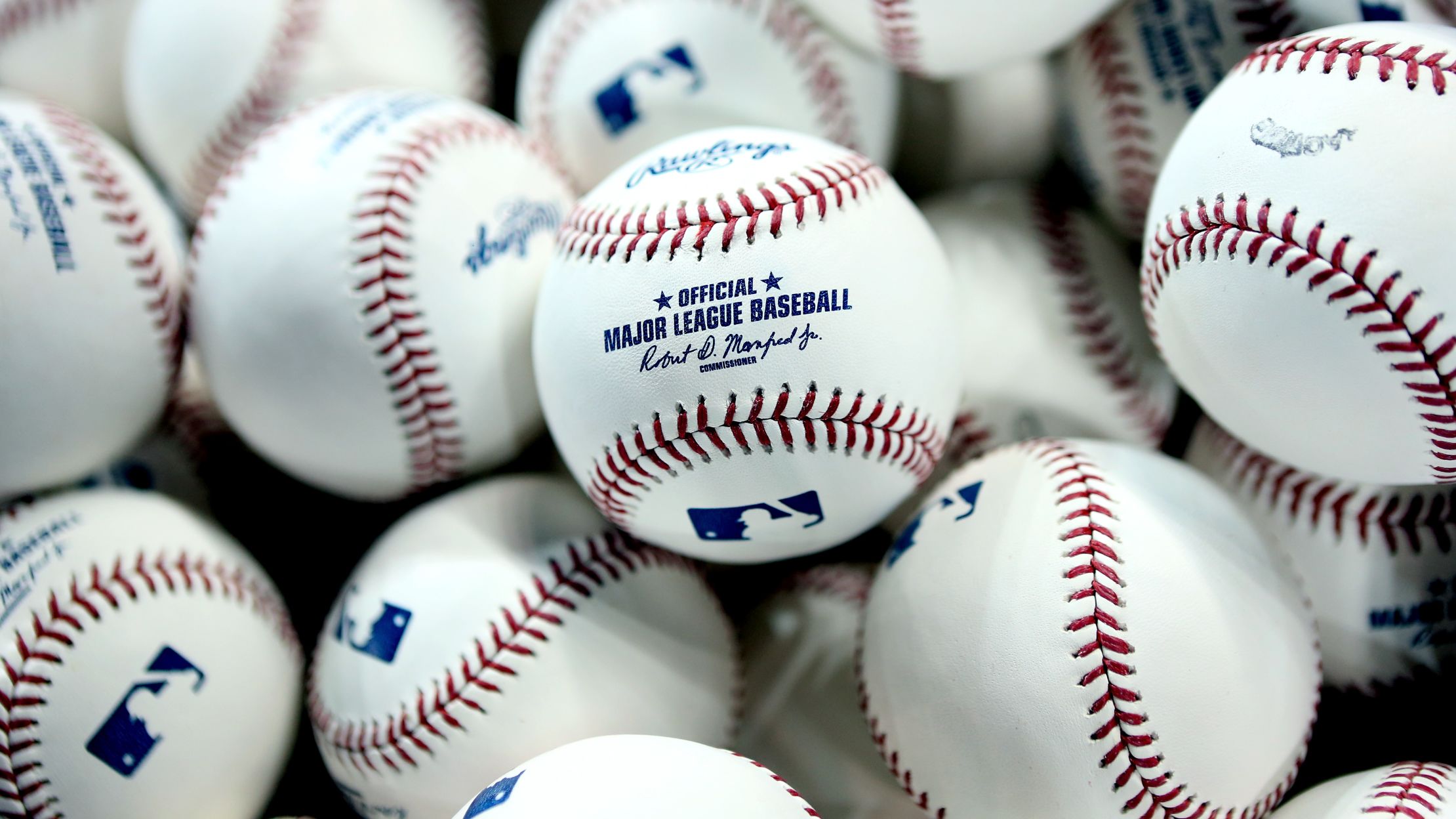
A baseball’s weight is not plucked from thin air; it emerges from its composed materials. At its core lies a small sphere of cork, often encased in a layer of tightly wound yarn, sometimes wool or synthetic blends. This core is then enveloped by two pieces of white leather stitched together with 108 double stitches of red thread. Each of these layers contributes to the final mass, texture, and grip.
The cork center is especially crucial; it must be dense enough to provide resilience, but light enough to avoid tipping the scale. Surrounding the core, the windings add bulk and elasticity, giving the ball its characteristic bounce and firmness. The outer leather cover provides durability and ensures players can grip the ball securely.
This layered construction not only defines the weight but imparts the tactile feedback essential to pitching and catching. The MLB’s exacting standards control everything from the density of the core materials to the tightness of the stitches, all culminating in that precise weight range.
The Challenge of Consistency: Manufacturing and Quality Control
Imagine the herculean task manufacturers face: creating millions of balls that all weigh within a slender half-ounce spread. Achieving this level of conformity demands rigorous quality control, sophisticated machinery, and exacting craftsmanship. Each stage, from winding the yarn to stitching the leather, is monitored to keep the weight and balance of the baseball within specification.
Even slight variations in humidity, temperature, or materials can shift the ball’s weight by a fraction. Manufacturers counteract this by using controlled environments and meticulous weighing processes after assembly. If a ball falls outside the required parameters, it is discarded or reworked.
This attention to detail ensures that no team or player has an undue advantage. It keeps the playing field level, a testament to the reverence for tradition and fairness within professional baseball.
How Weight Influences Gameplay: From Pitchers to Batters
The baseball’s weight directly impacts gameplay in nuanced ways. Consider the pitcher gripping this five-ounce sphere, preparing to unleash a blistering fastball or a deceptive curve. The feel of the ball—the weight in the fingers—dictates the pitcher’s grip and release, affecting control and movement. A ball that falls outside the weight range could alter the pitch’s behavior significantly.
Batters, too, feel the weight’s influence. Heavier balls might be more challenging to propel, while lighter ones could travel further, disrupting established hitting dynamics. The standardized weight thus maintains equilibrium between pitching prowess and hitting skill, preserving the delicate tension that defines the game.
Historical Evolution: Has the Weight Always Been This Exact?
The weight of baseballs hasn’t always been codified with such rigid precision. In the sport’s nascent days, balls varied considerably in size and weight, causing unpredictable gameplay and frustrations. Over decades, through trial, error, and the gradual professionalization of the sport, standardized specifications emerged.
By the early 20th century, leagues installed formal weight regulations to enhance consistency and fairness. These standards evolved into today’s exact measurement range. This historical journey underscores how the weight’s importance transcends mere numbers—it’s a pillar supporting the sport’s legacy and competitive integrity.
The Intriguing Outliers: What Happens with Balls Outside the Standard Weight?
Occasionally, baseballs deviate from specifications due to manufacturing defects or weather-induced changes like moisture absorption. Overweight balls can feel sluggish and dampen pitch velocity. Underweight balls, conversely, might zip faster but respond erratically in the air.
Players often intuitively sense subtle differences before umpires or officials note them. When games are played with off-weight balls, it can cause erratic pitching, unpredictable hits, and even influence the outcome of a contest. Such anomalies underscore the criticality of maintaining rigorous standards—not just for fairness but for the very character of the game.
The Bottom Line: More Than Just a Number
The question, “How heavy is a baseball?” may seem playful or trivial, but the answer opens a window into a world of precision, science, and tradition. The MLB’s exact weight range of 5 to 5.25 ounces binds the sport together, ensuring that every pitch, catch, and hit operates within an orchestra of standardized conditions.
It is this carefully calibrated weight that allows baseball to balance power and control, skill and chance, delivering the timeless spectacle that has enthralled generations. Next time you hold a baseball, remember: that small weight carries the weight of history, fairness, and the very spirit of the game.