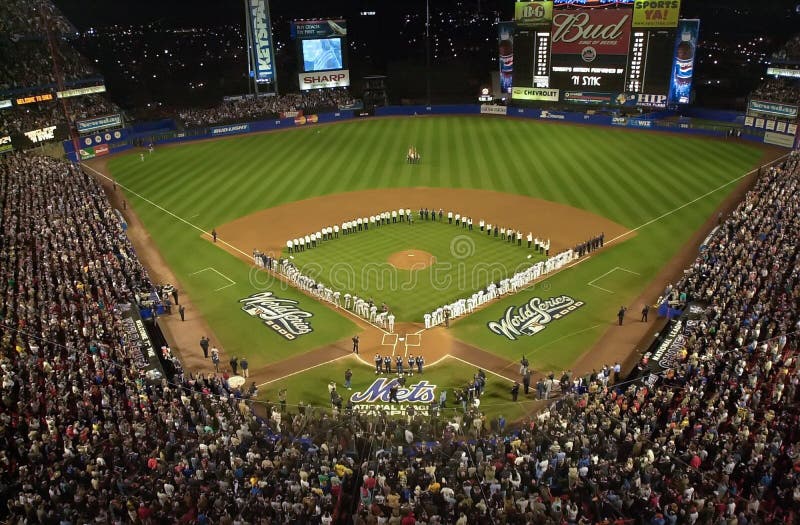
The New York Mets’ 1986 World Series triumph was a coronation of chaos, a season so electrifying it rewrote the blueprint for postseason dominance. But what happens when the confetti settles and the champagne flutes are drained? The 1987 and 1988 Mets rosters faced a daunting paradox: how do you follow up on greatness without being crushed beneath its weight? The answer lies not in the echoes of October’s glory, but in the gritty, often overlooked battles of the seasons that followed.
The Hangover of a Championship: The 1987 Mets’ Identity Crisis
The 1987 Mets entered the season as defending champions, a title that hung over them like a championship belt in a wrestling match—glorious to wear, but impossible to ignore. The roster still brimmed with talent: Darryl Strawberry’s prodigious power, Keith Hernandez’s defensive artistry, and the mercurial genius of Dwight Gooden on the mound. Yet, something had shifted. The swagger of ’86 had calcified into expectation, and expectations are the heaviest weight a team can carry.
Injuries gnawed at the core. Gary Carter, the backbone of the team’s offense and defense, missed significant time. Lenny Dykstra, the fiery sparkplug of the lineup, battled through a wrist injury that dulled his trademark aggression. The bullpen, once a fortress, became a revolving door of shaky arms. By midseason, the Mets found themselves in a familiar position—chasing the division-leading Cardinals, their World Series hangover morphing into a full-blown identity crisis.
The challenge wasn’t just on the field. The media’s magnifying glass, once forgiving, now scrutinized every misstep. The Mets had to navigate the treacherous waters of defending a title without the luxury of anonymity. The 1987 season became a masterclass in resilience, but also a cautionary tale about the fragility of peak performance.
The Rotation’s Revolving Door: Gooden’s Dominance and the Search for Stability
Dwight Gooden remained the Mets’ North Star in 1987, his fastball still a blur and his slider still a bat-breaking enigma. Yet, even a supernova like Gooden couldn’t single-handedly propel the team to October. The rotation behind him was a patchwork of potential and peril. Ron Darling, ever the cerebral ace, turned in another All-Star caliber season, but his consistency couldn’t mask the inconsistency of his teammates.
Sid Fernandez, the enigmatic left-hander with a looping delivery and a fastball that seemed to defy physics, provided moments of brilliance but lacked the endurance to anchor the staff. Meanwhile, the back-end of the rotation became a carousel of mediocrity. Pete Falcone’s tenure was a cautionary tale of regression, while Rick Aguilera’s early promise faded into obscurity. The Mets’ pitching depth, once a strength, now resembled a leaky sieve.
The question loomed: Could the Mets sustain their championship form without a deeper, more reliable rotation? The answer would define their 1988 campaign—and perhaps their legacy beyond 1986.
The Bullpen’s Identity Crisis: From Firemen to Fizzle
The 1986 Mets’ bullpen was a symphony of intimidation, with Jesse Orosco’s legendary Game 6 save serving as its crescendo. By 1987, however, the bullpen had devolved into a cacophony of inconsistency. Orosco remained the closer, but the bridge to him was a minefield of blown leads and managerial second-guessing.
Randy Niemann, a journeyman lefty, became an unlikely hero at times, but his success was more a testament to necessity than reliability. Roger McDowell, a fan favorite for his antics, struggled to replicate his 1985–86 dominance. The bullpen’s struggles weren’t just a statistical blight—they were a psychological one. Every blown save eroded the team’s confidence, turning late-inning leads into a high-stakes gamble.
The Mets’ inability to stabilize the bullpen wasn’t just a personnel issue; it was a cultural one. The swagger of ’86 had given way to a team that seemed unsure of itself when the game tightened. Could they rediscover their late-inning fortitude, or was the magic of 1986 a one-time phenomenon?
The Lineup’s Shifting Sands: Strawberry’s Struggle and the Search for a New Identity
Darryl Strawberry was the face of the franchise, a five-tool phenom whose talent bordered on the supernatural. Yet, by 1987, his production had plateaued. The weight of expectation, combined with injuries and personal demons, turned him into a shadow of his former self. His .257 batting average and 20 home runs were a far cry from the MVP-caliber numbers of 1986.
The Mets’ lineup, once a relentless juggernaut, now relied heavily on Hernandez and Carter to generate offense. Davey Johnson’s lineup card became a chessboard of matchups, with pinch-hitters and platoons becoming the norm rather than the exception. The team’s identity, once defined by power and speed, now hinged on situational hitting and defensive grit.
The challenge was clear: How do you replace the thunder of Strawberry’s prime? The Mets’ front office would spend the offseason scrambling for solutions, but in 1987, they were left to navigate the storm with the tools at hand.
The Managerial Chess Match: Davey Johnson’s Balancing Act
Davey Johnson’s managerial style was a blend of innovation and intuition, a mix that had propelled the Mets to glory in 1986. But managing a defending champion is a different beast entirely. Johnson had to balance the egos of a locker room that had tasted greatness, while also instilling the hunger of a team that had already arrived.
His use of platoons and situational substitutions became more pronounced, a sign of a manager adapting to his roster’s limitations. Yet, Johnson’s biggest challenge wasn’t Xs and Os—it was morale. The Mets’ clubhouse, once a cauldron of camaraderie, now felt the strain of unmet expectations. Johnson’s ability to keep the team united would be tested in ways he couldn’t have anticipated.
The 1987 season was a masterclass in managerial adaptation, but it also foreshadowed the tougher decisions Johnson would face in 1988. Could he coax another October run from a team that had lost its way?
The 1988 Resurgence: A Phoenix Rising from the Ashes?
The 1988 Mets entered the season with a chip on their shoulder, a team determined to prove that 1986 wasn’t a fluke. The roster had changed—Keith Hernandez was gone, traded to Cleveland in a blockbuster deal. The bullpen had been bolstered by the acquisition of Randy Niemann, and the lineup had added the speed and power of Kevin Mitchell.
Yet, the ghosts of 1987 still lingered. The Cardinals, now led by the fearsome Ozzie Smith and the resurgent Joe Magrane, stood in their way. The Mets’ early-season surge was electric, but could they sustain it when the dog days of August arrived?
The challenge was no longer about living up to 1986—it was about carving out their own identity. The 1988 Mets would have to rediscover the alchemy that made them champions, while also forging a new path forward. The question was simple: Could they rise from the ashes of their own expectations?
The Legacy of the Post-Championship Era: Lessons in Resilience
The 1987–1988 Mets rosters serve as a reminder that championships are not endpoints, but waypoints. The team’s struggles in the seasons following 1986 were not failures—they were a testament to the difficulty of sustaining greatness. The Mets’ journey from champions to contenders was a masterclass in resilience, a story of a team learning to fight for its identity all over again.
For fans, the post-championship years were a mix of nostalgia and frustration. The 1987 Mets were a team adrift, while the 1988 Mets were a team reborn. Together, they painted a picture of a franchise in transition, one that would soon face even greater challenges in the years to come.
The question lingers: What does it take to build a dynasty? The 1987–1988 Mets didn’t have the answer—but they provided a roadmap of what not to do. And in baseball, as in life, the journey is often more instructive than the destination.