Baseball, a sport etched with nuances so fine they dictate wins and losses. Beyond the thundering fastball and the subtle artistry of the changeup, reside the subtle, yet profound, differentiators that separate brilliance from mediocrity on the mound. Discussions rage about velocity, spin rate, and command. However, a closer examination reveals a fascinating dichotomy within the high-velocity family: the 2-Seam Fastball versus the Sinker, or Sinking Four-Seamer. Both promise deception and ground balls, but they operate under different aerodynamic principles, yielding pitches that feel, move, and perform in distinctly different ways, especially when the rubber meets the grass. Determining which is inherently *more* dangerous requires moving beyond simple velocity and appreciating the unique hazards they present.
The Deceptive Path: Unpacking the Sinker
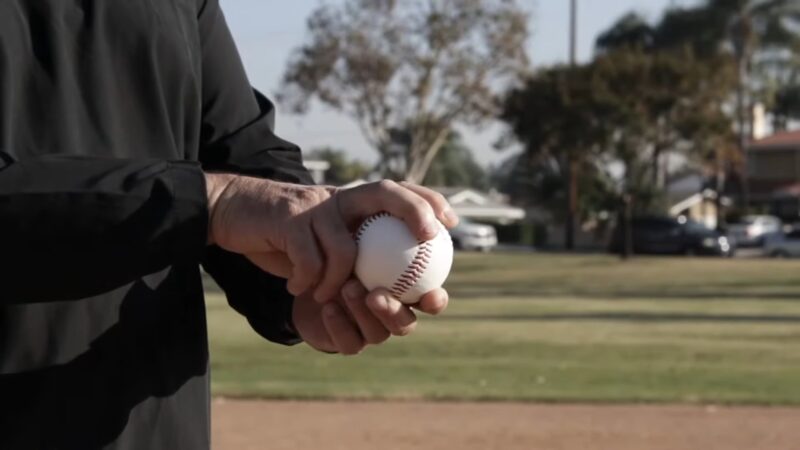
The sinker, though often technically a Four-Seam Fastball with a downward spin axis, derives its effectiveness from how the pitcher manipulates its trajectory relative to the spin. The key difference lies in the **grip** and the resulting **seam orientation**. Pitchers typically hold the sinker with a supinated (palm-down) grip, placing the seams directly underneath the fingers and thumb pad, or sometimes slightly offset. This precise grip forces the ball to breakplane downward with a pronounced, late, and deceptive dip.
This downward movement is its signature, the promise of a pitch that dives at the last conceivable moment, mimicking an elevated fastball until the late break reveals its true intent. Think of it as an inverted fastball, designed primarily to induce ground balls and keep runners close to the ground, attacking the top half of the strike zone or the zone itself from a downward angle. The velocity profile, while high, often allows less time for the batter to react compared to a sharply rising four-seam fastball that commands immense respect. The promise here: deception disguised as a traditional high fastball, the danger manifesting in hard-hit ground balls and broken bats.
The Sidewinder’s Secret: Decoding the 2-Seam Fastball
Apart from the sinker, the 2-Seam Fastball stands as another potent weapon, sometimes labeled a “Sweeper” or “Carrot.” Its distinction unfolds through a different physical interaction. The 2-Seam pitch is gripped with the index and middle fingers directly on the seams, often with the ring finger slightly more elevated, holding the seams above the fingers and thumb pad. This configuration encourages the ball to spin primarily **sideways**, with a secondary downward component.
The movement isn’t just down; it’s a potent combination of downward and lateral drift, often breaking away from the pitcher’s arm side. This creates a complex, often unpredictable, tumbling action at the end of the pitch’s flight path. It can appear as a pitch running across the plate at two-seams, the plate, or even two-seams back, catching batters off guard due to its unexpected break, reminiscent of a splitter but often generated with greater velocity. While capable of running further in velocity when thrown flat (an “Up” seam 2-Seam), its typical presentation is one that breaks and runs away.
The danger embedded in the 2-Seam lies differently. It’s a pitch that often induces contact from the opposite side of the plate, confusing the batter’s timing. A pitch thrown across the outer half of the strike zone might be perceived as a fastball running towards the plate, only to drop into the zone in the last third. Conversely, a pitch thrown across the inner half can travel down the middle, appearing late due to its run. This misdirection, combined with the potential for late or unusual movement, can lead to contact mishits, poor swing paths, and sometimes surprise, induced fly balls or hard contact on the wrong side of the field.
Movement Analysis: A Difference in Kinematics
To grasp the inherent differences, one must dissect the physics:
**Sinker:** The dominant motion is straight down, primarily due to its high and consistent downward spin axis, coupled with the grip manipulation forcing the break. Its horizontal movement is less pronounced unless the batter is committed to the outside pitch zone, where the spin axis tilt might cause some curving effect, but typically it dives. The velocity profile for the sinker is usually lower tip velocity than the average four-seam fastball, or it maintains velocity, breaking down late.
**2-Seam:** The primary movement is lateral drift, essentially sideways movement at various levels (up, through, down, away). Downward movement in the 2-Seam is a secondary effect, a consequence of the sideways spin dragging the seams through the air. The velocity profile can vary; flat grips allow less downward movement but can maintain high speed with a straight break across, while deeper seams cause more dive and tumbling. This variability contributes to its deceptive nature.
**The Crucial Difference:** The sinker commands a clear downward vertical plane of movement throughout its flight, often maintaining relatively straight horizontal travel until the break presents. The 2-Seam, however, operates in a more unpredictable horizontal plane, its downward trajectory often dependent on lateral run, its horizontal movement being its defining characteristic. Both are dangerous due to their ground ball potential or ability to induce contact off the balance point, but the *mechanism* of movement differs fundamentally and dictates optimal locations and batter reactions.
Strategic Deployment and Pitcher Dilemmas
Both pitches are versatile strategically. The Sinker is a staple for inducing weak contact against batters the pitcher wants to drive the ball onto the ground, particularly on the opposite side or in the gap. It is frequently used off the inner half, appearing as a fastball to disrupt poor swing paths into the dirt, or dangerously close to the leg side on the outside third to challenge hitters’ timing in a different way.
The 2-Seam acts as a specialized splitter/fake fastball. Its unpredictable break makes it ideal as a third strike offering inside if a fastball isn’t warranted (though caution is needed with its horizontal run), or as a dangerous pitch running across the zone and in, which hitters often don’t trust. Due to its tendency to break vertically, pitchers sometimes need to throw it slightly farther from the plate than other pitches to maximize movement, increasing the risk of a walk if velocity/velocity command is lost, but also maximizing the deception factor when located properly.
The inherent danger for batters stems not just from the movement but also the “feel.” Hitters see a pitch and anticipate movement based on prior experience with its delivery and location. A Sinker might be anticipated as a potentially hard downward movement off the hands, leading hitters to adjust their swing plane downwards or take a shorter stride. Conversely, a 2-Seam might be felt as pure forward momentum until the last breakpoint, luring the hitter into a normal forward swing only to find the ball tumbling down the zone.
Which Path Brings More Peril? Deception Rears its Head Again
Context remains king. Is the Sinker inherently scarier? Or is the 2-Seam? Both are designed to deceive and induce mistakes. The Sinker offers cleaner, repeatable, high-velocity ground ball attacks, promising consistently deceptive downward movement at certain locations. For hitters with poor hands or against whom ground balls are detrimental, the late sink is arguably *the* pitch to fear, especially down the line (away from the pitcher’s arm side). Its movement feels constant and predictable in its primary vector, albeit late.
The 2-Seam, conversely, often feels less predictable and more tumbling. Its sideways movement challenges the batter’s perceived vertical break, leading to misjudgments on the fly. This unique type of deception, combined with the possibility of the pitch running across the plate unexpectedly (either horizontally or vertically due to the grip), can be deeply unsettling. Inducing contact from the wrong side of the field or timing a pitch that breaks in an unexpected way creates a different, yet equally dangerous, kind of mistake.
Ultimately, one could argue that the Sinker often presents a more contained deception (“It’s going down,” the hitter thinks, focusing on defense against the run), while the 2-Seam often induces confusion about *where* it will go (“What direction is this going?”) rather than just *how* much it will break. Both promise groundballs, both promise hard contact off the hands, both are deceptions masquerading as high velocity. Which seems “more dangerous” depends on the individual batter’s tendencies and the specific pitch location, movement profile, and the pitcher’s elite execution. But for a pitcher armed with either, or both, the promise of induced ground balls, broken bats, and baffled batters offers a potent and dangerous mix that fears few batters.