The silhouette of a baseball player cutting a formidable arc in the outfield or crouching low behind the plate carries more weight than just muscle and stamina. Their height, an often-unspoken dimension of their physical tapestry, whispers tales of evolution, training, and perhaps even the relentless march of time across the diamond. “Average Height of MLB Players: Are Baseball Stars Getting Taller?” This question isn’t merely about inches; it’s a probe into the confluence of nature, nurture, technology, and the enduring quest for competitive advantage. Let’s explore the fascinating landscape where data meets destiny on America’s most storied field.
A Metamorphosis on the Mound?
The very notion of an “average” is fluid, constantly shifting with the ebb and flow of talent. Historically, baseball players were perceived, and often required, to be compact, agile specimens. While legendary figures like Babe Ruth or Cap Anson commanded great height for their era, tenets of weight control and nimble fielding often favored those who were not necessarily skyscrapers. But the 21st century seems to murmur a different tune. When we measure today’s athletes, or observe their development paths, are we witnessing a gradual rise in the collective standard of verticality?
It’s a complex answer. Part of the perceived trend might stem from a widening talent pool, allowing selectors to pick the *best* available players globally, naturally including those blessed with considerable height. Equally significant, however, are changes in training philosophy and sports science. Modern methods meticulously sculpt athletes into specific functional profiles, sometimes elevating stature not just as a trait but as a strategic adaptation. A pitcher aiming for deceptive quickness might encourage slight height through nutrition and targeted growth; a defender aspiring to cover vast amounts of ground might find advantageous stature selected or enhanced over decades. Yet, quantifying pure “getting taller” from natural causes is elusive.
Size and Position: The Architecture of the Diamond
The diamond demands specific architectural strengths. Roles differ vastly, much like specialized towers in an ancient city, each built for a unique function and bearing a distinct height requirement. While the overall average rises, the distribution of height across positions paints a complex picture.
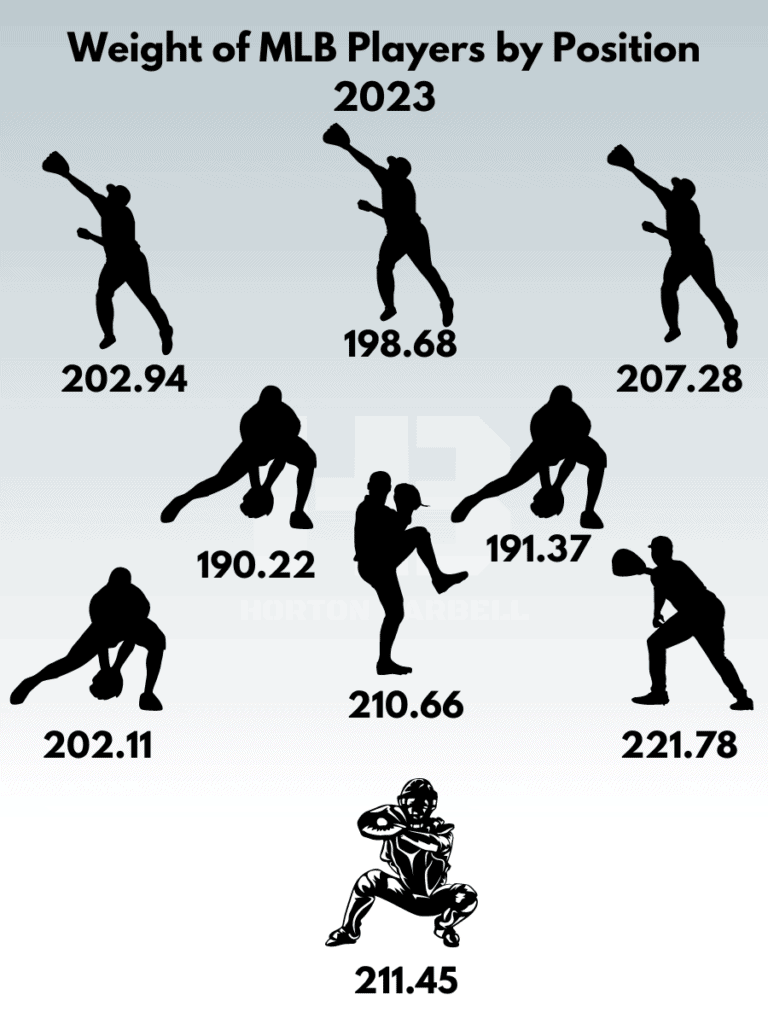
An outfielder relies heavily on stride length to meet potentially game-winning hits, a longer vertical often translating to easier catches deep in the gaps. Today’s left fielders and right fielders, those vanguards stretching the boundaries, frequently stand among the tallest players in the league, their height becoming a functional asset. The center fielder, the ultimate range tester, commands the most impressive altitude, often becoming the league’s tallest standard-bearer. Catchers, conversely, operate in a pocket of constant chaos, requiring unwavering focus, lightning-fast reflexes, and often a lower center of gravity for quick exchange and blocking. This necessitates a degree of compactness, meaning catchers have historically skewed shorter, although modern conditioning and nutrition have gradually increased their average frame.
Pitchers oscillate. Traditionally, a compact arm slot and quick arm action were prized to maximize velocity and deceive the runner. While taller frames can still excel, the definition has broadened. Infields, with their complex reads, sudden bursts, and close-quarters collisions, often balance between shorter, powerful builds and taller, athletic frames. The perception of height is less uniform, filtered through the lens of individual skill and the specific demands of first base versus third, shortstop versus middle infielder. Each position contributes to a nuanced mosaic, not a simple linear increase for all.
Training Grounds: Cultivating Giants and Gnomes
At its core, baseball remains a game of inherent talent, a dance between genes and greatness. But the *development* of that talent is increasingly sophisticated. Nutrition and supplementation regimes, guided by sports science, aim to fuel optimal growth and amplify strength thresholds. Recovery protocols utilizing cryotherapy, hyperbaric chambers, and intricate sleep science optimize physical functioning and potentially support favourable maturation in younger athletes.
The evolution in strength and conditioning coaching is profound. Programs don’t simply seek to add muscle but to sculpt functional power, enhance body control, and maximize athletic potential. This includes nuanced methods to potentially encourage favourable linear growth in younger athletes while optimizing strength gain relative to frame. Nutrition, far more complex than simply adding “calories,” tailors macronutrient and micronutrient ratios aimed at stimulating growth hormone cascades that favour lean mass accrual alongside height increase in developing athletes, provided skeletal maturation allows it. It’s about pushing the potential of the physical structure, whether naturally tall or encouraged towards greater stature, to its biomechanical limits.
This scientific cultivation isn’t uniform; it depends on individual build, genetic predisposition, and the specific requirements of the position they target. Yet, across the training spectrum, the aim for athletes to reach their full developmental potential, including vertical stature, is a constant, adding another subtle layer to the ongoing measurement of player development.
Retro Reflections: Have the Titans Truly Grown?
To definitively state taller players are dominating requires looking beyond current trends into deeper time. Adjusting historical data for measurement inconsistencies and population base is notoriously difficult. Early 20th-century players were often evaluated differently, sometimes skewed towards shorter, quicker profiles, particularly in positions demanding quick reactions or avoiding direct collision.
Statistical shifts, however, provide some indirect clues. Catching, an inherently demanding position requiring quick wrists and a low profile, often saw players with shorter builds excel, sometimes due to limited access to certain training modalities compared to other positions. The rise in designated hitters, primarily a strategic maneuver allowing teams to optimize lefty-righty matchups without positional constraints, arguably opened doors for more athletes who might have otherwise been considered suboptimal not just strategically but physically in certain traditional roles.
Modern technology certainly allows for more precise anthropometric tracking. Wearable sensors can monitor fatigue, potential injury risk related to height and mechanics, and inform nuanced training adjustments. Whether the *average* has increased enough across all positions or simply shifted due to position-specific trends and evolving training science is still a matter of interpretation, much like trying to measure the wind without instruments – the effect is there, perceptible, but quantifying its exact trajectory demands careful analysis of long-term data.
Height: A Unique Thread in Baseball’s Fabric
The pursuit of specific physical attributes in professional sports inherently involves selective pressures. While strength, speed, and agility are universally sought, height represents something more specific and nuanced. For roles demanding range and stride length, taller athletes possess an inherent advantage in the geometrics of the game. For roles requiring quick reaction times and compact profiles, a certain level of verticality might represent a slight disadvantage, leading to a degree of self-selection. This isn’t solely about winning height contests, but about shaping potential for specific functional outputs demanded by different positions.
Beyond performance metrics, height influences visibility and media presence. Players commanding greater height often capture more camera angles and fan attention. Their presence on stadium marquees and team logos can symbolize power and reach in the popular imagination. The visual narrative of baseball itself incorporates height – the towering fly ball, the intimidating stare from the mound, the defensive positions themselves shaped by a player’s physical dimensions. It’s an integral part of the game’s visual storytelling and cultural identity.
The Sky’s the Limit (or at Least a Player’s Ceiling)
The question of whether MLB stars are getting taller remains a compelling one, woven into the larger narrative of sports science, player development, and the quest for competitive edge. While measuring the definitive answer requires looking at vast longitudinal datasets spanning decades, it’s clear that the *perception* and *underlying trend* point towards evolving anthropometric profiles. This could stem from a combination of factors: a more global talent pool offering larger frames, a sophisticated training and nutritional landscape optimizing athlete development including height, and a deeper understanding of how physical dimensions translate functionally across different positions.
The game, however, celebrates unique blends. While height might trend upwards in certain ways, players also defy expectations. A player with extraordinary speed hidden behind a shorter frame can eclipse anyone. A deceptive quickness from a traditionally powerful build shatters stereotypes. Baseball’s magic lies perhaps in its multi-dimensionality – a game where the perfect height appears differently for the pitcher, the fielder, the runner, the catcher. The focus should remain on the complete individual – their skill, intelligence, and heart – rather than a single dimension like height.
Whether the overall average continues its subtle ascent or if it represents a plateaued point remains an open question, awaiting future historical analysis. But one thing seems certain: the conversation around player dimensions, including height, continues to evolve, reflecting the ongoing quest for peak athletic performance within baseball’s unique framework.