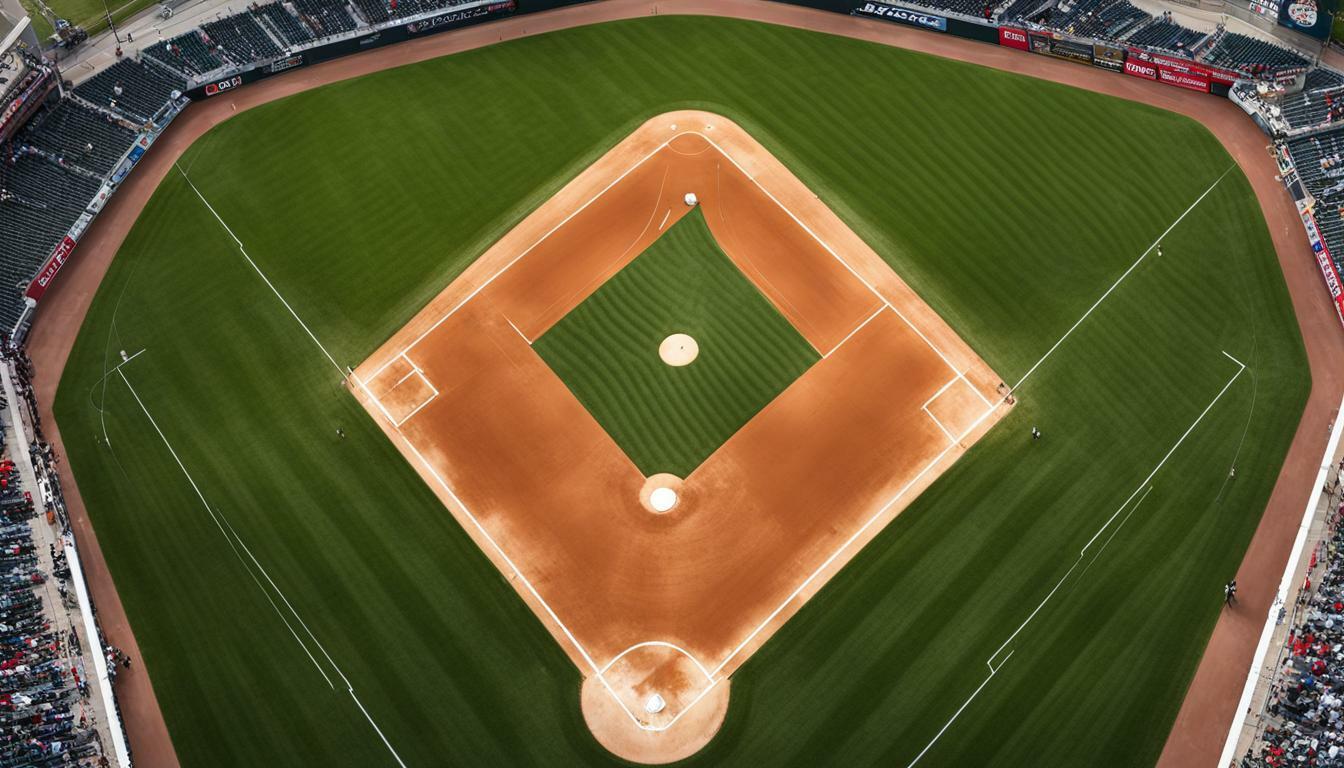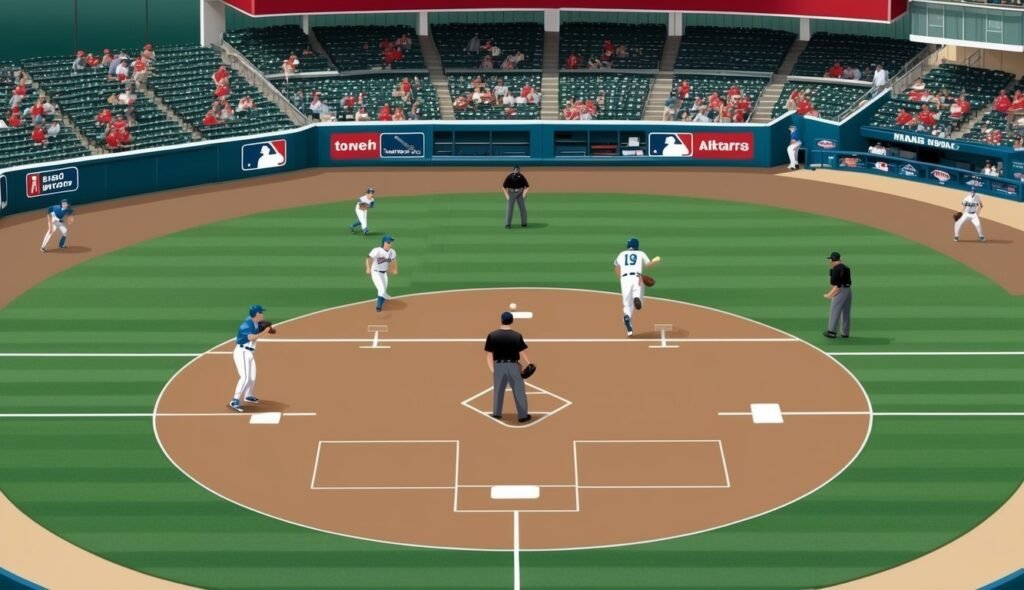
Ah, the baseball diamond, a hallowed expanse of geometric precision bathed in the golden glow of possibility. For the initiated, every line, every crack, tells a story, but few measurements command such silent reverence or ignite the imagination like the one defining the pitcher’s mound and home plate. The distance, immutable, yet profound – 60 feet, 6 inches. Let us delve into the significance of this hallowed span, exploring not just the numbers, but the very soul it animates across the continuum of the game.
The Unshakeable Point: 60 Feet, 6 Inches
Herein lies the bedrock of professional baseball’s pitching mechanics. It is, for all intents and purposes, a sacred measurement. Sixty feet, six inches, or precisely 18.44 meters – this distance is the fixed point upon which the entire pitcher’s delivery, the catcher’s anticipation, and the fielder’s positioning are meticulously calibrated. This figure isn’t arbitrary; it was determined not by chance, but by generations of evolution and refinement, seeking that delicate equilibrium between enabling athletic prowess and preserving the structural integrity of the player’s arm. It is the stage upon which the pitcher performs his most intricate ballet – a dance born of immense power and exquisite control.
A Historical Perspective: The Long and Winding Road
Time, that great sculptor, has incrementally shaped the dimensions of the modern game, most notably with the pitching distance itself. The mound has not always stood at its current precipice. Dating back to well over a century ago, the distance was once considerably less. Imagine the different strain, the altered biomechanics that would have resulted from a pitcher coiled closer to the heart of home. Adjustments over time were gradual and fraught with controversy, carefully considered to gradually increase the strain on the pitcher’s arm, thereby curbing the perceived runaway velocity of the era while simultaneously enhancing player safety and longevity. This is a journey, a deliberate lengthening of the runway for the throw, increasing the time frames and protective windows for this remarkable display of human coordination.
Decoding the Delivery: Speed, Motion, and Impact
Now, consider the implications of this seemingly straightforward distance. It becomes the crucible, the very space where velocity is measured, not merely in miles per hour read from radar guns, but in the visceral sensation it creates. A pitch clocked at 95 mph covers that 60-6 in a mere heartbeat, a fleeting moment of high-velocity delivery that can be disconcerting, powerful, and fundamentally transformative. The pitcher, executing his unique wind-up and follow-through, translates stored energy into controlled release. The shorter the time taken (the faster the speed), the more explosive the event feels, demanding not only pinpoint accuracy but also an almost instinctual reaction from the defense, milliseconds away.
The Catcher’s Calculated Combat: Timing and Immersion
For the catcher, standing poised at the absolute destination of that long-awaited release, this distance is nothing short of a symphony. It is the calculated window for his own anticipation and reaction. He reads the subtle shifts of his pitchers, the release point nuances (is it higher, lower, closer the pocket?), the spin axis revelations, and the raw trajectory as it slices through the air. He wears the weight of the game in his box, his feet braced, his eyes fixed, the culmination of every practiced drill translating into a single, focused gaze: catcher’s stance, the meeting point of skill, the last destination on a precisely measured path.
Geometry Meets Neurology: Mechanics Intricate and Precise
Every stride, every arm motion, is a fraction of a second closer to that hallowed 60-6. The pitcher’s stride is measured, a precise extension; the arm cocking height is calculated; the circular motion of the arm bar executes an exact equation. It’s a dance where the mind dictates the motion, demanding a perfect translation of intent into physical execution. The closer proximity of the mound allows the arm mechanics more room to complete their intricate journey, maximizing the power potential generated from the lower half and shoulders, channeling it efficiently towards the release point. The entire setup prepares the arm for the controlled throw upon that exact target 60-6 away – a delicate balance between stored potential and controlled release.
Farther Out: High School, Little League, Diverging Paths
Yet, this 60-6 benchmark is not universal. Like the path of a slider curving away, the standard varies significantly based on the level of play. In the vast realm of high school baseball, leagues often adjust this standard, providing slightly longer distances (a common misconception among younger players and the casual observer). This variation serves its own narrative. Younger pitchers, perhaps still developing their internal biological clock for pitch count and mechanics, benefit from the slightly greater distance, effectively softening the internal impact without the explicit rules changes implemented at higher levels. Little League, even further removed from the professional sanctum, employs its own longer standard, tailoring the challenge to the developmental stage and physical maturation of its participants. These variations represent different dimensions of the same game, different paths designed to nurture skill at varying paces.
Chronometric Challenge: The Pace of the Pitching Rhythm
Beyond the spatial measurement, there exists a rhythmic quality imbued within these 60-6 inches. The game is measured in fractions of a second – in the time taken to throw the ball, the reaction time of the batter, the split-second decisions made at the plate. The greater the distance, the slower the perceived pace; the shorter (as in professional baseball), the quicker the internal chronometer clicks. It quantifies that intuitive sense of velocity – a fastball traveling 60-6 inches seems inherently faster than one covering 46 inches down the hill. It is the internal cadence that defines the intensity, the tension palpable within the stadium on a pitch clocked at such velocity and precision.
The Last Six Inches: A Point of Origin and Culmination
Perhaps there is a unique elegance in the very definition that distinguishes the two numbers: 60 feet, and then the critical final 6 inches. They represent the elongated preparation, the initial build-up, followed by the explosive dispatch from the mound. It is the point of rupture, the place where the pitcher chooses his coordinates, unleashing his preparation into a focused missive aimed at a distant target. That last six inches is the acceleration phase, the terminal velocity point, the bridge between the stored energy of the wind-up and the kinetic blast that is the essence of the pitching delivery. It underscores that distance – not merely the journey, but the final, decisive thrust.
Indeed, the measurement of 60 feet, 6 inches transcends mere geometry. It is the spine of the pitcher’s throw, the rhythm of the game, the historical evolution reflecting a delicate balance, and the very measure of power and precision in America’s pastime. The next time you follow a pitch across the infield grass or track its trajectory on your radar, remember this defining distance – a fixed point in space and time that encapsulates the very soul of the competitive throw. It is the quiet, absolute answer to one of baseball’s most fundamental questions.