The shadow of the fastball often falls long and deep within a pitcher’s arsenal, casting doubt and demanding precision. But beneath the surface, hidden by the blur of adrenaline and the geometry of the game, lie subtle revolutions transforming a basic pitch into bespoke weapons of kinetic intrigue. The “Two-Seam Fastball” and the “Sinker” – or “Sinker” – are two such protagonists in the ongoing saga of baseball pitching evolution. They appear on the radar screen with often indistinguishable velocity, yet describe wildly divergent paths, evoking fascination or frustration depending on the target. For years, whispers, debates and unconfirmed reports painted these pitches as part of a single, more effective package. But are they one and the same, merely different sides of the same formidable coin? Or do they represent a tectonic shift, demanding recalibration of understanding?
The Two-Seam Fastball Unveiled: More Than Skin Deep
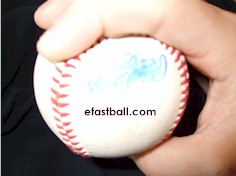
The Two-Seam Fastball, the conceptual forerunner, possesses a narrative inextricable from its motion. Forget the perfect grip; imagine two elongated seams not just cutting the air, but dictating its turbulent journey. The grip, typically shallow, rests over the two grooves of a four-seamer. Little grip, or pressure, is applied over the top, near the pitcher’s fingers; instead, the fingers merely slot loosely onto the leading seam, almost mimicking holding a baseball sideways between two index fingers without squeezing.
This “minimalist” grip breeds a seemingly effortless release. The spin is less about the numbers generated by advanced tracking software and more about inducing inherent drag and tilting the pitch’s axis. It’s about sacrificing a modicum of velocity and control for movement that feels deceptive. As it transits toward the plate, under low-pressure spin, the pitch tilts and drifts, its path veering unexpectedly away from the pitcher’s intended target.
The Sinker’s Serendipitous Rise: A Departure Pointing West
Now, picture the Sinker, often mistakenly grouped with its Two-Seam cousin, yet operating under a different principle. While sharing the same, seemingly unconstrained grip foundation, the Sinker emerges from a specific type of delivery – a distinct *mechanical* difference felt up to 60 feet. The grip remains largely similar (often referred to as “Hurling” grip, focusing on the two seams), but the *action* at the moment of release dictates its singular trajectory.
The Sinker relies on a distinct downward, forearm motion, coupled with deep arm slot and subtle trunk rotation. This motion imparts a unique spin axis, rotating much like a football caught loosely without direct pressure. Instead of a controlled seam-driven lift, the Sinker leverages this spin to counteract gravity’s relentless pull in the horizontal plane. Imagine trying to throw a basketball with spin, but deliberately tilting the axis. The Sinker dives with a deceptive, late, skidding action. Often delivered from a lower arm slot (around shoulder height to below) and generated by a pitching motion oriented slightly away from the target, its dive is not just downward, but sharply, inducing severe horizontal drop.
Distinct Movement Manifests Itself: From Veer to Vertical Vault
This is the crux of the distinction: movement. The Two-Seam Fastball, even with a slightly higher arm slot (retaining a semblance of a fastball action), veers away after a deceptive initial trajectory. It’s a sideways bullet, challenging accuracy but rewarding for inducing swings late.
The Sinker, conversely, plunges vertically, eluding the batter entirely too often. If the velocity is sufficient to reach the plate, down the zone it comes, potentially burying pitches effectively. The Two-Seam might make the ball slightly rise mid-trajectory; the Sinker pulls in a profound, almost imperceptible drop until it’s too late for the batter to adjust.
This inherent downward dive is what separates the Sinker from most other pitches. While splitter and changeup can descend, the Sinker’s abrupt, sharp, near-submarine action makes it unique, a true gravity-defying, or rather, gravity-enabling, pitch. It requires precise execution and a specific release point to harness its devastating potential.
The Tilted Axis: Beyond Spin Rates
While advanced cameras measure spin axis and velocity, the tactile sensations experienced by batters and catchers often tell a different story. The Two-Seam Fastball’s unique spin pattern creates lift-induced drag and lifts its axis slightly, causing the veer. The Sinker’s axis is fundamentally tilted horizontally, orienting it like a weather vane catching the wind – gravity wins decisively.
It’s not just about high spin counts. The Two-Seam achieves its peculiar lift through lower, seam-riding RPMs compared to a true Four-Seam, but configured uniquely. The Sinker’s efficiency in dropping is less about a specific rotation rate (though velocity helps) and more about its axis being perfectly aligned against gravity. It’s a physics dance requiring a specific orientation – a true “horizontal-axis spin attack angle” – focused singularly on inducing extreme downward movement.
Grip vs. Gesture: The Subtle Kinetic Divide
While the grip is visually and tactilely similar (loose grip over the two leading seams), the defining difference lies not in the grip itself, but in the pitcher’s *delivery*.
The Two-Seam Fastball is generally thrown from a higher arm slot (around mixed pitcher level), with a release point lower than a typical four-seamer but higher than a curveball, and often still oriented somewhat towards the target, inducing a later veer.
The true Sinker is executed from a lower arm slot, often almost horizontal, the arm slot tilted towards the third base side, and the release delivered from a motion that leans away from home plate. It’s the execution – the hurling action emphasizing the lower half of the arm’s path – that fundamentally changes the outcome.
Forging the Identity: Usage, Evolution, and Debate
Pitchers strategically leverage these grips to achieve specific objectives. The Two-Seam offers a challenging, off-speed like appearance, inducing mistakes from patient batters or those seeking fastball velocity. The Sinker, when mastered, becomes an unhittable ground ball inducer, particularly against contact-oriented line drives.
The evolution from using two seams to potentially achieve a sinker-like effect but executing it primarily as a fastball grip to a distinct, lower delivery mechanism has caused considerable confusion. Some prominent pitchers initially linked the grips simply because a pitcher using the Sinker grip was often associated with a unique delivery style. This perceived connection fueled the debate: was this merely a superior form of Two-Seam, or a fundamentally different motion using a coincidentally similar grip?
Context matters. A velocity-wise Two-Seam that dives upon release is suspect. True Sinker velocity often drops precipitously due to the dive, sometimes reading significantly slower at the catcher than in the air. And a Two-Seam typically doesn’t require such a pronounced downward dive when delivered from a higher arm slot.
Conclusion: Kinetic Kinship, Operational Divide
The Two-Seam Fastball and the True Sinker are part of a continuum of baseball innovation – “seam balls” pushing aerodynamic boundaries and player adaptation limits. The Sinker, in its essence, is an evolution, or perhaps a misdirection, stemming from understanding the profound influence of spin axis on pitch movement. While born from a similar grip foundation, their kinematics, delivery mechanics, and resulting movement patterns are worlds apart.
If asked simply “Is a Sinker a Two-Seam?”, consider the nuances. A grip used over two seams can influence a pitch in myriad ways, but the Sinker represents a *physically distinct outcome* demanding specific movement, velocity profile, and delivery. They are conceptually siblings on the advanced fastball/movement spectrum, sharing a grip, yet diverging genetically in their execution and inherent nature. The answer lies not in their perceived final appearance on the radar or video, but in the complex, largely hidden interplay of grip pressure, arm slot, release point, and throwing action – a unique journey downcourt, separated by a horizon marked solely by horizontal descent.