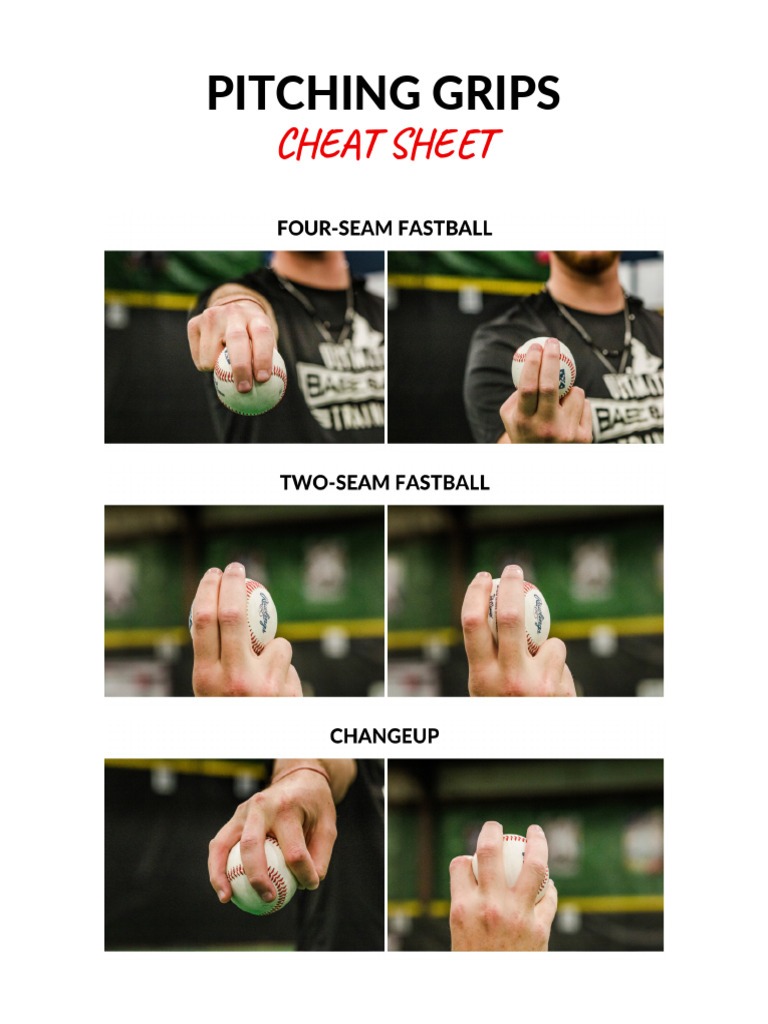
Imagine the stage is set: the pitcher’s mound, the on-deck circle brimming with anticipation, the weight of a single moment hanging in the humid air. For the pitcher, a question often arises: How does grip, that intricate dance between fingers and leather, shape the narrative of each pitch? It’s more than mere contact; it’s the architect of velocity, the conductor of movement, the translator of intention into the language of the diamond. A profound understanding of pitching grips, exploring the nuances of the fastball, the deceptive curves, the subtle spinners, and beyond, is akin to mastering a complex form. It blends the visceral feel of raw power with the precise control of surgical artistry, where the seemingly simple act of holding the ball becomes foundational to bringing the game to life.
Fastball Velocity: The Uncompromising Core
Often considered the bedrock of a pitcher’s repertoire, the fastball represents pure velocity and forward momentum, a pitch designed to overwhelm with its raw speed. To grip the fastball effectively is to harness and direct this inherent energy. Various styles exist, ranging from the classic four-seam grip, providing exceptional straightness and backspin, to the two-seam grip, lending the pitch more ground plane movement. Consider the grip almost like a key, turning it correctly unlocks the full potential velocity from your arm. The objective is to promote forward spin, ensuring the ball travels with purpose directly towards the hitter. Think of the grip position, established well ahead of the actual release point, setting the initial path. The fingers act as stabilizing guides on the baseball’s dominant seams, minimizing aerodynamic drag and maximizing carry. Here lies the unique appeal found within this seemingly basic pitch: mastering its grip nuances unlocks subtle commands and unexpected movement, transforming the fastball from a simple fastball into a deceptive weapon.
Conquering the Curveball: Deceptive Angles and Descending Volcanoes
Where the fastball represents straightforward authority, the curveball embodies mystery and deception, a deliberate departure from the intended path. Its grip is deceptively intricate. A common approach involves placing the four seams of the baseball in an upright, vertical position, with the thumb securely snugged beneath the ball. The index and middle fingers then gently cradle the sides of the seams, while the ring and pinky fingers extend towards the thumb pad on the underside. This unique grip orientation is key, dictating the axis upon which the rotation occurs. As the arm initiates the pitch, the wrist uncoil dramatically, applying distinct angular momentum that imparts significant downward slipp spin. This rotational energy translates into a sharp, sudden break, often dramatically altering the ball’s trajectory just as it reaches the hitting zone. The curveball’s appeal lies in its ability to *conquer* the hitter’s expectations. Gripping it involves mastering that wrist hinge; it’s a controlled descent, like piloting a small submarine through the water, from the perceived straightness of a fastball to a sudden, fiery plunge. Perfecting the curveball grip refines control and introduces unpredictable movement, making it an essential tool for disrupting the timing of opposing batters.
Weaving the Slider’s Intricate Path: Precision and Tempo
Consider the slider, a pitch that dances on the boundary between a fastball and a curveball. It is renowned for its late, sharp, 11 o’clock to 1 o’clock break, a deception that can fool even the most focused hitter. Its grip philosophy differs significantly from the curve. Here, the fingers weave through the seams, often employing a finger-over-thumb technique that initially grips the top half of the ball. The thumb occupies the base of the seam. As the arm accelerates for delivery, a controlled flick of the fingers, typically involving a rotation of the middle two fingers rather than the index finger, imparts the characteristic side-winding spin. This distinct orientation generates purely horizontal movement relative to the pitch’s forward velocity, creating the dramatic, deceptive break. The slider’s uniqueness shines through in its tempo control. Gripping it requires a specific finger pattern, ensuring the spin is generated correctly – a subtle flick, not a sharp snap. The appeal of the slider lies in its blend of high velocity with deceptive displacement; effectively harnessing its grip turns it into a pinpoint precision missile, arriving suddenly off the plate as the hitter expects a fastball. This intricate finger play is what makes the slider an advanced and highly sought-after skill.
Subtleties Emerge: Changeup and Knuckleball Variations
Beyond the fastball family, the changeup and the knuckleball offer further dimensions of strategic control through altered grip dynamics. The changeup’s core objective is to deceive the runner by mimicking the arm action of a fastball, inducing the batter to swing early on a pitch traveling significantly slower than their anticipated fastball velocity. Achieving this requires a grip adjustment focused on the same high-velocity finger placement as the fastball, but with an intentional restriction of forward spin or even backspin. Thumb placement remains similar, but the other fingers grip the seams more tightly or lower, effectively impeding the ball’s momentum, altering its flight path through induced drag via seams facing sideways (airflow disruption). The knuckleball, conversely, is a different beast. Gripping with the fingertips, typically lower on the pitcher’s hand towards the side of the ball, imparts minimal spin. The result is high aerodynamic drag interacting with the ball’s seams, creating unpredictable erratic movement, often described as ‘floating’ or tumbling in flight. Exploring these variations reveals a deeper layer of baseball physics and control. Mastering the changeup’s grip refines deception and swing-and-miss strategies, while the knuckleball presents an intriguing, physics-driven challenge requiring immense control and unpredictable movement.
Grip Dynamics: The Synergy of Hand, Wrist, and Arm
The true artistry of grip transcends the mere physical contact; it is a symphony conducted by the entire arm. The specific grip chosen is but the overture; the true performance begins with the subtle adjustments in finger pressure during delivery. Maintaining consistent pressure guides the ball through its flight path. This synergy extends to the fingers, wrists, and forearms themselves. A neutral wrist position initially sets the stage, but controlled, coordinated bending in the wrist, subtly timed with arm speed, provides the essential platform for generating the unique spin profiles associated with grips like the curve or slider. Mastering forearm pronation (rotating the palm downward and forward) and supination (rotating the palm upward and back) further refines the ball’s tumbling or curving nature. This intricate connection between grip, wrist action, and arm mechanics forms the palpable rhythm that makes certain pitches rise, dip, cut, or spin with life-like quality. Finding this internal balance brings the player into near-perfect control, feeling the pitch journey from the fingertips to the plate.
More Than Technique: Mindful Practice and Adaptation
Integrating these grips into a practice routine requires more than mechanical repetition; it demands intentionality. Visualizing the desired movement helps internalize the necessary finger placement and body mechanics long before stepping onto the mound under pressure. Players should experiment safely, perhaps using stationary tossing or radar guns to analyze subtle differences in grip impact on velocity and movement. However, each pitcher’s arm is unique, presenting a need for personalized adaptation. What works theoretically must feel instinctive individually – fingers that articulate optimally, pressure points that feel comfortable and reproducible under adrenaline. Recognizing this, focusing on grip dynamics rather than just the static position allows for organic control, where the arm movement flows naturally from the mind, guided by a finely tuned grip command. This dedication to mindful experimentation fosters an intimate connection with the delivered pitch.
The Unseen Thread: Elevating Performance through Precision Grip
In the high-wire dance that is baseball pitching, the grip anchors the performer. It serves as the unseen scriptwriter, translating intent into physical expression. From the unyielding drive of the fastball to the cryptic depths of the curveball, and the nuanced flicks of the slider and changeup, the precision grip allows a pitcher to command the ball’s destiny as it hurtles towards the plate. It merges the art of intuitive motion with the science of aerodynamics, creating pitches that move, surprise, and disrupt. This deep, almost poetic understanding, of how the fingers frame the ball dictates the flight path, adds the unique aesthetic appeal to each delivery, transforming it from mere mechanics to an art form. The pitcher who truly comprehends and masters these grips doesn’t just throw; they choreograph possibilities, navigating the game’s invisible lines with a blend of feel, precision, and artistic control.