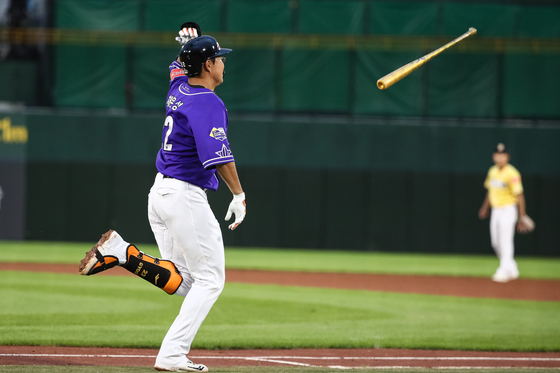
The crack of the bat, the arc of a baseball soaring into the summer night, and then—suddenly—the bat flips. Not a careless toss, not a dismissive flick, but a deliberate, almost theatrical flourish that turns a routine home run into a statement. In South Korea’s KBO League, bat flips are not just a quirk of celebration; they are an art form, a cultural signature, and sometimes, a psychological weapon. This compilation explores the many dimensions of KBO bat flips—from their historical roots to their modern-day symbolism, from the most iconic moments to the subtle nuances that make each one unique. Whether you’re a die-hard baseball fan or a casual observer, prepare to see the game through a new lens.
The Anatomy of a Bat Flip: More Than Just a Gesture
A bat flip is never just a bat flip. It is a micro-narrative in motion, a silent dialogue between player and crowd, between tradition and innovation. The mechanics vary as widely as the personalities behind them. Some flips are explosive, a full-body commitment to the moment—arms shooting skyward, bat spiraling like a comet. Others are understated, a mere wrist flick that belies the hitter’s confidence. The grip changes too: some players release the bat with a two-handed follow-through, while others let it fly with one hand, as if hurling a gauntlet at the opposition. The trajectory itself tells a story—high and looping for maximum drama, or low and controlled, like a precision instrument. In the KBO, where emotion runs as deep as the dugouts, these flips are not just celebrations; they are declarations of intent.
Cultural Significance: Where Baseball Meets Performance Art
To understand KBO bat flips, you must first understand South Korea’s relationship with baseball—a sport that arrived on the peninsula in the early 20th century but blossomed into a national obsession in the 1980s and 1990s. Baseball here is not merely a game; it is a communal experience, a shared language. The bat flip, then, is a cultural artifact, a fusion of athletic prowess and theatrical flair. It reflects the Korean concept of jeong—a deep, almost spiritual connection between people and their passions. When a batter flips his bat after a game-winning home run, he is not just expressing joy; he is inviting the crowd into his moment, turning a personal triumph into a collective memory. This is why KBO flips often feel more personal, more *alive*, than their MLB counterparts. There is a sense of *jeong* in every arc of the bat.
The Evolution of the Flip: From Humble Beginnings to High Art
The bat flip, as we know it today, did not emerge fully formed. Its evolution in the KBO mirrors the league’s own growth—from a fledgling organization in 1982 to a powerhouse of baseball entertainment. In the early years, flips were rare, almost nonexistent. Players adhered to the stoic, disciplined ethos of Korean baseball, where overt displays of emotion were frowned upon. But as the KBO matured, so did its players’ willingness to embrace individuality. The turning point came in the 2000s, when a new generation of hitters—raised on Hallyu dramas and global pop culture—began to see baseball as more than just a sport. They saw it as a stage. Players like Lee Dae-Ho and Kim Tae-Kyun became early pioneers, their flips subtly rebellious, a quiet challenge to tradition. By the 2010s, the flip had become a rite of passage, a badge of honor for any hitter worth his salt.
Iconic Moments: The Flips That Defined Generations
Some bat flips transcend the game itself. They become etched into the collective memory of fans, replayed endlessly in highlight reels and memes. Consider the flip of a rookie sensation in his first professional at-bat, the bat arcing over the infield like a comet tail. Or the veteran’s slow, deliberate follow-through after a walk-off grand slam, as if savoring the moment before the inevitable mob of teammates descends upon him. There are the flips that defy physics—bat spinning horizontally mid-air, or flipping backward as if the hitter is trying to send the ball back to the pitcher. And then there are the flips that carry historical weight, like the one after a championship-clinching hit, where the bat’s trajectory mirrors the arc of the team’s entire season. These are not just moments; they are milestones in the KBO’s visual lexicon.
The Psychology Behind the Flip: Mind Games on the Diamond
Baseball is as much a mental game as it is a physical one, and the bat flip is a psychological tool as much as it is a celebration. A well-executed flip can demoralize an opposing pitcher, a silent reminder that his best efforts were not enough. It can energize a team’s dugout, turning a single hit into a rallying cry. Conversely, a poorly timed or overly aggressive flip can backfire, drawing the ire of the opposition or even the umpire. Some players use flips as a form of trash talk, a way to assert dominance without uttering a word. Others employ them as a coping mechanism, a way to release the pressure of a high-stakes moment. In the KBO, where rivalries run deep and emotions are rarely suppressed, the bat flip is both a weapon and a shield.
Regional Flair: How Different Teams Master the Art
Just as no two KBO teams are alike, no two bat flips are identical. The flips of the Doosan Bears, for instance, often carry a sense of controlled aggression, mirroring the team’s no-nonsense approach to the game. The flips of the NC Dinos, meanwhile, are fluid and artistic, reflecting the franchise’s emphasis on creativity. The Kiwoom Heroes, known for their youthful exuberance, favor flips that are bold and unapologetic, while the LG Twins’ veterans often opt for understated elegance, as if the bat’s arc is a brushstroke in a larger masterpiece. Even the flips of visiting teams take on a local flavor, adapting to the home crowd’s expectations. In this way, the bat flip becomes a microcosm of the KBO’s diversity—each team, each player, contributing their own chapter to the league’s visual story.
Fan Reactions: When the Crowd Becomes Part of the Performance
The bat flip does not end when the bat hits the ground. It lives on in the reactions of the fans, who are as much a part of the spectacle as the player himself. In the KBO, crowds are not passive observers; they are active participants, their cheers and gasps shaping the energy of the moment. A particularly impressive flip might elicit a standing ovation, or a chant that spreads like wildfire through the stadium. Some fans mimic the flip in the stands, their arms mimicking the bat’s trajectory. Others hold up signs or banners celebrating the hitter’s prowess. The flip, then, is not just a personal triumph—it is a communal experience, a shared moment of joy that binds strangers together. In a country where baseball is woven into the fabric of society, the bat flip is a thread that connects generations.
The Global Influence: How KBO Flips Are Reshaping Baseball’s Aesthetic
What happens in the KBO does not stay in the KBO. As the league’s popularity grows—fueled by streaming services and social media—the influence of its bat flips is spreading far beyond South Korea’s borders. MLB players, once known for their stoic demeanor, are increasingly adopting flips of their own, a testament to the KBO’s cultural sway. Even in Japan’s NPB, where tradition runs deep, younger players are looking to the KBO for inspiration. The bat flip, once a novelty, is now a global phenomenon, a symbol of baseball’s evolution from a rigid, rule-bound sport to one that embraces creativity and individuality. In this way, the KBO is not just a league; it is a trendsetter, a laboratory for the future of baseball’s visual language.
How to Appreciate a Bat Flip: A Guide for the Uninitiated
For those new to the KBO, a bat flip might seem like mere theatrics. But with a little knowledge, it becomes a gateway to deeper appreciation. Start by observing the mechanics: Is the flip high or low? Is it controlled or wild? Next, consider the context: Was it a game-tying hit in the bottom of the ninth? A walk-off in a playoff game? Then, think about the player: Is he known for his flair, or is this a rare moment of rebellion? Finally, watch the crowd: How do they react? Do they stand in unison? Do they chant the player’s name? A bat flip is more than a celebration; it is a story, and every story has layers. The more you watch, the more you’ll see.