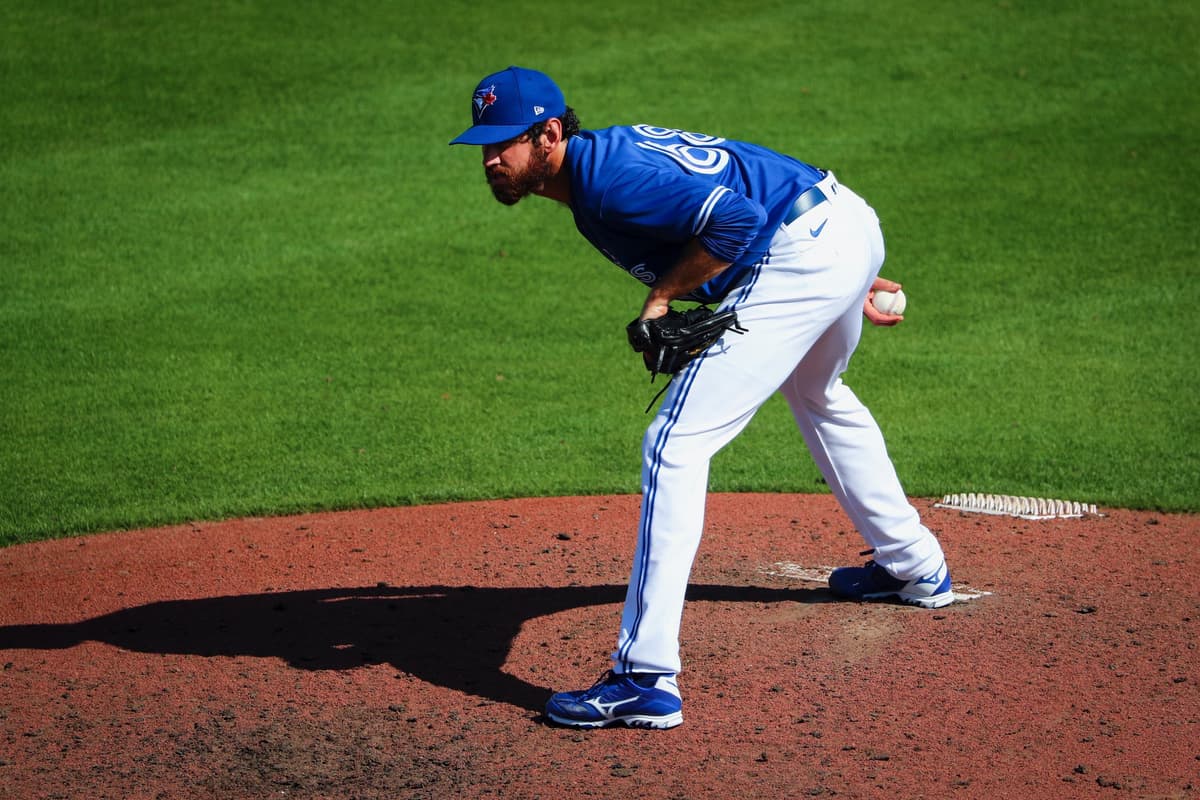
Imagine stepping into a time machine, not to witness the birth of the universe or the fall of ancient empires, but to observe a group of athletes engaged in a peculiar ritual: baseball players, clad in uniforms that haven’t yet been sullied by the grime of a full season, swinging bats with the fervor of a child’s first home run swing. This is Spring Training, the MLB’s annual prelude to the grind of the regular season—a six-week carnival of hope, where every stat line is dissected with the intensity of a detective solving a cold case. But here’s the twist: most of those statistics are about as meaningful as a screen door on a submarine. So, why do we obsess over them? And more importantly, what if we simply stopped caring?
The Illusion of Early Brilliance: When .400 Hitters Roam in February
Picture this: a journeyman infielder, a man who has spent the last five seasons flirting with the Mendoza Line, steps into the batter’s box on a balmy March afternoon. The pitcher, a minor leaguer trying to earn a roster spot, groans as the first pitch sails over the plate for a line drive single. By the end of the week, this player is leading the Grapefruit League in batting average, his name trending on sports talk radio. But here’s the catch—this same player will likely spend the first two months of the season riding the pine, his “hot” Spring Training performance buried beneath a mountain of strikeouts come April.
Spring Training stats are the statistical equivalent of a mirage. The sample sizes are laughably small, the competition is a mix of washed-up veterans, overmatched prospects, and pitchers experimenting with new grips. A .350 batting average in March is less a predictor of success than a fluke of a blackjack player hitting three aces in a row. The real question isn’t whether these numbers matter—it’s why we let them cloud our judgment before the first pitch of the regular season has even been thrown.
The Pitching Paradox: ERA and WHIP in a League of Randomness
Now, let’s talk about the arms race—or more accurately, the arms roulette. A reliever, fresh off a winter of throwing bullpen sessions in his backyard, steps onto the mound in Sarasota and proceeds to retire the side in order. His ERA? A pristine 0.00. His WHIP? A mythical 0.00. By the time the first real game rolls around, he’s been optioned to Triple-A, his “dominant” Spring outings forgotten faster than a pitcher’s fastball in the ninth inning of a blowout.
Pitching stats in Spring Training are the statistical equivalent of a magician’s trick—sleight of hand disguised as data. The conditions are artificial: smaller sample sizes, unfamiliar lineups, and pitchers often working on new pitches or mechanics. A starter might “dominate” in his first two Grapefruit League starts, only to give up six runs in the third, his ERA ballooning like a hot air balloon over the Everglades. The truth is, pitching stats in March are about as reliable as a weather forecast for the next decade. They’re fun to watch, sure, but they’re not a crystal ball.
The Prospect Panic: When a 20-Year-Old’s Slash Line Sends Fans Into a Frenzy
There’s a special kind of madness reserved for prospect hype. A 20-year-old outfielder, fresh off a dominant season in Double-A, steps into the box in Jupiter and crushes a 450-foot home run off a veteran pitcher. By the end of the week, social media is ablaze with takes about how he’s the next Mike Trout. The problem? This same prospect might struggle to hit .220 in his first big-league call-up, his Spring Training heroics reduced to a footnote in his rookie struggles.
Prospect stats in Spring Training are the baseball equivalent of reading tea leaves. The competition is uneven, the coaching staff is tinkering with mechanics, and the player’s body is still adjusting to the grind of a full season. A .300 average in March means less than nothing when that same player strikes out 30 times in his first 100 big-league at-bats. The real test comes when the games start to matter—and until then, those early numbers are just a distraction from the real work of development.
The Manager’s Dilemma: When Spring Stats Dictate Roster Spots
Here’s where things get messy. Managers, under pressure to justify their decisions to fans and media alike, often make roster choices based on Spring Training performance. A utility infielder with a .380 average in March might find himself penciled into the Opening Day lineup, while a veteran with a .150 clip gets sent down before the season even starts. The issue? These decisions are often made with less regard for long-term success than a gambler’s last bet at the roulette table.
Baseball is a game of inches, but it’s also a game of patience. A manager who leans too heavily on Spring Training stats risks overlooking the intangibles that truly matter: a player’s work ethic, his adaptability, his ability to handle adversity. The best managers know that a hot March doesn’t guarantee success in October—but the worst ones let a few weeks of meaningless data dictate their entire season’s strategy.
The Fan’s Folly: Why We Can’t Resist the Siren Song of Early Numbers
So why do we fall for it every year? Why do we let a handful of meaningless games dictate our expectations for the season ahead? The answer lies in our collective inability to resist the siren song of early data. We crave certainty in a sport defined by unpredictability. We want to believe that a .400 hitter in March will carry that momentum into May. We want to believe that a pitcher with a 1.00 ERA in Spring Training is destined for Cy Young greatness.
But baseball doesn’t work that way. The regular season is a marathon, not a sprint, and the players who thrive are the ones who can grind through the dog days of summer, not the ones who feast on weak competition in February. The fans who resist the urge to overanalyze Spring Training stats are the ones who truly understand the game. The rest of us? We’re just along for the ride, hoping that this year, the mirage will finally be real.
The Challenge: What If We Ignored Spring Training Stats Entirely?
Here’s a thought experiment: What if we collectively decided to ignore Spring Training stats? No batting averages, no ERAs, no home run leaders. Just pure, unfiltered baseball, with no distractions from the noise of early-season hype. Would the regular season suffer? Would we miss out on any meaningful insights?
The truth is, Spring Training stats serve one primary purpose: they give us something to talk about. They’re the baseball equivalent of small talk at a cocktail party—pleasant, but ultimately meaningless. The real magic of the sport happens when the games start to matter, when the stakes are high, and when the numbers finally mean something.
So this year, let’s try something different. Let’s enjoy the spectacle of Spring Training for what it is: a chance to see young players grow, veterans shake off the rust, and managers experiment with lineups. But let’s not pretend that the stats they accumulate in March will tell us anything about how they’ll perform in October. Because if there’s one thing we know about baseball, it’s this: the only stat that truly matters is the one that’s written in the record books at the end of the season.