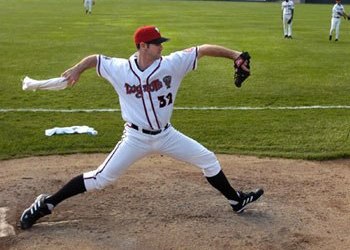
In the intricate ballet of baseball pitching, every movement is a note in a symphony of power, precision, and durability. Yet, within this complex choreography lurks a mechanical enigma known as the “Inverted W”—a motion as captivating in its appearance as it is treacherous in its consequences. This subtle distortion in arm mechanics has intrigued pitchers, coaches, and medical experts alike, symbolizing both the allure of potential velocity and the shadow of injury risk. Understanding the nuanced danger of the “Inverted W” unveils not only the fragility hidden beneath elite performance but also the imperative of refining mechanics to preserve a pitcher’s longevity.
The Anatomy of the Inverted W: Visualizing the Mechanical Culprit
Imagine a pitcher’s arms tracing a fleeting, angular sculpture mid-delivery. The “Inverted W” manifests when a pitcher’s elbows rise abruptly above the shoulder level before the arm accelerates forward—a visual akin to an upside-down letter “W” painted across the silhouette. This seemingly innocuous sequence, characterized by premature elevation and internal rotation of the elbows, perverts the fluid kinetic chain that pitching mechanics ideally embrace. Instead of a seamless cascade of energy from the legs up through the torso and finally discharged by the arm, the Inverted W interrupts the flow, introducing an aberration in timing and positioning.
Why the Inverted W Enchants and Endangers Pitchers
The Inverted W possesses a dualistic allure. On one hand, it promises explosive arm speed and a perceived edge in velocity—a siren call for those chasing the fastball’s mercurial edge. The exaggerated elbow position seemingly sets the arm up for a more forceful whip-like motion, fueling the imagination of optimized power. However, this mechanical embellishment doesn’t come without a price. The early elevation and internal rotation constrained by this position place extraordinary stress on ligaments, tendons, and the delicate ulnar collateral ligament (UCL) within the elbow. This mechanical compromise is a tinderbox for injury, particularly the dreaded Tommy John surgery that has become emblematic of overuse and misalignment in pitchers.
Biomechanical Breakdown: The Cascading Effects on the Arm
Delving deeper, the Inverted W disrupts the biomechanical harmony essential for efficient pitching. The ideal delivery harnesses sequential energy transfer—from the ground, through the hips and trunk, culminating in a synchronized arm whip. However, the premature elbow elevation truncates the arm’s acceleration phase, disrupting timing and imposing atypical valgus torque on the elbow. This unnatural strain inflames soft tissue structures, increasing the risk of microtears and degeneration. Furthermore, the disjointed arm action compromises accuracy and control, as the pitcher contends with altered proprioception and uneven force distribution. The Inverted W, then, is not merely a mechanical flaw but a catalyst for biomechanical dissonance and cumulative trauma.
Historical Perspectives: Notable Examples and Their Lessons
The Inverted W’s notoriety has been spotlighted in the careers of prominent pitchers who both dazzled and suffered under its shadow. Mark Prior, once hailed as a prodigious talent, epitomized the paradox of the Inverted W. His fluid yet unconventional mechanics embodied this distinctive motion, which many analysts associate with his rapid ascent and subsequent injury struggles. His career arc serves as a cautionary tale, underscoring the allure and peril entrenched within these mechanics. Such historical examples fuel ongoing debates among pitching coaches and therapists about the balance between harnessing natural motion and preemptively correcting harmful patterns.
Technological Advances in Detection and Correction
Modern advancements in motion capture and biomechanical analysis have revolutionized the ability to detect and quantify the Inverted W. High-speed cameras and 3D kinematic models provide granular insights into joint angles, velocity, and stress points during each phase of delivery. This technological lens enables coaches and medical professionals to identify subtle inconsistencies indicative of the Inverted W early in a pitcher’s development. Subsequently, personalized intervention strategies—including targeted drills, flexibility enhancement, and strength conditioning—can be implemented to recalibrate mechanics. This predictive approach is transforming injury prevention from reactive treatment to proactive optimization.
The Role of Coaching Philosophy and Developmental Athletics
Underlying the biomechanical discourse is the philosophical debate around pitching instruction. Some coaching paradigms emphasize natural arm action and individual expression, accepting idiosyncrasies as intrinsic to pitching artistry. Others advocate for rigorous technical correction, prioritizing mechanical efficiency and injury mitigation. In youth and adolescent development, this dichotomy gains prominence. Early detection and modification of the Inverted W are critical, as developing musculoskeletal systems are particularly vulnerable. Programs focusing on foundational biomechanics, arm care education, and workload regulation have shown promise in mitigating the propagation of detrimental motions like the Inverted W. This intersection of pedagogy and physics is shaping the next generation of pitchers, harmonizing performance and longevity.
The Psychological Dimension: Navigating Change and Adaptation
The journey to amend the Inverted W is not solely physical but profoundly psychological. Pitchers often develop an intimate kinesthetic memory of their motion—a finely tuned sense of timing and balance. Asking an athlete to alter this deeply ingrained pattern can provoke frustration, self-doubt, and decreased confidence. The psychologist’s role emerges as crucial in facilitating this transition, empowering pitchers to embrace adjustments as enhancements rather than limitations. The narrative rewrites itself not just in muscle memory but in mindset—the resilience to evolve while safeguarding future potential.
The Inverted W as a Metaphor for Risk and Reward
The Inverted W stands as an evocative metaphor within baseball’s grand theater: a tightrope walk between brilliance and breakdown. It embodies the tension between harnessing natural gifts and succumbing to mechanical hazards, reflecting a broader human struggle with balancing ambition against vulnerability. Just as the ascending and descending angles of the W convey both symmetry and imbalance, so too does this pitching motion encapsulate the fragile equilibrium of athletic endeavor. Recognizing and respecting this duality invites a nuanced appreciation for the complexity of pitching—a reminder that in the pursuit of greatness, vigilance against unseen dangers is paramount.
Conclusion: Towards a Future of Informed Pitching Practices
Emerging from the shadows cast by the Inverted W is a call to action—a mandate for informed, evidence-based pitching practices that prioritize health as much as performance. Through biomechanical insight, technological innovation, and holistic coaching, the baseball community is forging pathways that honor the artistry of pitching while safeguarding its artisans. The Inverted W, once a cryptic signature of risk, can now serve as a catalyst for progress, guiding pitchers away from the precipice of injury toward a resilient and sustainable career. In embracing this knowledge, the sport advances not just in skill but in wisdom, preserving the delicate dance of pitching for generations to come.


![My Leaguemate Just Dropped [STAR NAME]. Collusion?](https://zellspinstripeblog.com/wp-content/uploads/2026/04/0kilnqte7uu91.jpg)