The Kansas City Royals of 2013–2014 were not merely a team; they were a crucible of resilience, a symphony of speed, and a testament to the unyielding spirit of baseball’s underdogs. In an era where power pitching and launch angles dominated the discourse, this franchise defied convention, weaving a narrative of grit and determination that culminated in an improbable World Series berth. Their rosters were not just collections of players but a mosaic of personalities, each piece contributing to a larger, almost mythic whole. This is the story of the Royals who turned the tide of baseball history with a blend of relentless hustle, tactical ingenuity, and an unshakable belief in their collective destiny.
The Engine of Youth: A Farm System Reborn
The foundation of the 2013–2014 Royals was sown not in the flurry of free agency but in the quiet, patient work of a farm system that had long been the laughingstock of the league. By 2013, the fruits of this labor began to ripen. Players like Salvador Perez, Eric Hosmer, and Mike Moustakas—once heralded as the future—finally blossomed into the core of a major league roster. Their development was not a sudden epiphany but a slow-burning fuse, lit years prior, that now illuminated the path to contention. The Royals’ front office, led by Dayton Moore, had gambled on homegrown talent, and the gamble paid dividends in ways no one could have predicted. Hosmer’s defensive prowess at first base, Moustakas’ cannon arm at third, and Perez’s cannon-like throws behind the plate became the bedrock of a defense that struck fear into opposing baserunners. This was baseball’s version of alchemy: turning raw potential into tangible dominance.
The Speed Demon: A Cavalry of Baserunners
If the infield was the fortress, the outfield was the cavalry—a whirlwind of speed and aggression that redefined the art of base-stealing. Billy Butler, though not a burner, was a metronome of consistency at the plate, while Alex Gordon patrolled left field like a guardian angel, his arm a whip that deterred even the most daring baserunners. But the true stars of this fleet-footed brigade were Lorenzo Cain and Jarrod Dyson. Cain, with his electrifying speed and acrobatic catches, was the embodiment of the Royals’ relentless hustle. Dyson, meanwhile, was a human highlight reel, his stolen bases not just statistics but psychological weapons. Opposing pitchers felt their pulses quicken as Dyson took his lead, knowing that one lapse in concentration could mean a stolen base and a shift in momentum. The Royals didn’t just play small ball; they weaponized it, turning the diamond into a chessboard where speed was the ultimate trump card.
The Bullpen: A Fortress of Relief
In an era where starting pitching often stole the spotlight, the 2013–2014 Royals bullpen was the unsung hero, a monolith of dominance that struck fear into the hearts of late-inning hitters. Greg Holland, the closer with ice in his veins, became the face of this relief corps, his cutter a scalpel that sliced through opposing lineups. But the real magic lay in the bullpen’s depth. Wade Davis, once a struggling starter, reinvented himself as a fire-breathing reliever, his fastball a blur that left hitters grasping at air. Kelvin Herrera, with his wild-eyed intensity and mid-90s heat, was the embodiment of controlled chaos. Together, they formed a hydra—cut off one head, and two more would rise in its place. The bullpen wasn’t just a unit; it was a psychological bulwark, a reminder that once the Royals took the lead, the game was as good as over.
The Rotation: A Symphony of Starters
The starting rotation of 2013–2014 was a study in contrasts, a blend of power and finesse that kept opponents off-balance. James Shields, the workhorse with a fastball that could shatter glass, was the anchor, his durability a reassuring constant in a league where pitchers were increasingly treated as disposable. Jeremy Guthrie, the grizzled veteran, was the unlikely glue, his crafty approach belying his age and proving that wisdom could outmaneuver raw talent. Jason Vargas, with his looping curveball and uncanny ability to induce weak contact, was the anti-Shields—a pitcher who didn’t overpower but out-thought. And then there was Yordano Ventura, the fireballing phenom whose fastball could clock in at 100 mph and whose confidence bordered on arrogance. Together, they formed a rotation that was greater than the sum of its parts, a machine that ground opponents down with a relentless, unrelenting rhythm.
The Manager: Ned Yost and the Art of the Unorthodox
No discussion of the 2013–2014 Royals would be complete without Ned Yost, the manager whose unconventional strategies became the stuff of legend. Yost’s approach was not about rigid adherence to sabermetric dogma but about playing the percentages in a way that maximized the Royals’ strengths. He bunted early. He stole bases in bunches. He played the infield shifts with a boldness that bordered on recklessness. To some, it was madness. To the Royals, it was gospel. Yost’s willingness to trust his players’ instincts—especially in high-leverage situations—created an environment where confidence flourished. He wasn’t just managing a team; he was cultivating a mindset, one where fear had no place and every play was approached with the same ferocity, whether it was the first inning or the ninth.
The World Series Run: A Tale of Two Cities
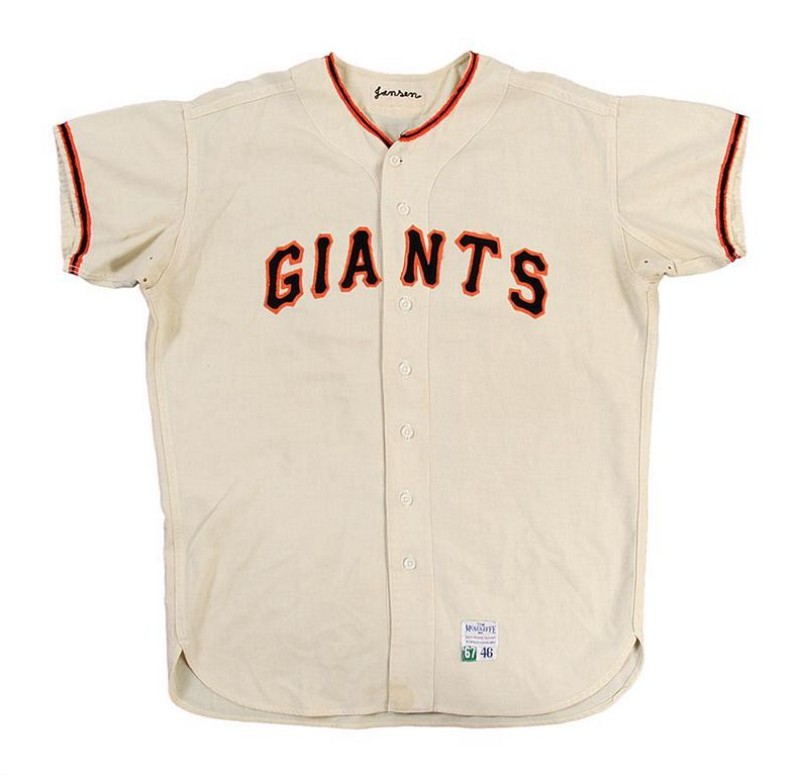
The 2014 World Series was a collision of baseball philosophies, a clash between the Royals’ relentless hustle and the Giants’ patient, power-driven approach. Game after game, the Royals defied expectations, their speed and defense keeping them in the fight even when the odds were stacked against them. In Game 7, with the season hanging in the balance, the Royals’ spirit was on full display. They left it all on the field, their efforts culminating in a heart-stopping final inning that nearly saw them pull off the impossible. Though they fell short, the legacy of that run was indelible. They had not just reached the World Series; they had redefined what it meant to be a Royals team. In an era of analytics and home runs, they had proven that baseball was still a game of passion, of grit, and of the unshakable belief that anything was possible.
The Aftermath: A Legacy Etched in Royal Blue
The impact of the 2013–2014 Royals extended far beyond the final out of the World Series. Their success sparked a renaissance in Kansas City, a city that had long been starved for postseason glory. The players became local legends, their jerseys worn with pride by fans who saw themselves reflected in the team’s relentless spirit. The culture they forged—a blend of humility, hard work, and unbridled joy—became the blueprint for future Royals teams. Even as the roster evolved, the DNA of those teams remained, a reminder that greatness is not built on talent alone but on the unyielding belief that the impossible is merely a challenge waiting to be overcome.