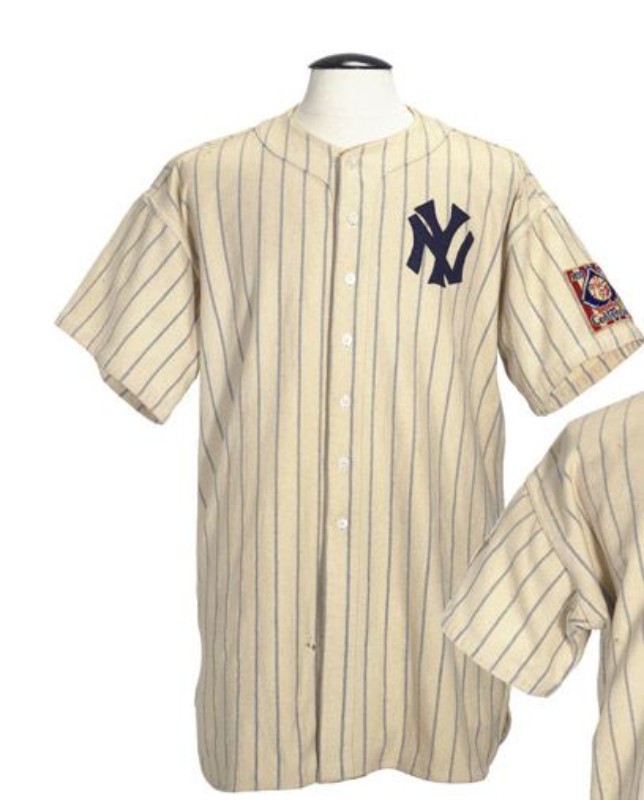
The 1939 New York Yankees weren’t just a baseball team—they were a phenomenon, a constellation of talent so luminous that it redefined the very essence of dominance in America’s pastime. In an era when the game still carried the scent of tobacco-stained dugouts and the crack of bats echoed through cavernous ballparks, this roster assembled a legacy that would outshine even the most vivid imaginations. The Yankees of 1939 didn’t merely win; they ascended, crafting a narrative so compelling that it lingers in the collective memory like a well-worn baseball glove, its leather supple with history. Their story is one of synergy, of individual brilliance coalescing into something greater than the sum of its parts, a testament to how a team can transcend its era and become immortal.
The Architecture of a Dynasty: A Roster Forged in Fire
To understand the 1939 Yankees, one must first grasp the alchemy of their composition. This was not a team assembled through happenstance but rather a meticulously engineered machine, where each cog played a role in a grander design. At the helm stood Joe McCarthy, a manager whose stoic demeanor masked a tactical genius capable of extracting peak performance from even the most mercurial talents. His leadership was the glue that held together a roster brimming with personalities as diverse as the boroughs of New York itself.
The infield alone reads like a roll call of baseball royalty: Bill Dickey, the Hall of Fame catcher whose defensive prowess and leadership behind the plate set the standard for generations; Joe Gordon, the second baseman whose cannon arm and clutch hitting made him the backbone of the middle infield; and Phil Rizzuto, the diminutive shortstop whose boundless energy and defensive wizardry would later earn him the nickname “The Scooter.” But it was the corner positions that truly defined the era’s offensive firepower. Lou Gehrig, the “Iron Horse,” may have been in the twilight of his career, but his presence alone was a gravitational force, a reminder of the Yankees’ unbroken lineage of excellence. Complementing him was Red Rolfe, a steady third baseman whose reliability was as understated as it was invaluable.
The outfield was a triptych of terror, a trio of hitters whose combined offensive output would make modern analytics weep with envy. Joe DiMaggio, the “Yankee Clipper,” was at the zenith of his powers—a player whose grace and power seemed almost supernatural. His 56-game hitting streak in 1941 would later cement his legend, but in 1939, he was already a myth in the making. Charlie Keller, the “Keller Kid,” brought a left-handed power bat to the lineup, his swing as smooth as it was devastating. And then there was George Selkirk, the oft-overlooked right fielder whose timely hitting and defensive acumen made him the perfect complement to his more celebrated teammates.
The Pitching Staff: Arms That Carved a Path to Immortality
If the position players were the Yankees’ dazzling front porch, the pitching staff was the foundation upon which the entire edifice stood. This was an era when starting pitchers were expected to toe the rubber every fourth day and hurl complete games with the tenacity of a bulldog defending its bone. The 1939 Yankees boasted a rotation that was the envy of the league, a quintet of arms that combined for 100-plus wins and an ERA that hovered around a stingy 3.30.
Red Ruffing, the workhorse of the staff, was the embodiment of durability. His 21 wins and 3.47 ERA were impressive, but it was his ability to pitch deep into games—often single-handedly carrying the team—that set him apart. Lefty Gomez, with his high leg kick and blazing fastball, was the flamethrower of the era, a pitcher whose name alone struck fear into opposing batters. His 12-4 record in 1939 was a mere snapshot of his dominance, a career that would later earn him a plaque in Cooperstown.
Then there was Monte Pearson, the unsung hero of the rotation, whose 12-7 record belied his importance. His ability to pitch in high-leverage situations made him a linchpin of the staff. At the back end of the rotation, Atley Donald and Steve Sundra provided the stability needed to weather the inevitable storms. Donald’s 13-4 record and Sundra’s 11-4 mark were not just numbers; they were the statistical fingerprints of a pitching staff that operated with the precision of a Swiss timepiece.
But the bullpen, though less heralded, was no afterthought. Johnny Murphy, the “Fireman,” was one of the first true relief aces in baseball history. His ability to stifle rallies in the late innings was a luxury that few teams could afford, and the Yankees wielded it like a scalpel. The bullpen’s collective 3.10 ERA was a testament to its effectiveness, a unit that could preserve leads and extend the careers of the starting pitchers who preceded them.
The Season That Defined a Generation: 1939’s March to the World Series
The 1939 Yankees did not merely win games; they orchestrated symphonies of dominance, a season-long crescendo that culminated in a World Series sweep of the Cincinnati Reds. Their 106-45 record was not just a reflection of their talent but a declaration of their intent. They played with a swagger that bordered on arrogance, a confidence that bordered on invincibility. Every game was a masterclass in execution, a clinic in how to play baseball with both precision and flair.
Their offensive firepower was on full display, with the team batting .287 as a unit and slugging .428. DiMaggio led the charge with a .381 batting average, 30 home runs, and 125 RBIs, while Gehrig, despite his declining health, still managed to contribute 29 home runs and 113 RBIs. The pitching staff, as a collective, allowed just 646 runs over 154 games—a figure that would be the envy of any modern team. Ruffing led the charge with 21 wins, while Gomez’s 12-4 record was a harbinger of the dominance he would display in the coming years.
The World Series was a coronation, a four-game dismantling of the Reds that served as both a validation of the Yankees’ supremacy and a foreshadowing of the dynasties to come. DiMaggio’s performance alone—hitting .313 with a home run and three RBIs—was a microcosm of the team’s effortless excellence. The sweep was not just a victory; it was a statement, a declaration that the Yankees were not merely the best team in baseball but a force of nature, a team that had ascended beyond the realm of mere mortals.
The Cultural Impact: How a Team Became a National Obsession
The 1939 Yankees were more than a baseball team; they were a cultural touchstone, a symbol of American resilience and excellence during a decade marked by economic hardship and global uncertainty. In an era when radio broadcasts brought the game into living rooms across the country, the Yankees became a unifying force, a shared experience that transcended class and geography. Their games were not just sporting events; they were communal rituals, moments of collective joy in an often bleak world.
Their dominance was a balm to a nation still reeling from the Great Depression, a reminder that excellence could still be achieved in the face of adversity. The Yankees’ success was not merely a product of their talent but a reflection of their ability to embody the aspirations of a generation. They were the team of the everyman and the elite alike, a rare convergence of public affection and athletic prowess.
Their legacy extended beyond the diamond, seeping into the fabric of American culture. The 1939 Yankees were immortalized in newsreels, in newspapers, and in the collective consciousness of a nation that saw in them a reflection of its own indomitable spirit. Their story was one of triumph, of a team that had not just won a championship but had captured the imagination of a country.
The Enduring Fascination: Why the 1939 Yankees Still Captivate Us
Decades later, the 1939 Yankees remain a subject of fascination, a team whose mystique only deepens with time. Part of their allure lies in the era itself—a time when baseball was still the undisputed king of American sports, when the game was played in the shadow of towering ballparks and the crack of bats was the soundtrack of summer. The 1939 Yankees were the last gasp of a golden age, a team that carried the torch of tradition into a world on the cusp of change.
But their appeal is more than nostalgia. It is the story of a team that achieved greatness not through a single transcendent talent but through the alchemy of collective effort. It is the tale of a manager who could coax greatness from a roster of strong personalities, of a pitching staff that operated with the precision of a well-oiled machine, and of an offense that blended power and finesse in a way that felt almost effortless. Theirs is a story of synergy, of how a group of individuals can come together to create something greater than themselves.
Their legacy is also a reminder of the ephemeral nature of greatness. The 1939 Yankees were not just a team; they were a moment in time, a snapshot of a world that would soon be irrevocably changed by war and social upheaval. Their dominance was a fleeting phenomenon, a burst of brilliance that illuminated the baseball landscape before fading into history. And yet, in that fleeting moment, they achieved something rare and beautiful—a legacy that would endure long after the final out of the 1939 World Series had been recorded.