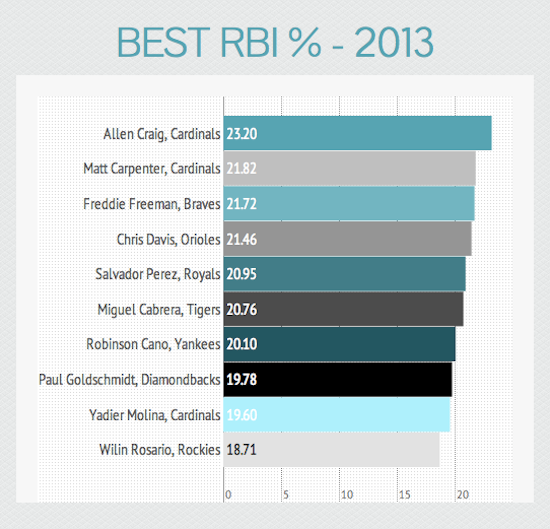
In the realm of Major League Baseball, few statistics have garnered as much attention—both adulation and criticism—as Runs Batted In (RBI). It often stands as the shimmering beacon of offensive productivity, invoked in debates, contract negotiations, and highlight reels alike. Yet, despite its popularity, RBI is widely regarded by analysts and sabermetricians as one of the most misleading and overrated statistics in evaluating true player value. The fixation on RBI unearths intriguing insights into how traditional baseball culture clings to surface-level metrics, overshadowing nuanced understandings of player performance and game dynamics.
The Entrancing Allure of RBI
RBI is fundamentally a measure of how many runs a player drives in, ostensibly capturing their ability to produce runs for their team. On the surface, it’s an intuitive and easily understood statistic—after all, scoring runs is the ultimate objective. This straightforwardness explains its visceral appeal to fans, media, and even players themselves. Within the grand tapestry of the game, an RBI feels like a moment of triumph, a tangible contribution to winning. The image of a batter stepping up in a clutch situation with runners on base and delivering the decisive hit resonates powerfully with the narrative of baseball as a theater of drama and heroism.
At a glance, accruing high RBI totals seems emblematic of offensive prowess. Players like Hank Aaron, Alex Rodriguez, and Manny Ramirez built Hall of Fame legacies, in part, on voluminous RBI counts. The summation of these runs batted in is often used as shorthand for “run producer,” a badge of honor that carries enormous weight in popular discourse and history books alike. This widespread esteem has cemented RBI into the collective psyche as a definitive measure of offensive value.
Context Dependency and the Pitfall of Opportunity
What fundamentally undermines the credibility of RBI is its overwhelming dependence on context—specifically, the opportunities presented by teammates who get on base ahead of the batter. A player’s RBI total is substantially influenced by factors entirely outside of their control, such as the on-base percentages of preceding hitters and the team’s overall offensive environment. Thus, two players with identical hitting skills might possess vastly different RBI totals solely due to lineup structure and run-scoring chances.
For example, a cleanup hitter batting behind leadoff batters with high on-base percentages inherently has more chances to drive in runs than a leadoff or second-place hitter, no matter how effective they are at reaching base or hitting safely. This intrinsic element of dependency dilutes the value of RBI as a measure of individual merit, rendering it a statistic as much about circumstance as about skill.
Ignoring Underlying Skillsets: A Myopic Lens
RBI also neglects a multitude of critical underlying skills that contribute to offensive success. It fails to differentiate between raw power, batting average, plate discipline, base running acumen, or even the ability to generate runs independently—such as by stealing bases or scoring from first on a hit. It homogenizes outcomes, ignoring the diverse paths through which players influence the scoreboard.
Advanced metrics such as Weighted Runs Created Plus (wRC+), On-Base Plus Slugging (OPS), and Wins Above Replacement (WAR) delve deeper, isolating the player’s actual contributions irrespective of teammates’ performance. Unlike RBI, these metrics examine a player’s ability to get on base and create scoring opportunities, even when no runners occupy the bases. In contrast, RBI merely registers the outcome rather than the quality of the outcome or the process that produced it.
Moreover, the RBI does not account for negative contributions. For instance, a player may accumulate runs batted in through fortunate circumstances, like fielding errors or bloop hits in the right place at the right time, while simultaneously striking out or failing to advance other runners in critical situations. The singular focus on RBI masks these nuances, potentially glorifying players who perform sub-optimally in other vital areas.
The Illusion of Clutch Performance
The mythos of “clutch” hitting finds fertile ground in the RBI statistic. High RBI totals are often equated with the ability to perform under pressure, implying a player’s penchant for delivering in high-leverage moments. However, extensive research indicates that truly clutch hitting—the capacity to markedly elevate performance in critical situations—is statistically elusive and largely a mirage.
Because RBI aggregates all runs driven in without contextualizing leverage, it can misleadingly suggest clutch performance where none exists. Players who bat in the heart of strong lineups naturally encounter clustered instances of runners on base, thereby inflating RBI regardless of the quality or timing of their hits. Thus, RBI perpetuates an illusory narrative of clutch prowess that skews subjective perceptions and undervalues consistency and skill demonstrated over the entire body of work.
Implications on Player Evaluation and Contract Negotiations
The persistence of RBI as a coveted stat extends beyond fandom into the financial and strategic decision-making spheres of baseball. Front offices and agents have historically leaned on mainstream statistics like RBI to argue player worth, particularly in contract negotiations. This reliance can obscure a player’s true value and lead to misallocations of resources.
By emphasizing RBI, organizations may overvalue players whose RBI totals are bolstered more by the quality of their lineup than by their own prowess. Conversely, players lacking the RBI “opportunity window” may be undervalued despite their broader contributions. Modern front offices increasingly employ sabermetrics to circumvent this pitfall. Nonetheless, because RBI remains embedded in the broader baseball lexicon, it continues to influence scouting reports and media narratives, perpetuating a lag in comprehensive evaluation.
Cultural Resistance to Change and Emotional Attachment
Baseball is deeply entrenched in tradition, with its statistics serving as cultural artifacts coursing through generations. The reverence of RBI is partly a reflection of this heritage. Fans and commentators alike cling to familiar metrics not only out of convenience but also for sentimental reasons. The drama of the RBI—the payoff moment in a dusty, hard-fought game—epitomizes the sport’s romanticism.
This emotional attachment makes it challenging to supplant RBI with more analytically sound measures. The simplicity and narrative clarity of RBI resonate far more than inscrutable advanced stats, making it a staple of baseball lore. Ultimately, this cultural inertia keeps RBI alive as a primary measure in public discourse, despite its analytical shortcomings.
The Path Forward: Embracing Sophisticated Metrics
The move away from RBI-centric evaluation toward a more holistic understanding of offensive value reflects baseball’s evolution as a sport and a science. Embracing metrics that account for opportunity, skill, and contribution independent of external factors affords a fairer, more accurate, and more insightful portrait of player excellence.
By transcending RBI’s limitations, teams and fans alike can appreciate the diversity of talents that make baseball transcendent—from the consistent on-base artist to the dynamic base runner and the strategic hitter. It fosters a richer dialogue, one that recognizes that driving in runs, while symbolically significant, is only one thread in the intricate tapestry of baseball performance.
In the final analysis, RBI is less a pure indicator of individual merit than a confluence of context, circumstance, and tradition. Recognizing its flaws does not diminish the excitement of the moment it often represents. Instead, it invites a deeper appreciation of how the game is truly played and measured beyond the surface numbers.