In the annals of Major League Baseball, certain moments transcend mere box scores and statistics, offering a vivid snapshot of an era. The 1939 World Series, a contest pitting the formidable New York Yankees against the burgeoning Cincinnati Reds, is one such historical juncture. While the outcome might be well-known to dedicated fans, a deeper dive reveals a fascinating tapestry of talent, strategy, and a sporting world on the precipice of profound global change. Join us for a journey back to that unforgettable Fall Classic, where legends were forged and a dynasty cemented its place in baseball lore.
1. A Dynasty in Full Stride
By 1939, the New York Yankees were not just a great team; they were an institution of unparalleled dominance. Having won three consecutive World Series titles from 1936 to 1938, Joe McCarthy’s squad entered the Fall Classic seeking their fourth straight, a feat that would solidify their place as arguably the greatest dynasty in baseball history. This context isn’t just a detail; it’s the very foundation of understanding the monumental challenge faced by any opponent.
2. The Reds’ Resurgence
Across the diamond, the Cincinnati Reds represented a compelling narrative of resurgence. Under manager Bill McKechnie, the Reds had dramatically improved, finishing first in the National League with a 97-56 record. Led by a strong pitching staff and veteran catcher Ernie Lombardi, their journey to the Series was a testament to building a competitive team from the ground up, a stark contrast to the Yankees’ established might.
3. Gehrig’s Poignant Absence
While the Yankees were a powerhouse, the 1939 season carried a profound sadness with the retirement of the legendary Lou Gehrig on May 2nd, after his diagnosis of amyotrophic lateral sclerosis. His iconic “Luckiest Man” speech at Yankee Stadium on July 4th resonated deeply. Though Gehrig was no longer on the field, his spirit undoubtedly loomed large over the team, adding an emotional layer to their pursuit of another championship.
4. The Yankees’ Offensive Juggernaut
The Yankees lineup was a veritable who’s who of Hall of Famers. Joe DiMaggio, fresh off an MVP season where he hit .381 with 30 home runs, was at the peak of his powers. He was supported by sluggers like Bill Dickey, Charlie Keller, Joe Gordon, and George Selkirk, forming an offensive machine that led the American League in runs scored and home runs by a considerable margin. Their ability to consistently put runs on the board was a significant advantage.
5. Cincinnati’s Pitching Prowess
The Reds countered the Yankees’ firepower with an exceptional pitching staff. Bucky Walters led the league with 27 wins and a 2.29 ERA, earning him the NL MVP award. Paul Derringer added 25 victories. This one-two punch was considered the National League’s best, and their ability to stifle opposing lineups was the cornerstone of Cincinnati’s success, making the Series a fascinating clash of offensive and defensive titans.
6. Game 1: The Yankees’ Statement
The opening game at Yankee Stadium saw a masterful performance by Yankees pitcher Red Ruffing, who pitched a complete game, limiting the Reds to two runs. While the Reds’ Paul Derringer also pitched well, a crucial error by third baseman Bill Werber in the bottom of the ninth allowed the Yankees to score the winning run, setting an early, ominous tone for Cincinnati and demonstrating the Yankees’ knack for capitalizing on opportunities.
7. Game 2: DiMaggio’s Heroics
Game 2 further emphasized the Yankees’ dominance. Joe DiMaggio delivered a towering home run in the first inning off Reds ace Bucky Walters, igniting the Yankees’ offense. Lefty Gomez, pitching for the Yankees, scattered seven hits for the win, showcasing the depth of New York’s pitching rotation. The precision and power displayed by DiMaggio were a clear indicator of the immense talent gap between the two clubs at critical moments.
8. A Shift to Crosley Field
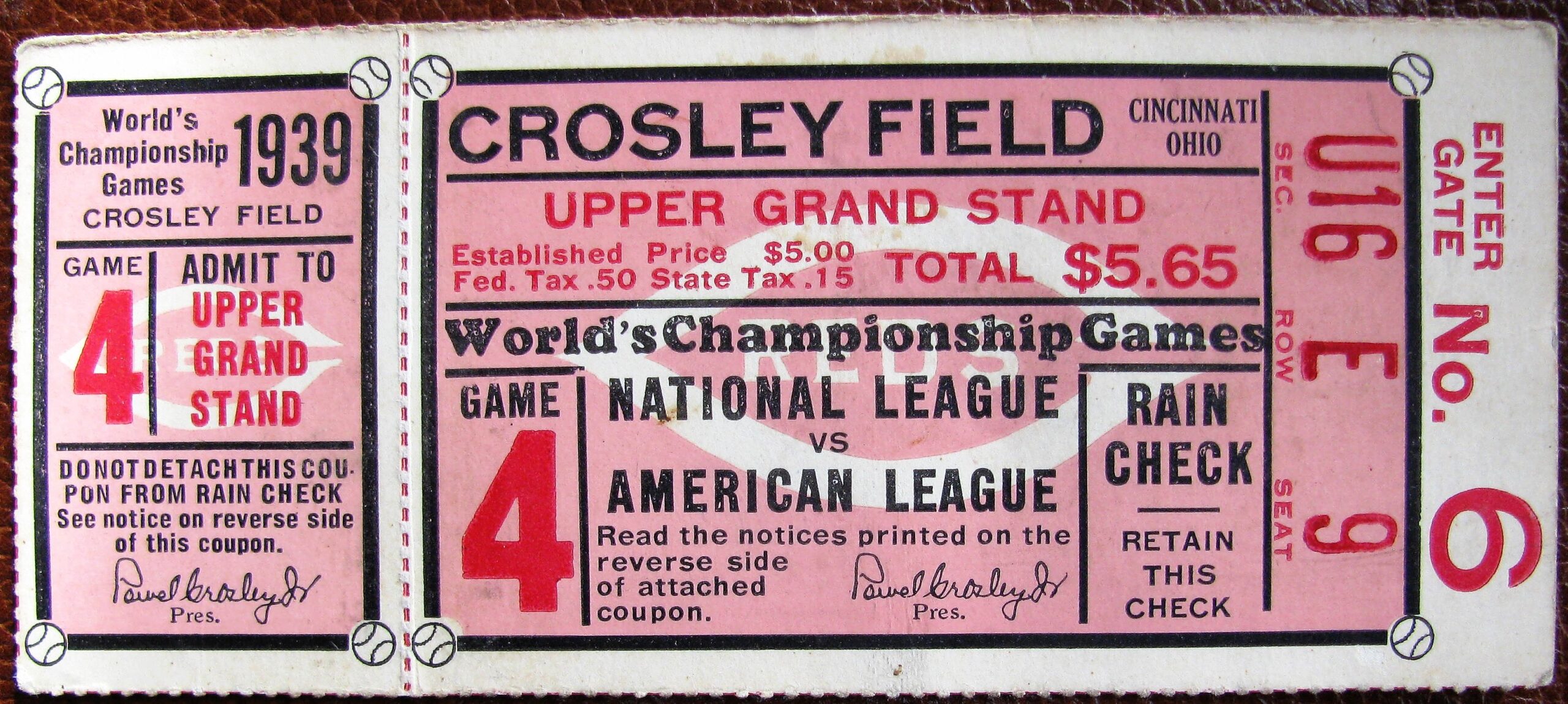
The series then shifted to Cincinnati’s Crosley Field for Games 3 and 4. While the change of venue often sparks a revival for the home team, the Yankees were undeterred. The intimate confines of Crosley Field, known for its quirky dimensions, offered a different challenge, but one that the experienced Yankees handled with remarkable composure and adaptability.
9. Game 3: The Controversial Call
Game 3 saw the Yankees take a commanding 3-0 lead in the series with a 7-3 victory. This game featured a pivotal moment in the fifth inning when a play at the plate involving Reds catcher Ernie Lombardi and Yankees baserunner Charlie Keller led to a controversial call, further fueling the Yankees’ momentum. These critical in-game decisions often define the trajectory of a series, and this one certainly favored New York.
10. The Legendary “Lombardi’s Snooze”
The infamous play often dubbed “Lombardi’s Snooze” occurred in Game 4. With the score tied in the 10th inning, Joe DiMaggio doubled, scoring Charlie Keller. When Frank Crosetti attempted to score behind Keller, Reds catcher Ernie Lombardi was bowled over, hitting his head. Disoriented, Lombardi failed to get up immediately, allowing DiMaggio to score all the way from first base on what was officially a single and two errors. This play sealed the Yankees’ sweep and became one of the most memorable, albeit unfortunate for the Reds, moments in World Series history.
11. McCarthy’s Masterful Management
Yankees manager Joe McCarthy cemented his legacy in 1939, leading the team to its fourth consecutive title. His calm demeanor, strategic acumen, and ability to manage a roster full of stars without ego clashes were hallmarks of his success. McCarthy’s leadership was a quiet but powerful force behind the Yankees’ sustained excellence.
12. McKechnie’s Unfortunate Fate
For Reds manager Bill McKechnie, the sweep was a bitter pill. Despite leading his team to a remarkable season, they simply ran into an unstoppable force. McKechnie was a respected manager, and his team would bounce back to win the World Series the following year, but 1939 served as a harsh lesson in facing a baseball juggernaut.
13. The Yankees’ Unstoppable Sweep
The 4-0 sweep was more than just a victory; it was a resounding declaration of absolute superiority. The Yankees outscored the Reds 20-8 over the four games, leaving no doubt about their status as the preeminent team in baseball. Such a decisive sweep against a strong opponent highlighted the Yankees’ capacity to perform under the highest pressure.
14. Statistical Dominance
Throughout the series, several Yankees delivered stellar performances. Joe DiMaggio led all players with a .375 batting average, driving in three runs. Charlie Keller, in his first World Series, also shone brightly, showcasing the new generation of Yankees talent ready to carry the torch. Even against top-tier pitching, the Yankees found ways to generate offense.
15. A Pre-War Sporting Spectacle
The 1939 World Series unfolded as the world teetered on the brink of World War II. While the conflict hadn’t yet engulfed the United States, the ominous clouds were gathering in Europe. Baseball, for many, offered a vital escape and a sense of normalcy in increasingly uncertain times, making this Series a cultural touchstone beyond just the sport itself.
The 1939 Fall Classic stands as a testament to the undeniable might of the New York Yankees and a pivotal chapter in the storied history of Major League Baseball. While the outcome was a definitive sweep, the narratives woven through each game, the individual performances, and the broader historical context offer a rich, enduring legacy that continues to captivate baseball enthusiasts.