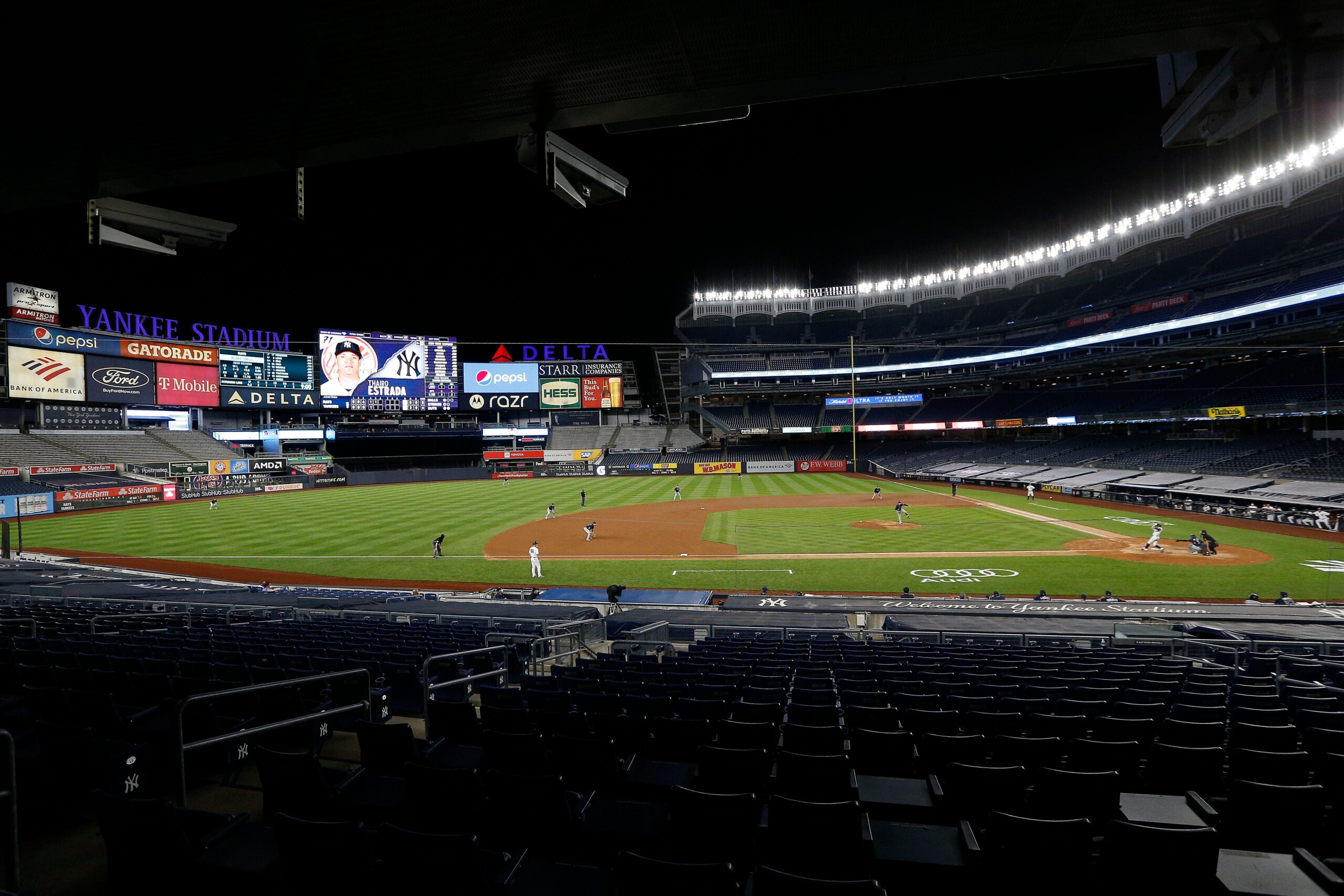
The hallowed grounds where baseball legends are forged are rarely without their quirks, and the New Yankee Stadium, a cathedral of the sport in its own right, is no exception. Since its inauguration, discussions have often revolved around specific seating sections where the grand spectacle of a game might be punctuated by an unyielding pillar, an overhang, or a structural impediment. While some decry these as modern design oversights, for the thoughtful fan, they often weave a unique narrative into the fabric of the game day experience. These are not merely “bad seats,” but rather vantage points that offer a distinct interaction with the ballpark, compelling fans to engage with the environment in ways a pristine, panoramic view never could. Here’s a deeper look into the intriguing reality of obstructed views at the New Yankee Stadium.
1. The “Architectural Rib Cage” Effect
Like a living structure, the New Yankee Stadium boasts an intricate framework, a concrete and steel rib cage designed for immense scale and enduring strength. From certain vantage points, these very bones of the ballpark become part of the viewing experience, creating natural, albeit sometimes inconvenient, frames for the action. It’s not a flaw, but an intrinsic element of being nestled deep within a modern coliseum, a visceral connection to the stadium’s immense presence.
2. The “Diamond Shard” Glimpse
Instead of a sweeping vista of the entire diamond, certain seats offer a focused, almost microscopic view – a brilliant shard of the game. Perhaps you catch every rotation on a curveball, or the exact moment a runner’s spikes dig into the basepath, forcing a heightened concentration on the immediate action rather than the broader strategic tableau. It’s a selective gaze, a curator’s choice of what to observe within the grand exhibit.
3. The “Legacy Lint” Perspective
In a stadium built to echo the grandeur of its predecessor, some obstructed views can be seen as an almost nostalgic nod to baseball’s older ballparks, where steel supports and grandstands often dictated sightlines. It’s a bit like finding a piece of legacy lint on a meticulously tailored suit – a small, unavoidable detail that connects the new to the old, suggesting a continuity of tradition rather than a departure from it.
4. The “Connoisseur’s Corner” Dilemma
For the true baseball connoisseur, proximity often trumps perfection. These obstructed views, often found closer to the field or in unique architectural pockets, offer an intimacy with the game that a distant, unobstructed view cannot. It’s the difference between seeing a play unfold on a vast canvas and being close enough to hear the grunts, feel the vibrations, and smell the freshly cut grass, accepting a trade-off for sensory immersion.
5. The “Pillar of Pantheon” Perspective
A supporting pillar in a magnificent stadium isn’t just an obstacle; it’s a monument in itself, a silent sentinel that has witnessed countless triumphs and heartbreaks. From these specific seats, the pillar becomes a tangible part of your personal game-day story, a landmark around which memories are framed, lending a unique sense of place and permanence to your experience.
6. The “Whispers of the Bat” Obstruction
When the visual field is partially obscured, other senses are sharpened. The crack of the bat becomes more pronounced, the roar of the crowd takes on new textures, and the chatter from the dugout seems to drift more clearly. The “whispers of the bat” become the primary narrative, allowing the soundscape of the game to paint the missing pictures in the mind’s eye, a truly immersive sonic experience.
7. The “Architect’s Intent” Shadow Play
Perhaps these views are not accidental, but rather an intentional shadow play within the architect’s grand design. They create varying degrees of light and visual emphasis, guiding the eye to specific areas or creating pockets of intimacy amidst the vastness. It’s a dynamic interplay between structure and sight, where the stadium itself becomes an active participant in shaping the viewer’s journey.
8. The “Frame of History” Angle
Viewing a game through a partial obstruction can feel like looking through an antique spyglass or a windowpane from a bygone era. The limited aperture forces a focus, creating a sense of peering into a historical moment rather than simply observing it. It adds a layer of curated perspective, making the viewer feel like a discoverer of a hidden truth.
9. The “Concentration Catalyst” Effect
With a portion of the field out of sight, a fan’s attention is hyper-focused on what remains visible. This isn’t distraction, but rather a catalyst for intense concentration. Every pitch, every swing, every movement within the visible segment becomes magnified in importance, cultivating a deeper, more engaged analytical viewing experience.
10. The “Narrative Nook” Advantage
Obstructed view seats often become the birthplace of unique anecdotes. “Remember that game where I saw Judge’s homer from behind that beam?” These seats offer a distinct vantage point for crafting personal narratives, transforming a potentially negative feature into a memorable detail that elevates a fan’s individual story within the collective stadium experience.
11. The “Authenticity Angle” Reimagined
Baseball, at its core, is a game of imperfections and unique characteristics. Obstructed views, in a peculiar way, contribute to this authenticity. They remind us that not everything needs to be perfectly polished, and that sometimes, the true charm lies in the raw, unvarnished reality of a grand, working stadium, mirroring the unpredictable nature of the sport itself.
12. The “Value Proposition Paradox”
Often, these obstructed view seats come with a more accessible price point, offering a gateway for a broader spectrum of fans to experience the grandeur of Yankee Stadium. It presents a paradox where a seemingly imperfect view unlocks the priceless opportunity to be present for a Yankees game, proving that even a partial glimpse of greatness is invaluable.
13. The “Mystery Moment” Enchantment
When a play unfolds behind an obstruction, a fleeting moment of suspense is introduced. What happened? Who caught it? This brief period of uncertainty adds a unique layer of enchantment and anticipation, making the eventual reveal of the play even more exciting and memorable, transforming a visual block into a dramatic pause.
14. The “Sensory Symphony” Supplement
Beyond sight, the stadium offers a symphony of sensations: the scent of ballpark food, the feel of the stadium vibrating with crowd noise, the specific taste of a cold beverage on a hot day. When sight is partially diminished, these other sensory inputs are amplified, creating a richer, more holistic experience where the game is felt as much as it is seen.
15. The “Optimist’s Orientation”
For the true, unwavering Yankees fan, any seat within the hallowed grounds of Yankee Stadium is a good seat. It represents a connection to a dynasty, a shared passion, and a chance to witness history. An obstructed view is merely a minor detail, easily overlooked in the grand scheme of being present and part of the enduring legacy that is Yankees baseball.
16. The “Architectural Autograph”
Every stadium has its distinctive features, and the internal structures that create these unique sightlines are, in a sense, the architect’s autograph on the building. From these seats, you are intimately observing the very signature of the stadium’s design, appreciating the engineering marvel that holds it all together, adding another layer to the appreciation of the venue itself.
17. The “Collective Experience” Empathy
Sharing an obstructed view with fellow fans fosters a unique sense of camaraderie. There’s a shared understanding, perhaps a knowing glance, that creates a special bond. It’s an empathetic connection that reinforces the idea of a collective experience, transforming individual challenges into shared anecdotes that enhance the communal spirit of attending a game.
18. The “Historical Horizon” Acknowledgment
Baseball history is replete with iconic stadiums that had their share of structural quirks and limited sightlines, from the Polo Grounds to Fenway Park. The New Yankee Stadium, by presenting its own versions, inadvertently aligns itself with this historical lineage, acknowledging that such views are not just modern anomalies but a thread woven into the very fabric of America’s pastime, grounding it in a rich tradition.