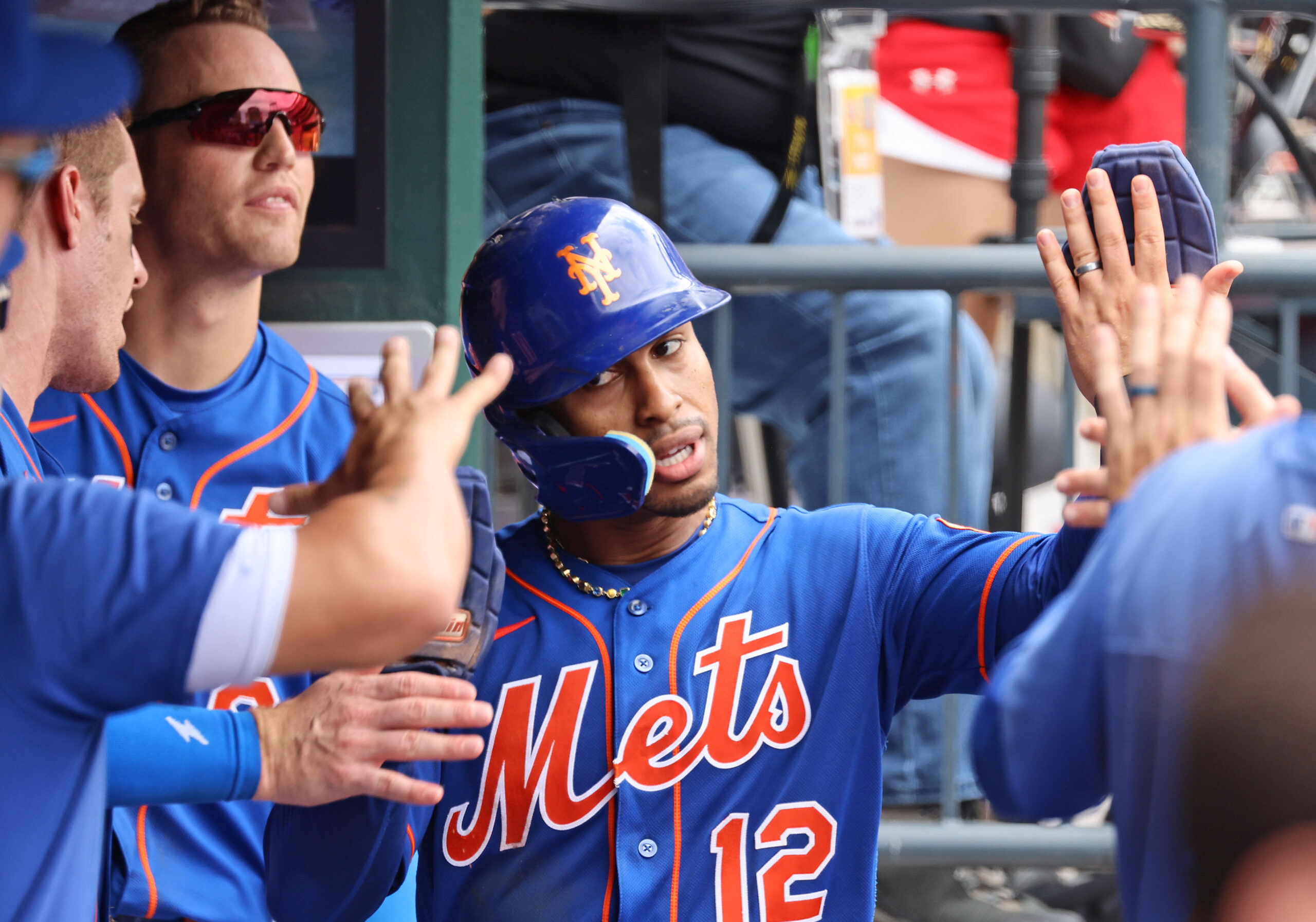
The crack of the bat, the roar of the crowd, the gleam of a diamond-studded contract—baseball is a sport of spectacle, where talent and charisma collide to create legends. Yet, in the grand theater of Major League Baseball, few players embody the alchemy of skill and star power quite like Francisco Lindor. The New York Mets’ shortstop isn’t just a defensive virtuoso or a clutch hitter; he’s a walking, talking brand of joy, a human embodiment of the phrase “smile like you mean it.” And if the whispers of a $341 million valuation are to be believed, that grin isn’t just infectious—it’s invaluable.
The Smile That Launched a Thousand Contracts
There’s something almost disarming about Francisco Lindor’s smile. It’s not the polished, camera-ready grin of a Hollywood starlet, nor the stoic intensity of a seasoned warrior. No, Lindor’s smile is the kind that sneaks up on you—unexpected, unfiltered, and utterly genuine. It’s the grin of a kid who just stole second base, the laugh of a man who’s just cracked a joke no one else gets, the warmth of a teammate who remembers your name. In an era where athletes are meticulously crafted into marketable personas, Lindor’s authenticity is a rare commodity.
But how does a smile translate to a nine-figure contract? The answer lies in the alchemy of baseball economics, where intangibles like charisma and marketability are as critical as on-field performance. Lindor isn’t just selling baseball; he’s selling an experience. Fans don’t just come to see him play—they come to *feel* something. His joy is contagious, his presence magnetic. In a sport where engagement drives revenue—through jerseys, tickets, and broadcast deals—Lindor’s smile is a silent but potent revenue stream. It’s the difference between a player who fills seats and one who sells out merchandise. And in the cutthroat world of MLB contracts, that’s worth every penny.
The Defensive Virtuoso Behind the Grin
Of course, no $341 million valuation is built on charm alone. Lindor’s defensive prowess is the bedrock of his worth, a fact that even the most cynical analysts can’t ignore. Since debuting in 2015, he’s been a Gold Glove-caliber shortstop, a human highlight reel of diving stops, cannon throws, and acrobatic double plays. His defensive metrics—ranging from Defensive Runs Saved (DRS) to Ultimate Zone Rating (UZR)—consistently place him among the elite at his position. In an era where defensive metrics are scrutinized as closely as offensive ones, Lindor’s glove is a non-negotiable asset.
But here’s the twist: Lindor’s defensive brilliance isn’t just about the numbers. It’s about the *spectacle*. His plays aren’t just effective—they’re breathtaking. A Lindor defensive gem isn’t just a routine out; it’s a moment of theater, a play that leaves fans on their feet and broadcasters scrambling for superlatives. In a sport where highlight reels drive engagement, Lindor’s defensive artistry is a marketing goldmine. Teams don’t just want a shortstop who makes the plays; they want a shortstop whose plays make headlines. And Lindor delivers, game after game, season after season.
The Offensive Arsenal of a Superstar
Lindor’s bat is the final piece of the puzzle, the cherry on top of an already delectable sundae. A switch-hitter with power, speed, and a knack for clutch hitting, he’s the kind of player who can change the complexion of a game in a single at-bat. His offensive profile is a masterclass in versatility: he can spray line drives to all fields, drive in runs with two strikes, or leg out an infield single that leaves the opposing third baseman looking foolish. His career .270 batting average, .340 on-base percentage, and .470 slugging percentage speak to his consistency, while his 150+ home runs and 200+ stolen bases underscore his elite all-around production.
But Lindor’s offensive value isn’t just in the stats—it’s in the *moments*. He’s the kind of player who delivers a walk-off home run in the bottom of the ninth, who turns a routine ground ball into a game-winning hit with a perfectly placed bunt. His offensive repertoire is a toolkit of clutch performances, a testament to his ability to rise to the occasion when it matters most. In a sport where pressure is the ultimate crucible, Lindor thrives. And that’s the kind of player every team dreams of—one who not only performs but *entertains*.
The Marketability Machine
Now, let’s talk about the elephant in the room: Francisco Lindor’s marketability. In an MLB landscape dominated by larger-than-life personalities like Aaron Judge and Shohei Ohtani, Lindor carves out his own niche—not as a boisterous showman, but as a relatable everyman with a megawatt smile. His appeal transcends demographics. Kids see him and think, “I want to be like him.” Adults see him and think, “He’s the guy I’d want to have a beer with.” And brands see him and think, “He’s the face of our next campaign.”
Lindor’s marketability isn’t just about his smile, though that’s a huge part of it. It’s about his authenticity, his work ethic, and his ability to connect with fans on a personal level. He’s active on social media, engaging with followers in a way that feels genuine rather than performative. He’s involved in charitable initiatives, using his platform to make a difference off the field. He’s the kind of player who makes fans feel like they’re part of his journey, not just spectators. And in an era where athlete activism and personal branding are as important as on-field performance, that’s a game-changer.
But here’s the challenge: maintaining that marketability over the long haul. Lindor’s contract isn’t just a reward for past performance; it’s an investment in future potential. The question isn’t just whether he’ll live up to his defensive and offensive résumé—it’s whether he can continue to captivate audiences, to stay relevant in a sport that’s constantly evolving. Injuries, slumps, and the inevitable aging process are all hurdles he’ll face. The real test of his $341 million valuation won’t be in the numbers, but in his ability to keep the magic alive.
The Ripple Effect: How Lindor’s Contract Reshapes the Game
Francisco Lindor’s contract isn’t just a personal milestone—it’s a seismic shift in the economics of baseball. When a player’s value is tied as much to his marketability as his on-field performance, it sets a new precedent for how contracts are negotiated and justified. Lindor’s deal sends a message to teams and players alike: charisma isn’t just a bonus; it’s a bankable asset. And in a sport where revenue streams are diversifying—from streaming rights to international markets—players who can bridge the gap between performance and personality are the ones who command the biggest paydays.
This ripple effect extends beyond Lindor himself. It forces teams to reconsider how they evaluate talent, to look beyond the traditional metrics and consider the intangibles. It pushes players to cultivate their personal brands, to engage with fans in meaningful ways, and to think of themselves as more than just athletes. It even influences how broadcasters and analysts discuss the game, placing a greater emphasis on the human stories behind the statistics.
But with this new paradigm comes new challenges. Teams will need to strike a delicate balance between investing in marketable stars and ensuring they’re getting value for their money. Players will face pressure to maintain their public personas while also delivering on the field. And fans? They’ll have to navigate a landscape where the line between athlete and celebrity blurs more than ever before. Lindor’s contract isn’t just a financial statement; it’s a cultural inflection point.
The Future: Can Lindor’s Smile Sustain a $341 Million Legacy?
The million-dollar question—literally—is whether Francisco Lindor can live up to the hype of his $341 million contract. The answer lies in his ability to adapt, to evolve, and to keep the essence of what makes him special—his joy, his authenticity, his relentless work ethic—alive and thriving. Baseball is a fickle mistress, and even the greatest players face moments of doubt, slumps, or injuries. Lindor’s challenge isn’t just to perform; it’s to *endure*.
Yet, if his track record is any indication, Lindor is up for the task. He’s already proven himself as a leader, a clutch performer, and a fan favorite. His smile isn’t just a gimmick; it’s a reflection of his passion for the game. And in a sport that’s constantly searching for its next superstar, Lindor offers something rare: a blend of skill, charisma, and relatability that’s hard to replicate.
So, can a smile be worth $341 million? In Francisco Lindor’s case, the answer is a resounding yes. But the real question isn’t whether he’s worth the money—it’s whether he can keep the magic alive for years to come. And if his past is any indication, the answer is a smile.