Ever wondered what it really takes to hear your name called in the MLB Draft? Is the path to becoming a professional baseball player lined with golden opportunities, or is it a labyrinthine challenge that few dare to navigate? The road to the Major Leagues is as thrilling as it is arduous, demanding not only talent but resilience, strategy, and an unyielding passion for the game. Let’s embark on a detailed exploration of how to get drafted in the MLB and uncover the truths behind going pro.
Understanding the MLB Draft Landscape
The MLB Draft, officially known as the First-Year Player Draft, is a multifaceted process where teams select amateur players in hopes of unearthing future stars. Unlike drafts in other sports, the MLB Draft is lengthy, spanning 20 rounds as of recent years, with hundreds of players chosen annually. Yet, the sheer number of picks belies a sobering reality: the overwhelming majority of hopefuls never don a Major League uniform.
Unlike the NBA or NFL, the MLB Draft encompasses high school players, college athletes, and even junior college prospects. This creates a diverse pool, forcing scouts and front offices to balance immediate talent against long-term potential. Understanding this dynamic is critical for any aspirant. Preparation isn’t merely about playing well—it’s about timing, exposure, and career planning.
Refining Skills: The Non-Negotiable Foundation
Raw talent is only the beginning. Prospective draftees must obsessively refine their baseball acumen—pitching mechanics, batting eye, defensive prowess, and baseball IQ all demand relentless cultivation. Esteemed scouts often stress the importance of consistency: the ability to perform at a high level against advanced competition repeatedly is what separates prospects from pretenders.
Developing secondary and tertiary skills can also elevate draft status. For pitchers, this might be adding a deceptive changeup or fine-tuning command to eliminate walks. For position players, becoming a switch hitter or improving defensive versatility enhances value exponentially. The goal is to present a comprehensive package that translates into a roster-worthy asset.
Visibility and Exposure: The Crucible of Opportunity
Outstanding ability in isolation rarely suffices. Without consistent visibility to scouts and decision-makers, even prodigious talent can languish unnoticed. Participating in elite showcases, summer leagues, and national tournaments is crucial for gaining the necessary spotlight. Events such as the Cape Cod League or Perfect Game showcases serve as proving grounds where stellar performance can dramatically elevate a player’s draft stock.
Moreover, strategic communication and networking should not be underestimated. Coaches, trainers, and advisors play pivotal roles in ensuring a player is pointed toward influential opportunities. The labyrinth of scouting pipelines often favors those who can navigate relationships with upstanding professionalism and authenticity.
The Importance of Education and Collegiate Baseball
While the dream of being drafted out of high school is alluring, college baseball remains a formidable path towards the majors. Collegiate programs, especially Division I schools, offer players enhanced coaching, superior competition, and physical maturation. Players refine their athletic and mental skills in an environment designed to simulate professional demands.
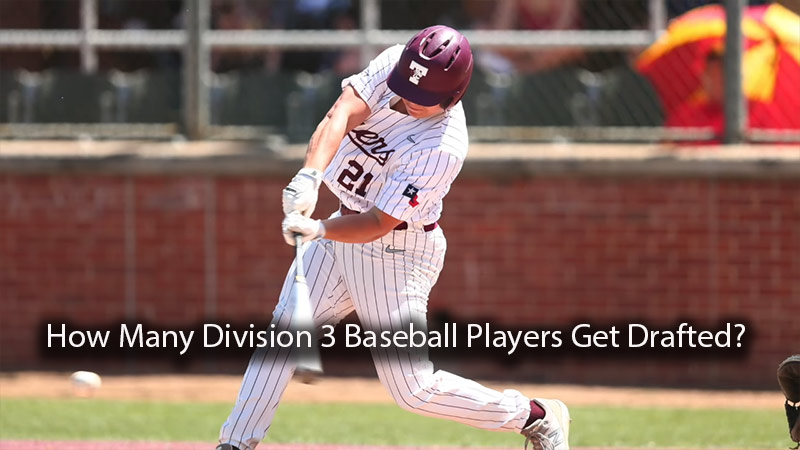
Interestingly, Division 3 players face a steeper climb, often perceived as outsiders in the draft arena. Nonetheless, perseverance and standout performance can turn the tide. College gives players time to adjust, grow, and re-enter the draft conversation with a more polished skill set, increasing their chances of selection and future professional success.
Physical and Mental Conditioning: The Overlooked Edge
Baseball is as much a mental chess match as it is a physical contest. Those who get drafted often possess a profound fortitude—resilience under pressure, the capacity to adapt, and the resolve to push through adversity. This mental muscle is nurtured through intentional practice, exposure to competitive stress, and constructive feedback.
Simultaneously, modern conditioning regimes emphasize injury prevention and athletic longevity. Strength training tailored specifically for baseball’s demands—rotational power, explosive sprinting, and joint health—can differentiate a borderline prospect. Teams increasingly prize athletes who demonstrate a commitment to holistic health, aligning with the sport’s grueling schedule and physical toll.
Agent and Advisory Roles: Navigating Professional Representation
Once draft eligibility is within reach, engaging credible representation becomes a pragmatic necessity. Agents and advisors possess intimate knowledge of contract structures, signing bonuses, and team philosophies, guiding prospects through negotiations. Well-informed advisors can drastically impact financial outcomes, career trajectories, and even draft position by leveraging their networks and market intelligence.
However, choosing the right team requires discernment. Integrity and compatibility should outweigh flashy promises. A trustworthy agent serves not solely as a negotiator but also as a mentor, balancing business acumen with the player’s broader aspirations and well-being.
Post-Draft Realities: From Signing to the Minors
Hearing your name called is thrilling, but the journey has only just begun. Most draftees embark on their professional career in the minor leagues—a crucible that tests patience and perseverance. Progression through Single-A, Double-A, and Triple-A levels demands continual adaptation and improvement.
Players must embrace the grind of long bus rides, modest paychecks, and fierce competition. Success hinges on the ability to sustain peak performance, maintain mental toughness, and capitalize on every opportunity. Those who flourish here earn the coveted call-up to the Majors. Understanding this post-draft reality reinforces that being drafted is not a conclusion, but a commencement of a grueling odyssey.
Embracing the Challenge: The Intangible Qualities
Ultimately, getting drafted is not solely about measurable statistics or physical prowess. Intangibles such as passion, unwavering commitment, coachability, and leadership often tip the scales. Major League organizations seek players who enrich team culture and demonstrate hunger for self-improvement.
Players must view every setback as a lesson, every failure as fuel. The longevity of a professional career often depends on these unseen attributes, coupled with the relentless pursuit of excellence. Those who embrace the challenge holistically—mind, body, and soul—transform from hopeful prospects into bona fide professionals.
Navigating the path to becoming an MLB draftee is a complex and multifarious endeavor. It requires excellence on the field, strategic visibility, sound mentorship, and an ironclad will. While the playing field may be more crowded than ever, those willing to invest in themselves and approach the process with wisdom and perseverance dramatically improve their chances of transforming a dream into reality.