Baseball isn’t just played on the diamond—it’s also battled in the palm of your hand, where strategy meets nostalgia. The baseball card game, a pastime that has endured decades, offers a tactile and cerebral escape from the digital deluge of modern life. For beginners, it’s easy to see it as a simple matching or collecting exercise, but beneath the surface lies a world of nuanced gameplay that rewards patience, observation, and a dash of competitive instinct. Whether you’re flipping cards at a kitchen table or diving into a league, understanding the fundamentals can transform a casual pastime into a lifelong fascination.
At its core, the baseball card game is a blend of luck and skill, where the thrill of the unknown meets the satisfaction of strategy. Unlike traditional board games, it thrives on unpredictability—the crack of a bat isn’t simulated by dice rolls, but by the randomness of a shuffled deck. This unpredictability is part of its enduring charm, a reminder that even in a world governed by algorithms, chance still plays a pivotal role. For many, the game becomes a metaphor for life itself: a series of calculated risks, unexpected outcomes, and the quiet joy of collecting moments, both big and small.
The Deck: Your Arsenal of Strategy and Serendipity
The foundation of any baseball card game is, of course, the deck. Most modern iterations feature player cards, each adorned with statistics, images, and sometimes even holographic finishes that shimmer under the light. These aren’t just decorative—they’re the lifeblood of your strategy. A rookie card might dazzle with its rarity, but it’s the veteran slugger with a .320 batting average who could turn the tide of a game. Beginners often make the mistake of chasing the flashiest cards, but seasoned players know that balance is key. A well-rounded deck includes a mix of power hitters, reliable pitchers, and defensive aces, ensuring you’re prepared for any scenario.
Beyond the player cards, many games incorporate special action cards—moments of magic that can swing a game in an instant. A “Grand Slam” card might let you score four runs in a single play, while a “Rain Delay” could freeze your opponent’s momentum. These cards add layers of unpredictability, forcing players to adapt on the fly. For newcomers, it’s tempting to hoard these power plays, but timing is everything. A well-timed special card can feel like hitting a walk-off home run, while a poorly placed one might leave you stranded in the dugout.
Setting Up the Playing Field: From Tabletop to Tactics
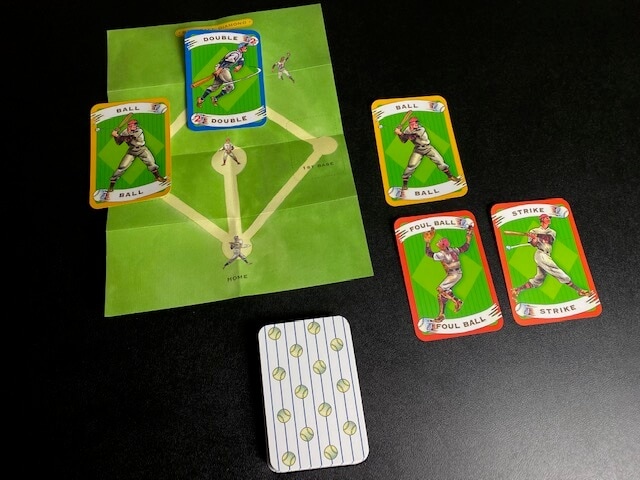
Before the first pitch is thrown, the playing field must be prepared. Most baseball card games are designed for two players, though some variants accommodate larger groups. The setup begins with shuffling the deck and dealing a hand to each player—typically five to seven cards, depending on the game’s rules. The remaining deck becomes the draw pile, while a discard pile is placed nearby for used cards. Some games introduce a “bench” area where players can set aside cards for later use, adding another layer of strategy to the opening moves.
One of the most critical aspects of setup is the pitcher’s role. In many games, the pitcher isn’t just a passive participant; they’re an active force that can influence the outcome of each play. Some rules allow the pitcher to “steal” a card from the opponent’s hand or force a discard, adding a psychological element to the game. For beginners, this can feel overwhelming, but it’s also where the game’s depth begins to reveal itself. The pitcher’s actions aren’t just about defense—they’re about controlling the flow of the game, much like a real-life pitcher who dictates the pace of a matchup.
The field itself is often represented by a simple grid or a series of bases, though some advanced games incorporate a full diamond layout. Each base can hold a player card, and the objective is to move your runners around the bases to score runs. The beauty of this setup is its simplicity—it mirrors the structure of baseball itself, where every play is a step toward victory. For those who’ve never swung a bat in real life, the card game offers a way to engage with the sport’s rhythm without stepping onto a field.
Gameplay Mechanics: The Dance of Offense and Defense
The heart of the baseball card game lies in its gameplay mechanics, where each turn is a delicate balance of aggression and caution. On your turn, you’ll draw a card, play an action if you have one, and then attempt to advance your runners. The most common method of advancing is by matching or exceeding the opponent’s card in a head-to-head showdown. For example, if your opponent plays a card with a batting average of .280, you might counter with a .300 hitter to move your runner forward. If your card is weaker, you could be forced to discard or lose a runner entirely.
This mechanic introduces a layer of tension that’s reminiscent of real baseball’s one-on-one duels. A pitcher’s duel in the majors often hinges on a single pitch, just as a card game can turn on a single play. For beginners, this can be frustrating—it’s easy to feel like the game is stacked against you when your best cards keep getting shut down. But this frustration is part of the learning process. Over time, players develop a keen eye for their opponent’s tendencies, much like a scout studying a hitter’s swing. Do they favor power hitters? Do they play conservatively? The answers to these questions can give you the edge you need to outmaneuver them.
Defense plays an equally crucial role. Some games allow players to “pitch” by selecting a card from their hand to counter the opponent’s play. A well-timed pitch can neutralize an opponent’s runner or even send them back to the bench. Others incorporate a “double-play” mechanic, where a single card can eliminate two runners at once—a devastating blow that can swing the momentum of a game. For players who enjoy the defensive side of baseball, these mechanics offer a chance to shine. There’s a unique satisfaction in turning a potential home run into a harmless groundout, a microcosm of the thrill of a clutch defensive play.
Scoring Runs: The Art of Turning Plays into Points
Scoring runs in the baseball card game isn’t just about moving pieces around a board—it’s about crafting a narrative. Each run represents a moment of triumph, a culmination of strategy and luck. The most straightforward way to score is by advancing your runners around the bases and back to home plate. Some games use a point system, where each base crossed equals a point, while others employ a more complex scoring system that rewards specific achievements, like hitting a home run or executing a sacrifice fly.
One of the most satisfying aspects of scoring runs is the element of surprise. A player might spend several turns carefully advancing a runner from first to third, only to lose them in a single play. Conversely, a last-minute rally can turn a seemingly lost game into a victory. This unpredictability is what keeps players coming back, the promise that no matter how dire the situation, a single card could change everything. It’s a reminder that in baseball, as in life, persistence and adaptability often outweigh raw power.
For those who enjoy the statistical side of baseball, the card game offers a chance to engage with the sport’s numbers in a hands-on way. Batting averages, earned run averages, and on-base percentages aren’t just abstract figures—they’re tools that can be wielded to gain an advantage. A player with a high OBP might be the key to a long inning, while a pitcher with a low WHIP can stifle an opponent’s offense. This fusion of data and gameplay appeals to the analytical mind, offering a way to geek out over the intricacies of the sport without needing a scorecard.
Advanced Tactics: Elevating Your Game from Rookie to Veteran
Once the basics are mastered, the baseball card game reveals its true depth. Advanced players begin to develop personalized strategies, tailoring their decks to exploit their strengths and exploit their opponent’s weaknesses. Some favor a “small ball” approach, relying on singles, stolen bases, and sacrifice flies to grind out runs. Others go for the long ball, stacking their deck with power hitters and hoping for a grand slam to turn the tide. The beauty of the game is that there’s no single “right” way to play—it’s a canvas for creativity.
Bluffing is another advanced tactic that adds a psychological layer to the game. Just as a pitcher might change their delivery to deceive a hitter, a card player can feign confidence in a weak hand or mislead their opponent about their strategy. The key is to read your opponent’s tells—do they hesitate before playing a card? Do they seem overly eager to discard a certain type of card? These subtle cues can provide invaluable insights, turning a game of chance into a battle of wits.
Deck-building is perhaps the most rewarding advanced skill. Many games allow players to customize their decks by adding or removing cards, creating a personalized arsenal tailored to their playstyle. A deck focused on speed might include fast runners and stolen base specialists, while a power-hitting deck could feature sluggers and clutch performers. The process of refining a deck is akin to building a real-life team, a labor of love that reflects the player’s personality and preferences. For collectors, it’s also an opportunity to showcase their favorite players, turning the game into a celebration of the sport itself.
The Social Dimension: More Than Just a Game
Beyond the mechanics and strategy, the baseball card game is a social experience. It’s a reason to gather with friends, family, or even strangers at a local game night. The banter, the trash talk, the shared excitement of a come-from-behind victory—these are the intangibles that make the game more than just a pastime. For many, it’s a way to connect with others over a shared love of baseball, a bridge between generations who remember trading cards in schoolyards and those discovering the sport for the first time.
The game also fosters a sense of community among collectors and players. Local tournaments, online forums, and trading groups create spaces where enthusiasts can share tips, swap cards, and celebrate their passion. There’s a camaraderie in the act of flipping through a deck, debating the merits of a rookie card, or recounting a legendary play from a past game. In an era where digital interactions often lack depth, the baseball card game offers a tangible, human connection—a reminder that some traditions are worth preserving.
There’s something inherently poetic about the baseball card game. It distills the essence of baseball—its unpredictability, its blend of skill and chance, its ability to captivate both players and spectators—into a compact, portable format. For beginners, it’s an accessible entry point into the world of baseball strategy. For veterans, it’s a canvas for creativity and a test of wits. And for everyone in between, it’s a reminder that the joy of the game isn’t just in the final score, but in the moments that lead up to it.
So shuffle the deck, deal the cards, and step up to the plate. The game is waiting, and the next play could be the one that changes everything.