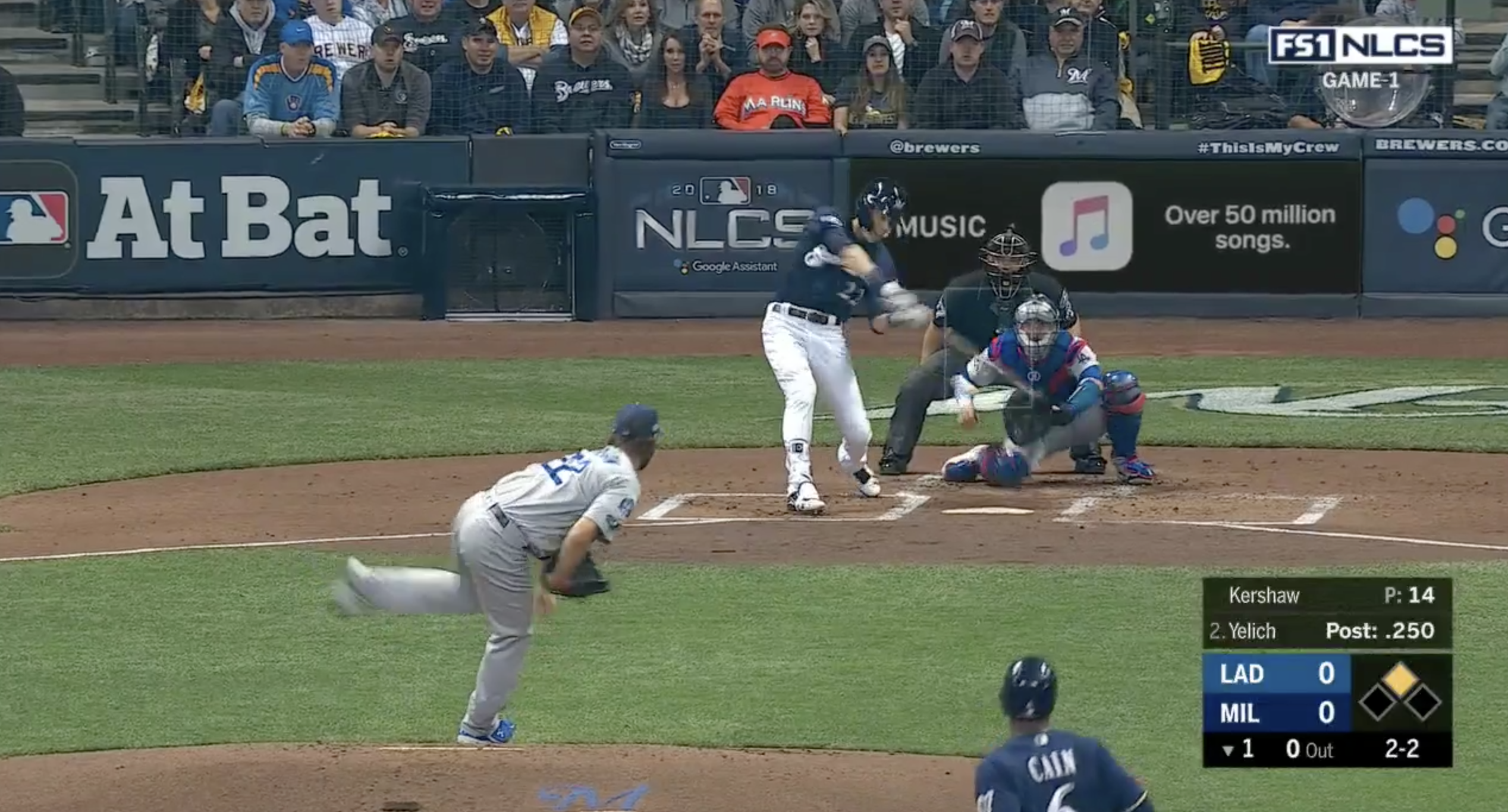
In the grand theater of baseball, where fastballs are the prima donnas and sliders the supporting actors, Clayton Kershaw’s curveball plays a role that defies convention. It’s not the speedster of the mound—far from it. In an era where pitchers like Aroldis Chapman unleash 105 mph heaters, Kershaw’s curveball ambles in at a leisurely 75 mph, a pace that would make a Little Leaguer blush. Yet, for all its apparent sluggishness, it remains one of the most unhittable pitches in the game. This paradox—where lethargy becomes lethality—is what makes Kershaw’s curveball a masterclass in deception, physics, and psychological warfare.
The Illusion of Leisure: Why Speed Isn’t Everything
At first glance, Kershaw’s curveball seems almost comically slow. While the average MLB curveball clocks in around 78 mph, Kershaw’s version often dips below that threshold, a pace that would barely register on a radar gun in a high school game. Yet, this deliberate lack of velocity is its greatest strength. The human eye, trained to track the blur of a 95 mph fastball, struggles to adjust to the languid arc of a curveball that seems to hang in the air like a lazy afternoon cloud. The batter’s brain, wired to expect a missile, is tricked into committing early, only for the pitch to plummet at the last second.
This isn’t just a matter of misdirection; it’s a battle of perception versus reality. The curveball’s deception lies in its ability to mimic the trajectory of a fastball before veering off course, a phenomenon known as the “late break.” Kershaw’s curveball doesn’t just drop—it seems to stall mid-air, as if gravity itself has been momentarily suspended. The result? A pitch that looks hittable until it’s too late, a cruel joke played on the batter’s timing.
The Art of the Late Break: Physics Meets Psychology
To understand why Kershaw’s curveball is so effective, we must delve into the physics of spin and movement. Unlike a fastball, which relies on linear velocity, the curveball thrives on rotational spin. Kershaw generates an average of 2,800 RPM (revolutions per minute) on his curveball, a whirlwind that imparts a violent downward and lateral movement. The Magnus effect—a force generated by the difference in air pressure on opposite sides of a spinning ball—causes the pitch to dive sharply as it approaches the plate.
But physics alone doesn’t explain its unhittability. The real magic lies in the psychological toll it takes on hitters. Batters are conditioned to expect a fastball’s late life, a slight rise or tail that keeps it in the zone. Kershaw’s curveball, however, does the opposite: it appears to die in the air, a phenomenon batters describe as “the pitch falling off a table.” The delayed reaction forces hitters to adjust their swing mid-flight, a nearly impossible task even for the game’s most elite talents. It’s as if the pitch is playing a cruel game of cat and mouse, luring the batter into a false sense of security before delivering the knockout blow.
The Evolution of a Weapon: How Kershaw Refined His Curveball
Kershaw’s curveball wasn’t always a thing of beauty. Early in his career, it was a serviceable pitch, but not the weapon it is today. Over time, he has refined its movement, blending power with precision. One key adjustment was increasing the spin rate while reducing the pitch’s horizontal break, making it appear more like a fastball before the late dive. Another was perfecting the release point, ensuring the pitch’s deception starts the moment it leaves his hand.
This evolution mirrors Kershaw’s own journey as a pitcher. Once a raw talent with a blazing fastball and a developing curveball, he has transformed into a craftsman, using his curveball as the ultimate equalizer. It’s a pitch that doesn’t just get outs—it demoralizes hitters. There’s a poetic justice in the fact that a pitcher who once relied on overpowering velocity now dominates with a pitch that’s the antithesis of speed. It’s a reminder that in baseball, as in life, the most effective tools are often the ones that defy expectations.
The Psychological Warfare of the Curveball
Baseball is as much a mental game as it is physical, and Kershaw’s curveball is a masterclass in psychological warfare. The mere threat of it can alter a hitter’s approach, forcing them to cheat on fastballs or leave the zone entirely. There’s a reason why batters often look helpless against it—they’re not just facing a pitch; they’re facing a psychological trap.
Consider the 2016 World Series, when Kershaw’s curveball became the stuff of legend. In Game 5, he struck out Chicago Cubs hitters with a pitch that seemed to defy the laws of physics. The Cubs, a team built on aggressive hitting, were reduced to a collective state of bewilderment. It wasn’t just that the pitch was unhittable; it was that it made them question their own abilities. That’s the power of Kershaw’s curveball—it doesn’t just get outs; it erodes confidence.
The Unwritten Rules of the Curveball
There’s an unspoken etiquette in baseball: fastballs are the currency of intimidation, sliders the tools of deception, and curveballs the pitch of finesse. Kershaw’s curveball adheres to none of these rules. It’s a pitch that operates in its own universe, where speed is irrelevant and movement is king. It’s the kind of pitch that makes purists swoon and modern analysts marvel, a relic of a bygone era in a sport increasingly dominated by analytics and velocity.
Yet, for all its uniqueness, Kershaw’s curveball is a reminder that baseball’s beauty lies in its contradictions. It’s a slow pitch that’s unhittable. A pitch that relies on deception rather than power. A weapon that doesn’t just get outs but leaves hitters questioning their own swing. In a game where every advantage is scrutinized, Kershaw’s curveball stands as a testament to the enduring power of craftsmanship over brute force.
The Legacy of a Curveball
Clayton Kershaw’s curveball is more than just a pitch; it’s a legacy. It’s the kind of weapon that transcends statistics, the kind of pitch that becomes the stuff of lore. Future generations of pitchers will study it, trying to replicate its movement, its deception, its sheer audacity. And yet, they’ll never quite capture what makes it so special. Because Kershaw’s curveball isn’t just a pitch—it’s an attitude. It’s a reminder that in baseball, as in life, the most effective tools are often the ones that defy convention.
So the next time you see Kershaw wind up and unleash that slow, arcing curveball, remember: it’s not just a pitch. It’s a statement. A challenge. A masterclass in the art of making the impossible look effortless. And for the batter standing in the box, it’s a nightmare come to life.