Ever watched a Little League game and wondered how those scribbled symbols and cryptic numbers on a scorecard could possibly capture the chaos of a nine-year-old’s first at-bat? Or perhaps you’ve stared at a blank sheet of paper, pen trembling, as the opposing team’s slugger stepped up to the plate with a bat that looked suspiciously like a light saber? Keeping score in Little League isn’t just about tracking runs—it’s about preserving the magic of those tiny cleats pounding the dirt, the triumphant fist pumps after a base hit, and the occasional dramatic slide into home plate that ends with a cloud of dust and a child’s triumphant grin. But here’s the rub: without a clear system, even the most well-intentioned scorekeeper can end up tangled in a web of strikeouts, stolen bases, and the occasional “wait, did that count?” moment. So, how do you turn the symphony of a Little League game into a readable, meaningful scorecard without losing your mind—or your sanity?
The Art of the Scorecard: Why It’s More Than Just Doodles
Picture this: a sun-drenched afternoon, the crack of a bat echoing through the park, and a group of children in matching jerseys charging around the bases like a swarm of bees. Now imagine trying to recount that scene to a parent who missed the game. A scorecard isn’t just a record—it’s a time capsule. It tells the story of a bunt that fooled the defense, a fly ball that turned into a double play because the outfielder tripped over his own shoelaces, or that one inning where every single batter reached base safely. But here’s the catch: if your scorecard looks like a toddler’s finger-painting, you’ve missed the point entirely. The key is to balance detail with clarity. You don’t need to be a calligrapher, but you *do* need a system that even a sleep-deprived parent can decipher at 11 PM after the game.
Choosing Your Weapon: Printable Sheets vs. DIY Systems
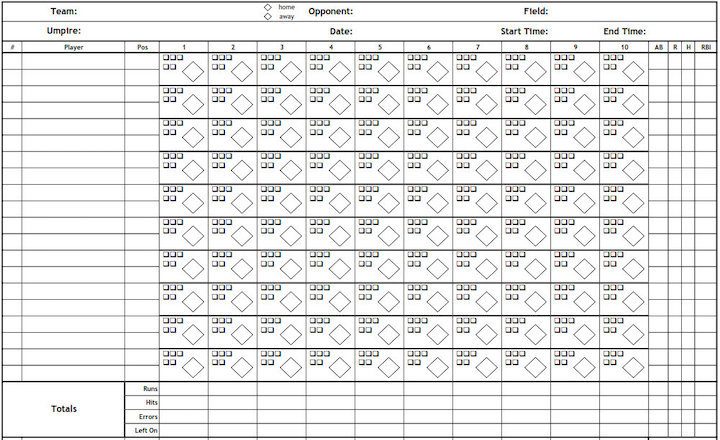
Not all scorecards are created equal. Some are sleek, pre-printed masterpieces with color-coded sections and tiny icons for every possible play. Others are scribbled on the back of a grocery list with a crayon. The best choice depends on your comfort level. If you’re new to scoring, a printable sheet is your best ally. Look for one that includes:
- Player lineups with positions and jersey numbers.
- A grid for tracking at-bats, hits, and outs.
- Space for noting errors, walks, and special plays.
- A section for the batting order, so you can track who’s up next without shouting across the field.
If you’re feeling adventurous, you can design your own. Grab a piece of graph paper and create columns for each inning, rows for each player, and symbols for common plays (a “K” for strikeout, a “HR” for home run, and a “E5” if the shortstop drops an easy grounder). The beauty of a DIY system is that it forces you to learn the lingo—but the downside? You might spend more time drawing than actually scoring the game.
Decoding the Scorecard: Symbols That Speak Louder Than Words
Every sport has its own secret language, and baseball’s scorecard is no different. Here’s a cheat sheet for the most common symbols:
- 1B, 2B, 3B, HR: Singles, doubles, triples, and home runs. Simple enough.
- K: A strikeout. But beware—if the catcher drops the third strike, it’s a “K” with a little “E2” next to it (error by the catcher).
- BB: A walk. The batter gets to trot to first base like they just won the lottery.
- SB: A stolen base. The runner’s legs are faster than the outfielder’s arm.
- E: An error. The fielder’s glove turned into a butterfly net.
- FC: Fielder’s choice. The runner advances because the fielder made a play on another runner.
Pro tip: If you’re scoring for a team with a particularly creative coach, you might also encounter symbols like “PB” (passed ball) or “WP” (wild pitch). When in doubt, ask the scorekeeper next to you—most are happy to share their secrets.
The Balancing Act: Speed vs. Accuracy
Here’s the dilemma: Do you try to keep up with every play in real time, or do you take notes and fill in the blanks later? The answer depends on your attention span and caffeine tolerance. If you’re scoring solo, real-time tracking is ideal—but it’s a high-wire act. You’ll need to:
- Watch the batter, the base runners, and the defense simultaneously.
- Listen for the umpire’s calls (strike, ball, safe, out).
- Jot down symbols faster than a third grader can say “I didn’t touch him!”
If you’re overwhelmed, don’t panic. It’s okay to pause and ask for a quick recap from another parent. The goal isn’t perfection—it’s capturing the essence of the game. And if all else fails, just write “WOW” next to the inning and call it a day.
Common Pitfalls: When the Scorecard Betrays You
Even the most seasoned scorekeepers make mistakes. Here are a few to watch out for:
- Losing track of the batting order: If you skip a batter or assign a hit to the wrong player, the whole inning becomes a jumbled mess. Use a highlighter to mark the current batter.
- Miscounting outs: Three strikes, three outs. It sounds simple, but in the heat of the moment, it’s easy to lose count. Try tapping your pen against the scorecard for each out.
- Ignoring substitutions: If a player leaves the game and another joins, update your scorecard immediately. Nothing’s worse than realizing you’ve been tracking the wrong team for three innings.
- Overcomplicating plays: Not every ground ball is a “6-4-3 double play.” If the play is simple, keep your notation simple. Save the fancy symbols for the truly heroic moments.
Making It Fun: Turning Scoring Into a Game
Scoring doesn’t have to be a chore. Turn it into a challenge: Can you spot every sacrifice bunt? Can you predict the next play before it happens? Or, if you’re feeling competitive, pit yourself against another parent to see who can keep the most accurate scorecard. You could even turn it into a bonding experience with your child—let them help you track hits and outs, teaching them the basics of the game while you work together. And if you’re really brave, try scoring blindfolded. (Okay, maybe not blindfolded. But you get the idea.)
Printable Scorecard Resources: Where to Find the Good Stuff
If you’re not ready to design your own scorecard, there are plenty of pre-made options available online. Look for sheets that include:
- A clean, easy-to-read layout.
- Spaces for player names, positions, and jersey numbers.
- Sections for tracking hits, errors, and special plays.
- A section for the final score and key stats.
Some popular options include the Official Scorecard from Little League International or customizable templates from sites like Scorebook Nation. Print a few copies before the season starts—you’ll thank yourself when the first game rolls around.
The Grand Finale: Why Your Scorecard Matters
At the end of the day, a scorecard is more than just a piece of paper. It’s a record of triumphs and near-misses, of little leaguers learning to stand in the batter’s box without flinching, of coaches shouting encouragement, and of parents cheering from the bleachers. It’s the difference between remembering a game as “that one where we won by a lot” and “the game where Jake hit his first double and we all lost our voices cheering.” So grab a pen, take a deep breath, and dive in. The next time you’re hunched over your scorecard, remember: you’re not just keeping score. You’re preserving a memory.