Pitching in Little League is more than just hurling a baseball across the diamond—it’s a delicate balance of skill, strategy, and safety. Whether you’re a young pitcher honing your fastball, a coach strategizing pitch counts, or a parent ensuring your child’s arm stays healthy, understanding the intricacies of Little League pitching rules is paramount. These regulations aren’t arbitrary; they’re meticulously crafted to protect young arms from overuse, mitigate injury risks, and foster fair play. From pitch count limits to mandatory rest days, the rules serve as both a guideline and a safeguard. This guide dives deep into the essentials, offering clarity on limits, rest protocols, and safety measures that every stakeholder should know.
The Anatomy of Pitch Count Limits: How Many Pitches Are Too Many?
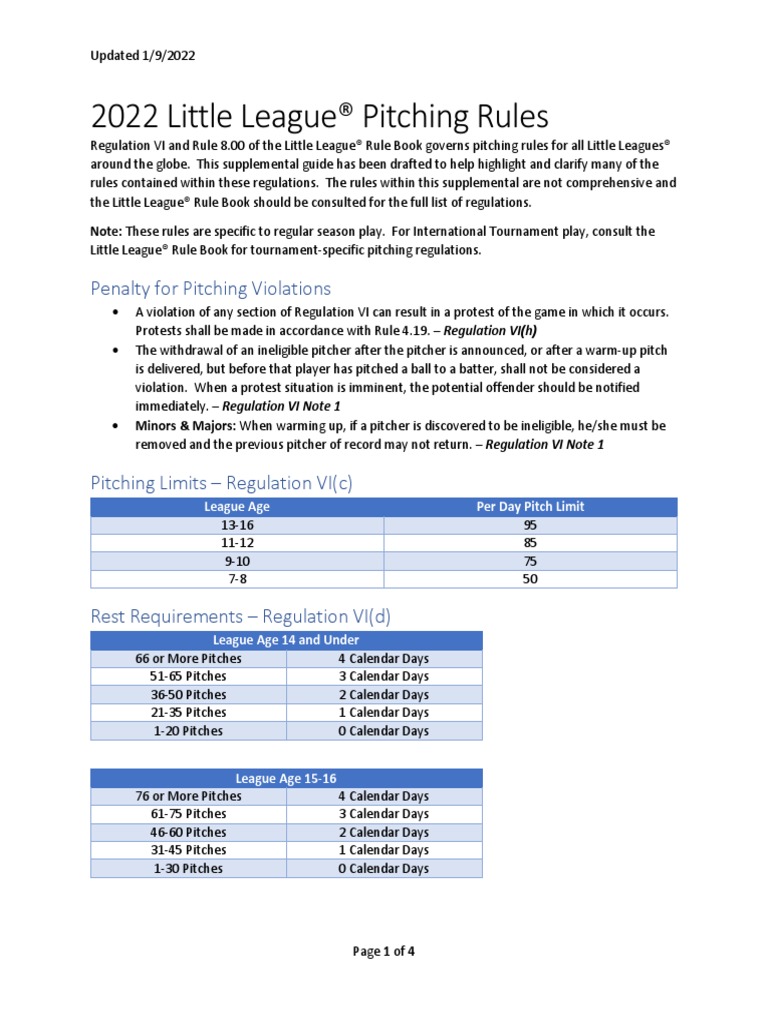
Little League’s pitch count system is the cornerstone of its pitching regulations, designed to prevent the catastrophic overuse injuries that plagued youth baseball in decades past. Unlike older systems that relied on innings pitched—a flawed metric given the varying pitch counts per inning—the current rules impose strict numerical caps based on a pitcher’s age. For instance, a 12-year-old pitcher is limited to 85 pitches in a day, while an 8-year-old can throw no more than 50. These thresholds aren’t plucked from thin air; they’re grounded in sports science, reflecting the cumulative stress young elbows and shoulders can endure. Exceeding these limits isn’t just a rule violation—it’s a gamble with long-term health, potentially leading to conditions like Little League Elbow or rotator cuff tears. Coaches and umpires must track pitches meticulously, using official scorebooks or digital tools to avoid missteps. The system also includes a grace period: if a pitcher reaches the limit mid-at-bat, they’re permitted to finish the batter but must be removed immediately afterward. This nuance ensures fairness while prioritizing safety.
Rest Days: The Unsung Heroes of Pitcher Recovery
Rest isn’t laziness—it’s a critical component of athletic development. Little League’s rest day rules underscore this principle, mandating specific recovery periods based on the number of pitches thrown. A pitcher who tosses 66 or more pitches in a game, for example, must observe a mandatory three calendar days of rest before taking the mound again. The logic is simple: muscles and tendons need time to repair microtears incurred during high-velocity throws. Skipping rest days doesn’t just violate regulations—it risks turning a young arm into a ticking time bomb for injury. Younger pitchers face even stricter protocols; a 10-year-old who throws 50 pitches must rest for two full days. These rules apply year-round, even during offseason training, to prevent the dangerous habit of year-round pitching. Coaches and parents should view rest days as non-negotiable, integrating active recovery like light stretching or low-impact drills to maintain arm health without strain.
The rest day system also introduces a strategic layer to game planning. A coach might opt to use multiple pitchers in a single game, rotating arms to stay within pitch limits while preserving each player’s eligibility for future outings. This approach, known as a “pitching carousel,” isn’t just about compliance—it’s about cultivating a deeper bench and reducing fatigue-related performance drops. However, it requires foresight and communication, as pitchers must be conditioned to handle sudden appearances in high-pressure situations.
Age-Specific Regulations: Tailoring Rules to Young Arms
Little League’s pitching rules aren’t one-size-fits-all; they’re finely tuned to the physical development of each age group. The distinctions between divisions—from Tee-Ball to Senior League—reflect the evolving capabilities and vulnerabilities of young pitchers. In the younger divisions (ages 7-12), the focus is on building foundational mechanics with minimal stress. Pitch counts are conservative, and curveballs or sliders are often discouraged due to their association with increased elbow torque. As players advance into the 13-16 age range, the rules loosen slightly, allowing for higher pitch counts (up to 95 pitches for 13-16-year-olds) but still enforcing strict rest protocols. Senior League pitchers, typically 15-18 years old, face the most lenient limits (105 pitches) but are expected to have developed the endurance and resilience to handle the workload. These age-specific guidelines ensure that rules evolve in tandem with physiological maturity, striking a balance between competition and caution.
Another layer of age-specific regulation involves the types of pitches permitted. While fastballs and changeups are universally allowed, breaking balls like curveballs and sliders are often restricted in younger divisions due to their higher risk of injury. The rationale is twofold: first, the mechanics of throwing a curveball can strain a developing elbow if performed incorrectly; second, the deception involved in breaking pitches may outpace a young batter’s ability to react safely. Coaches in these divisions are encouraged to prioritize command and control over velocity, fostering a sustainable pitching career rather than chasing short-term dominance.
Safety Protocols: Beyond Pitch Counts and Rest Days
While pitch counts and rest days form the backbone of Little League’s pitching safety framework, they’re not the only safeguards in place. The league also mandates regular arm care routines, including proper warm-ups, cool-downs, and strength training exercises tailored to young athletes. Dynamic stretches, such as arm circles and resistance band work, prepare the shoulder and elbow for the demands of pitching, while post-game ice baths or contrast therapy can reduce inflammation. Hydration and nutrition play equally vital roles; dehydration thickens the blood, increasing the strain on a pitcher’s cardiovascular system, while a diet lacking in protein and micronutrients can delay muscle recovery. Parents and coaches should collaborate to ensure pitchers are fueled properly before, during, and after games.
Another critical safety measure is the use of pitch tracking technology. While official scorekeepers are responsible for recording pitches, many leagues now employ apps or wearable devices to monitor pitch velocity, spin rate, and fatigue indicators in real time. These tools provide an additional layer of accountability, alerting coaches to potential overuse before it becomes a problem. For instance, a sudden drop in velocity might signal muscle fatigue, prompting an immediate pitching change. Similarly, tracking the number of high-stress pitches (e.g., fastballs in the upper 90s) can help coaches adjust strategies to protect a pitcher’s arm.
Common Misconceptions and Rule Violations to Avoid
Despite the clarity of Little League’s pitching rules, misconceptions and rule violations persist, often due to a lack of education or oversight. One prevalent myth is that a pitcher can “earn” additional pitches by throwing strikes. In reality, the pitch count is absolute—strike or ball, the number increments with every delivery. Another misconception involves the definition of a “day of rest.” Many mistakenly believe that a rest day resets at midnight, but Little League defines it as a full 24-hour period from the moment the pitcher last took the mound. For example, if a pitcher throws 70 pitches on a Saturday afternoon, their three-day rest period begins immediately and ends at the same time on Tuesday.
Rule violations can carry severe consequences, from forfeited games to suspensions. Coaches found in violation of pitch count or rest day rules may face penalties ranging from warnings to bans from coaching. Umpires play a crucial role in enforcing these rules, often consulting pitch count monitors or scorebooks to verify compliance. Parents, too, should familiarize themselves with the regulations to advocate for their children’s safety, especially in leagues where oversight might be lax. Ignorance of the rules is rarely an acceptable defense, making education a shared responsibility among all stakeholders.
Long-Term Development: Balancing Competition and Arm Health
The ultimate goal of Little League pitching rules isn’t just to prevent injuries in the short term—it’s to cultivate pitchers who can thrive in high school, college, and beyond. This requires a long-term perspective that prioritizes gradual progression over immediate results. Young pitchers should focus on developing a diverse arsenal of pitches, mastering mechanics, and building endurance through structured training. The temptation to specialize early or throw with maximum effort at every outing must be resisted, as it often leads to burnout or injury. Instead, coaches should emphasize quality over quantity, encouraging pitchers to throw with intent rather than sheer velocity.
Offseason training is equally critical. While it’s tempting to continue pitching year-round, Little League’s rules prohibit this for players under 14, and even older pitchers should incorporate periods of rest. Cross-training with other sports, such as swimming or tennis, can improve overall athleticism without overloading the throwing arm. Strength training should be age-appropriate, focusing on core stability, rotator cuff health, and scapular mobility. Physical therapists and sports medicine professionals often recommend exercises like the “empty can test” to assess shoulder strength or resistance band pull-aparts to counteract the repetitive motion of pitching.
The path to becoming a durable, high-performing pitcher is a marathon, not a sprint. By adhering to Little League’s rules, embracing rest, and prioritizing holistic development, young athletes can build a foundation that supports a lifetime in the sport. The rules aren’t obstacles—they’re the blueprint for a sustainable and rewarding pitching career.