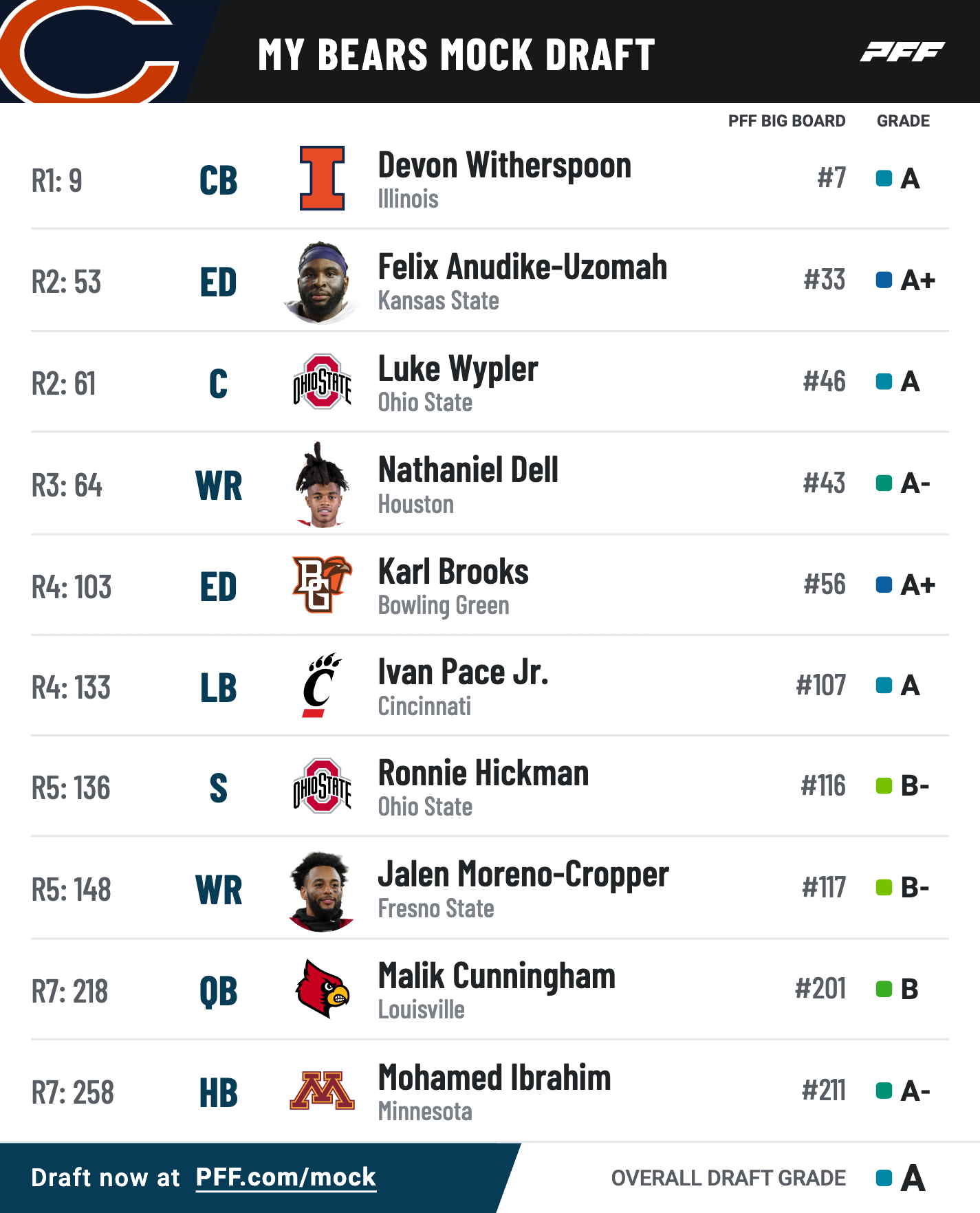
In the realm of professional sports, few spectacles captivate the imagination quite like the NFL Draft. It’s a stage where dreams are drafted into reality, where uncertainty is the only certainty, and where the art of prognostication reaches its zenith. Yet, nestled within this grand theater of gridiron prognostication lies a peculiar paradox: the “mock draft.” A ritualistic exercise where analysts, fans, and even algorithms attempt to divine the future with the precision of a crystal ball. But here’s the twist—what if I told you that the most flawlessly executed mock draft is also the one that never truly comes to pass? Welcome to the paradox of the “Mock Draft That Went Perfectly (And Never Translates).”
The Illusion of Precision: When the Mock Draft Becomes a Mirage
The mock draft is, at its core, a simulation—a dress rehearsal for the chaos that is draft day. It’s where scouts and pundits flex their analytical muscles, where statistical models are unleashed like oracles, and where the internet’s collective wisdom congeals into a single, cohesive narrative. When a mock draft aligns with reality with eerie precision, it’s celebrated as a triumph of insight. Yet, this alignment is often a mirage, a fleeting alignment of stars that dissolves the moment the actual draft begins.
Consider the 2023 NFL Draft, where a mock draft from a reputable outlet predicted the first-round selections with near-perfect accuracy. The elation was palpable. Analysts patted themselves on the back, fans marveled at the clairvoyance, and the draft itself was hailed as a validation of the mock draft’s predictive power. But here’s the catch: the mock draft’s success was a fluke, a statistical anomaly in a universe governed by chaos. The real draft is a living, breathing entity, shaped by last-minute trades, unexpected medical reports, and the whims of decision-makers who operate in the shadows of uncertainty.
The Draft as a Chess Match: Where the Mock Draft is Just a Gambit
To understand why the perfect mock draft never translates, one must view the NFL Draft as a high-stakes chess match, where each move is a gambit, and the board is constantly shifting. The mock draft is akin to a player’s opening gambit—a calculated move designed to set the tone. But in chess, as in the draft, the best-laid plans are often undone by the opponent’s unpredictability. A GM might intend to select a quarterback, only to pivot at the last moment when a trade offer materializes. A mock draft might project a defensive end as the top pick, only for a team to prioritize a trade-down strategy, leaving the mock draft’s predictions in tatters.
This is the unique appeal of the draft: it’s a game where the rules are written in pencil, not ink. The mock draft, no matter how meticulously crafted, is merely a snapshot of a moment in time—a frozen frame in a film that refuses to stay still. The real draft is a dynamic, fluid entity, where the only constant is change. The perfect mock draft, then, is less a prediction and more a reflection of the draft’s current zeitgeist, a snapshot that will inevitably be distorted by the passage of time and the machinations of the teams involved.
The Human Element: When Gut Feeling Trumps the Mock Draft
Behind every draft decision is a human element—a GM’s intuition, a coach’s preference, a player’s interview performance—that mock drafts, for all their data and analysis, can never fully capture. The mock draft is a spreadsheet; the real draft is a story. And stories are written by people, not algorithms. There’s a reason why the most memorable draft moments often defy the mock draft’s predictions: they’re the result of human emotion, of a GM falling in love with a player’s intangibles or a team’s desperate need to address a glaring weakness.
Take, for example, the 2019 NFL Draft, where the New York Jets selected quarterback Sam Darnold over Josh Allen, who was projected to go much higher in mock drafts. The mock drafts were unanimous: Allen was the future. But the Jets, swayed by Darnold’s poise and the allure of a franchise quarterback, made a bold choice that defied the mock draft’s consensus. The result? A draft that was both a triumph and a cautionary tale. The mock draft had its say, but the real draft was shaped by the Jets’ desire to write their own narrative.
The Echo Chamber of Consensus: When the Mock Draft Becomes Its Own Worst Enemy
The mock draft’s greatest strength—its ability to synthesize vast amounts of information into a single, cohesive narrative—is also its greatest weakness. In its quest for consensus, the mock draft can become an echo chamber, where the loudest voices drown out the dissenting opinions. When a mock draft achieves near-perfect accuracy, it’s often because the draft community has coalesced around a single narrative, leaving little room for deviation. But the real draft thrives on divergence, on the unexpected twist that upends the consensus.
This is the paradox of the mock draft: the more it succeeds in predicting the draft, the more it risks becoming irrelevant. If every mock draft is a self-fulfilling prophecy, then the real draft loses its magic—the element of surprise, the unpredictability that makes it so compelling. The perfect mock draft is, in essence, a self-cannibalizing beast, a creature that devours its own predictions the moment they’re made.
The Draft as a Living Organism: Why the Mock Draft is Just a Snapshot
Perhaps the most fitting metaphor for the mock draft is that of a photograph. A photograph captures a moment in time, freezing the world in a single frame. But life, like the NFL Draft, is a living, breathing entity, constantly evolving and changing. The mock draft is a photograph; the real draft is a motion picture. And no matter how perfect the photograph, it can never capture the full depth and complexity of the film.
This is why the mock draft that goes perfectly is also the one that never translates. It’s a snapshot of a moment when the draft community was in agreement, when the stars aligned, and when the future seemed clear. But the real draft is a story that unfolds in real-time, shaped by the unpredictable forces of human nature, team dynamics, and the sheer unpredictability of fate. The mock draft may predict the future, but the real draft writes it—and no amount of analysis can ever fully capture the magic of that process.