The legacy of Jimmie Foxx isn’t just etched in the annals of baseball history—it’s immortalized in cardboard and ink, waiting to be unearthed by collectors who understand that some cards transcend mere nostalgia. When the bat cracks and the crowd roars, Foxx’s name still echoes through the decades, but it’s the tangible artifacts of his prowess—his rookie cards, his vintage relics—that command prices that make even seasoned numismatists pause. What is it about these pieces of paper and plastic that turns them into veritable goldmines? Why do collectors, armed with spreadsheets and magnifying glasses, still chase Foxx’s cardboard legacy with the fervor of a rookie chasing down a fly ball in the ninth inning? The answer lies not just in the player’s Hall of Fame résumé, but in the alchemy of scarcity, storytelling, and the unshakable mystique of a bygone era when baseball was as much about character as it was about statistics.
The Allure of the Foxx: Why His Cards Defy the Passage of Time
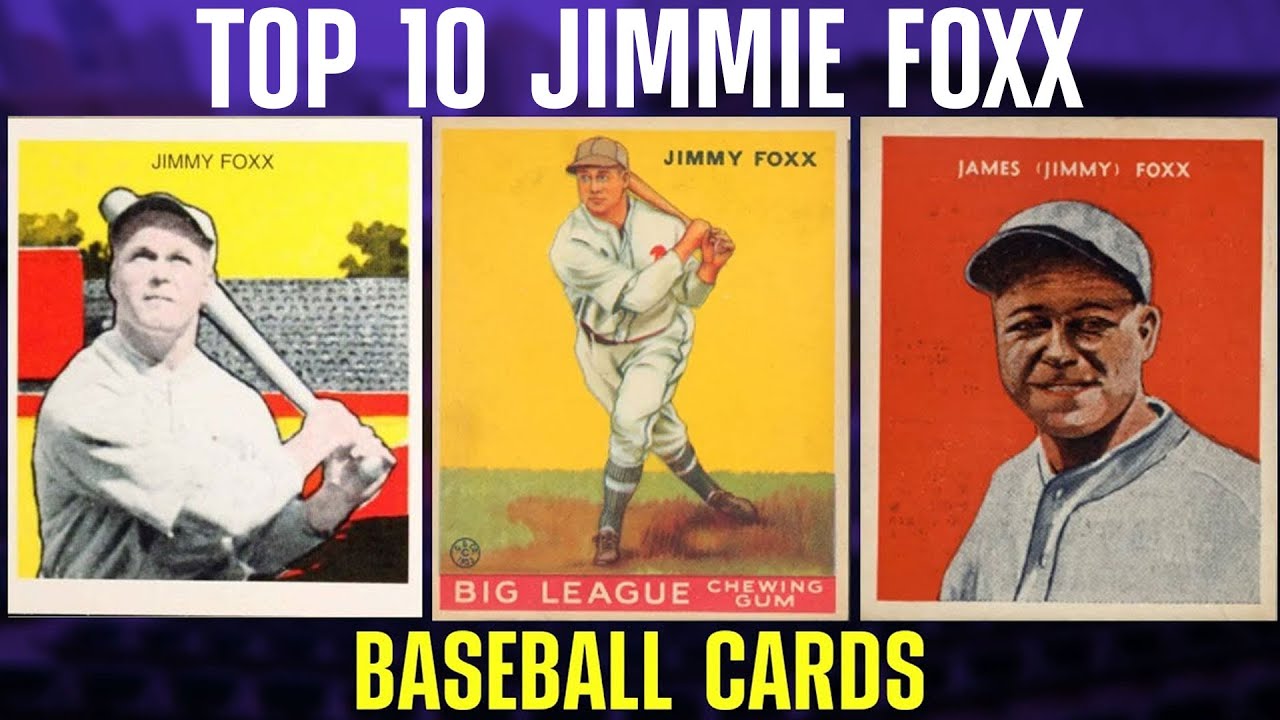
Jimmie Foxx wasn’t just another slugger—he was a phenomenon. A three-time American League MVP, a member of the vaunted 500-home run club before he turned 35, and a man whose bat could silence entire stadiums, Foxx’s on-field dominance was the stuff of legend. But it’s the cards that carry his legacy forward, turning his physical presence into something tactile, something you can hold in your hands. The 1933 Goudey #53, with its bold red borders and Foxx’s piercing gaze, isn’t just a piece of memorabilia; it’s a portal to an era when baseball cards were as much about artistry as they were about commerce. These cards are relics of a time when the sport was still raw, when every crack of the bat felt like a declaration of independence from the constraints of modern analytics.
What makes Foxx’s cards particularly magnetic is their duality—they’re both historical documents and speculative assets. A 1931 W517 #21, for instance, isn’t just a snapshot of Foxx in his Philadelphia Athletics uniform; it’s a time capsule of the Great Depression, a period when baseball offered fleeting escape. The card’s survival through the decades is a testament to its resilience, much like Foxx’s own career, which spanned the highs of the 1930s and the wartime 1940s. Collectors aren’t just buying cardboard; they’re investing in a narrative that refuses to fade.
The Rarity Factor: When Scarcity Meets Stardom
Not all Foxx cards are created equal. The market thrives on disparity, and Foxx’s most coveted cards are those that slipped through the cracks of time with barely a scratch. The 1933 DeLong rookie card, for example, is a unicorn—a card so scarce that even the most seasoned dealers might go years without encountering one in decent condition. Its value isn’t just a reflection of Foxx’s stardom; it’s a tribute to the fragility of the hobby itself. How many of these cards were printed? How many survived the ravages of children’s pockets, attic storage, and the indifferent hands of time? The answers are lost to history, but the result is clear: scarcity amplifies desire.
Then there’s the matter of condition. A Foxx card graded PSA 10 isn’t just a card—it’s a unicorn sighted in the wild. The difference between a PSA 5 and a PSA 9 isn’t just incremental; it’s exponential. A card’s corners, centering, and surface quality tell a story of its journey through the decades. A card with a crease might whisper of a child’s careless toss into a shoebox; a pristine card, meanwhile, feels like a miracle, as if it were preserved in amber. Collectors don’t just chase Foxx’s cards—they chase perfection, and in doing so, they elevate the hobby to an almost spiritual pursuit.
The Foxx Effect: How His Legacy Fuels Market Trends
The baseball card market is a living, breathing ecosystem, and Jimmie Foxx is one of its most influential keystone species. His cards don’t just sit in collections—they set trends. When a Foxx card hits the auction block, it doesn’t just move the needle; it sends ripples through the entire vintage market. Dealers watch the comps. Investors recalculate their portfolios. Even modern collectors, drawn in by the allure of the past, find themselves lured into the Foxx vortex. It’s a phenomenon economists call the “halo effect,” where one star’s brilliance casts a glow on everything around it.
Consider the 1934 Goudey #12, Foxx’s second-year card. While not as rare as his rookie, its ubiquity belies its power. It’s the kind of card that appears in estate sales and garage cleanouts, a gateway drug for new collectors. But once they’re hooked, they often find themselves chasing the rarer Foxx grails—the 1935 National Chicle #3, the 1936 Goudey Wide Pen #61, each one a stepping stone to deeper obsession. The Foxx market isn’t just about buying cards; it’s about joining a club, a fraternity of enthusiasts who understand that these pieces of cardboard are more than investments—they’re badges of honor.
The Foxx Paradox: Why His Cards Are Undervalued (For Now)
Here’s the twist: despite their allure, Foxx cards remain undervalued compared to contemporaries like Babe Ruth or Mickey Mantle. Why? The answer is a cocktail of factors—historical recognition, market saturation, and the simple fact that Foxx never quite achieved the mythic status of his peers. Ruth was the Sultan of Swat; Mantle was the Mick, the golden boy of the Bronx. Foxx, for all his brilliance, was a quiet titan, a man whose legacy was overshadowed by the larger-than-life personas of his era. But that’s precisely why his cards are a sleeping giant.
Market cycles are unpredictable, but history suggests that undervalued assets eventually correct. Foxx’s cards are poised for a reckoning. As younger collectors, raised on digital highlights and analytics, seek out tangible connections to the past, Foxx’s cards offer something rare: authenticity. They’re not NFTs or digital relics; they’re physical manifestations of a time when baseball was raw, unfiltered, and deeply human. The Foxx market isn’t just about profit—it’s about preservation, about keeping the flame of history alive in an era that often prioritizes the ephemeral over the eternal.
The Future of Foxx: A Card Collector’s Goldmine
The next decade could see Foxx’s cards ascend to new heights. As vintage collecting becomes more institutionalized—with auction houses like Heritage and SCP embracing the hobby—cards like the 1931 W517 #21 could fetch prices that make current owners’ jaws drop. The key lies in storytelling. The most valuable cards aren’t just those in pristine condition; they’re those with provenance, with a documented journey through the decades. A Foxx card that once belonged to a Hall of Famer, or was pulled from a pack in 1933 and tucked away in a safety deposit box, carries a narrative weight that a generic PSA 10 simply can’t match.
For investors, Foxx’s cards represent a rare opportunity: a chance to buy into a legacy before the rest of the world catches on. For purists, they’re a way to hold a piece of history. And for the next generation of collectors, they’re an invitation to step into a world where baseball cards were more than just pixels on a screen—they were windows into a golden age.
The chase is on. And for those who understand the Foxx effect, the reward isn’t just financial—it’s the thrill of the hunt, the satisfaction of owning a piece of the past, and the quiet knowledge that, in a hobby obsessed with the future, sometimes the real treasure lies in what’s already been forgotten.