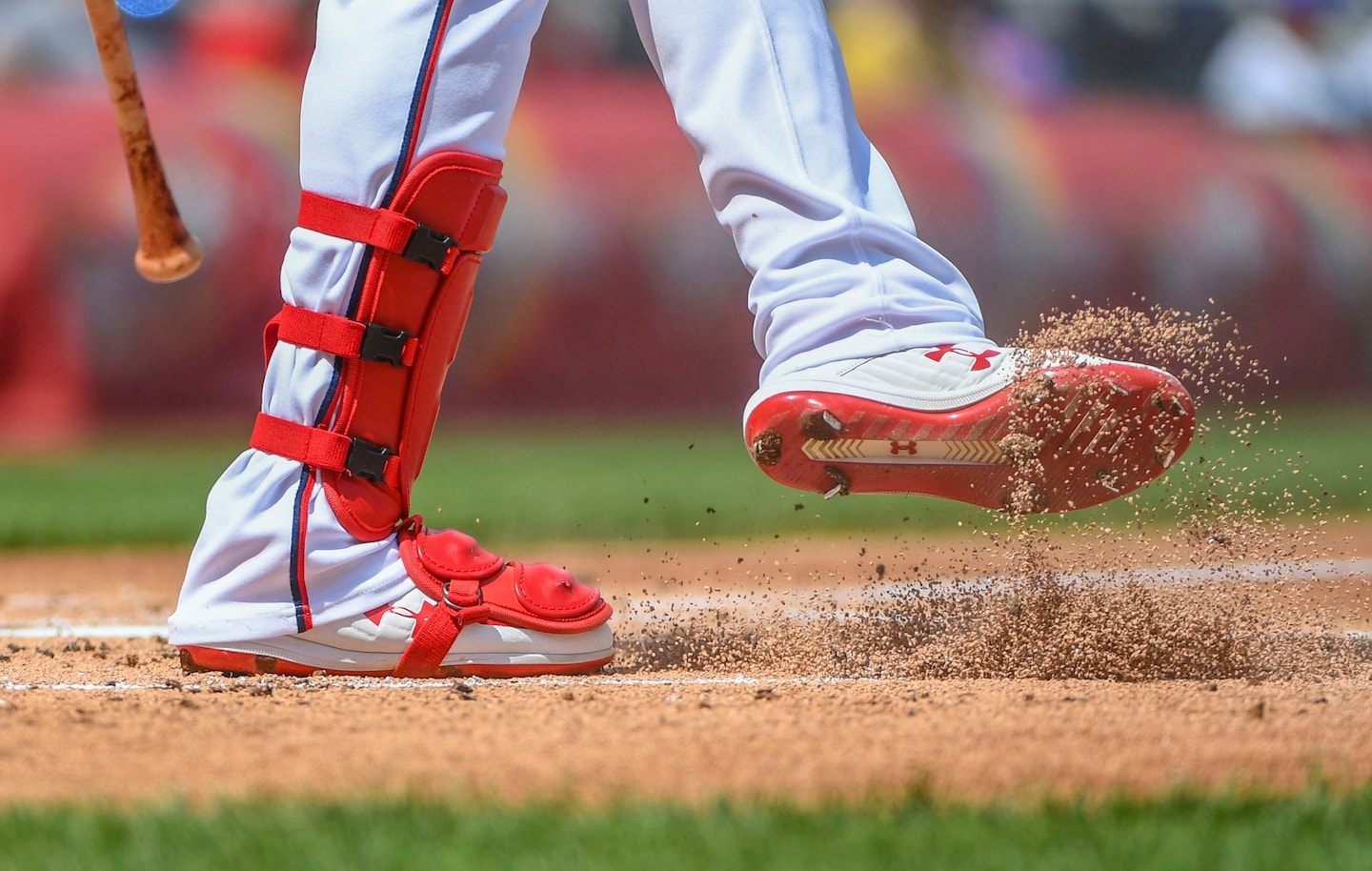
In the grand symphony of baseball, where the crack of the bat and the roar of the crowd compose the overture, there exists a rhythm so uniquely enchanting that it transcends mere mechanics—it becomes art. Enter Juan Soto’s shuffle, a cadence so mesmerizing, so intrinsically tied to the soul of the game, that it rivals the most beloved melodies ever penned. This isn’t just a pre-pitch ritual; it’s a ballet of anticipation, a hypnotic prelude to the chaos that follows. For those who’ve ever found themselves lost in the hypnotic sway of a favorite song, Soto’s shuffle offers a parallel experience—one that demands to be felt as much as it is observed.
The Art of Anticipation: Why Soto’s Shuffle Captivates the Crowd
Every baseball player has their quirks—adjusting their gloves, tapping their cleats, or fidgeting with their batting helmet. But Juan Soto’s shuffle is different. It’s not just a nervous tic; it’s a deliberate, rhythmic dance that syncs with the ebb and flow of the game. When Soto steps into the batter’s box, his movements are a metronome, a countdown to the pitch that follows. The shuffle isn’t just about timing; it’s about creating a psychological edge, a way to disrupt the pitcher’s rhythm while lulling the batter into a state of controlled focus.
The crowd doesn’t just watch Soto shuffle—they *feel* it. There’s a communal hush as he begins his routine, a collective breath held until the moment the ball is released. It’s the baseball equivalent of a DJ dropping the beat, a sudden shift from silence to sound that electrifies the senses. Opponents, too, are affected. Pitchers find their tempo thrown off, their concentration fractured by the relentless cadence of Soto’s steps. Even umpires, often the most stoic figures in the game, can’t help but steal glances at the spectacle unfolding before them.
From Mechanics to Magic: The Science Behind the Shuffle
What makes Soto’s shuffle so effective isn’t just its aesthetic appeal—it’s the science of movement and psychology. Studies on athletic performance have long emphasized the importance of routine in achieving peak mental states. Soto’s shuffle is a masterclass in this principle. By establishing a consistent, rhythmic pattern, he primes his brain for the pitch that’s coming, reducing decision fatigue and sharpening his reaction time. It’s not superstition; it’s neuroengineering in cleats.
But there’s more to it than just mechanics. The shuffle also serves as a form of biofeedback. Each step, each sway, sends signals to Soto’s nervous system, reinforcing muscle memory and grounding him in the present moment. It’s a physical manifestation of the mental cues athletes use to stay locked in. When the shuffle becomes second nature, the batter’s mind is free to focus solely on the pitch—reading spin, anticipating location, and unleashing the swing with precision. In this way, Soto’s shuffle isn’t just a performance; it’s a tool, a silent ally in the batter’s eternal duel with the pitcher.
The Cultural Ripple: How Soto’s Shuffle Became a Phenomenon
Baseball has always been a sport steeped in tradition, where the past and present collide in a dance of nostalgia and innovation. Soto’s shuffle is no exception—it’s a bridge between the old and the new. Older fans might see echoes of classic players like Roberto Clemente or Tony Gwynn, who had their own pre-pitch rituals. Yet, Soto’s shuffle feels distinctly modern, a viral moment in an era where every gesture is dissected, shared, and immortalized online. It’s a reminder that baseball, for all its timelessness, is also a sport that evolves with the times.
The shuffle’s rise to prominence isn’t just about Soto’s individual flair; it’s about the way it’s been embraced by fans and players alike. Social media has amplified its reach, turning a simple batting routine into a cultural touchstone. Memes, parodies, and even dance challenges have sprung up around it, proving that Soto’s shuffle has transcended the diamond. It’s a testament to the power of sport to inspire creativity beyond the field. Whether it’s a TikTok trend or a stadium chant, the shuffle has become a shared language, a way for fans to connect with the game—and with each other.
Comparing the Shuffle to the Greatest Hits of Music
If we were to draw parallels between Soto’s shuffle and music, we’d find that it occupies a rare space—part ballad, part anthem, part avant-garde composition. Like the opening notes of Beethoven’s *Moonlight Sonata*, it sets a mood, drawing listeners (or in this case, spectators) into a trance-like state of anticipation. The shuffle’s slow, deliberate build mirrors the crescendo of a symphony, each step a note in a larger, unfolding melody.
But it’s not all subtlety. There’s a punk-rock edge to Soto’s shuffle, a defiant energy that refuses to be ignored. It’s the guitar riff of *Smoke on the Water* or the drum fill of *In the Air Tonight*—sudden, jarring, impossible to tune out. Opponents can’t help but react, their focus shattered by the relentless rhythm. Even the most stoic pitchers find themselves thrown off their game, their carefully crafted plans unraveling with each shuffle of Soto’s feet.
And then there’s the emotional resonance. The greatest songs don’t just entertain; they evoke feeling. Soto’s shuffle does the same. For Nationals fans, it’s a symbol of hope and resilience. For opposing teams, it’s a psychological weapon. For neutral observers, it’s a moment of pure, unadulterated joy—a reminder of why baseball, with all its quirks and charms, endures as America’s pastime.
How to Incorporate the Shuffle Into Your Own Game (or Life)
The beauty of Soto’s shuffle is that it’s more than just a baseball tactic—it’s a philosophy. The idea that ritual and routine can elevate performance isn’t limited to the batter’s box. Whether you’re stepping onto a stage, preparing for a big presentation, or even just trying to center yourself before a difficult conversation, a little choreography can go a long way.
Start small. Find a movement that feels natural—a deep breath, a shoulder roll, a quick tap of the foot. The key is consistency. Repetition breeds familiarity, and familiarity breeds confidence. Over time, that movement becomes a trigger, a Pavlovian response that signals to your brain: *It’s go time.* It’s the same principle behind pre-game warm-ups, meditation practices, or even the way athletes visualize success before it happens.
Of course, not every shuffle will be as iconic as Soto’s. But that’s the point. The magic isn’t in the movement itself—it’s in the intention behind it. It’s about claiming a moment, making it yours, and using it to center yourself in a world that’s constantly demanding more. In that sense, Soto’s shuffle is less about baseball and more about the human need for control, for rhythm, for a little bit of art in the midst of chaos.
The Future of the Shuffle: Will It Become a Lasting Legacy?
Every great innovation in sports starts as a novelty—a flashy trick, a bold experiment, a moment that captures the imagination. But not all of them endure. The question now is whether Soto’s shuffle will join the pantheon of baseball’s most enduring quirks, like Babe Ruth’s called shot or Wade Boggs’ chicken ritual. Or will it fade into obscurity, a footnote in the annals of the game?
History suggests that the most iconic moments in baseball are those that feel *inevitable*—as if they were always meant to be. Soto’s shuffle has that quality. It’s not just a gimmick; it’s a genuine expression of his approach to the game. And as long as baseball remains a sport where individuality is celebrated, there will always be room for players to leave their mark in unconventional ways.
What’s certain is that Soto’s shuffle has already left an indelible impression. It’s a reminder that in a sport often defined by statistics and strategy, the human element still reigns supreme. It’s a celebration of style, of swagger, of the sheer joy of playing the game. And if that’s not the kind of thing that stands the test of time, then what is?