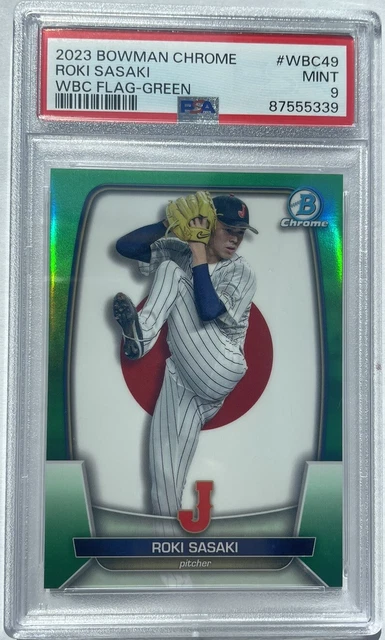
In the labyrinthine world of baseball card collecting, few names have stirred as much intrigue recently as Roki Sasaki. The young phenom’s Bowman 1st edition card, especially the 2023 Bowman Rifrattore Verde Cromato variant numbered to just 99, has catalyzed intense debate among devotees and investors alike. Is the fervor around this card a harbinger of smart investment or merely a transient bubble inflated by hype? This discussion seeks to unravel the layers of value, nostalgia, and speculation swirling around one of the most talked-about rookie cards on the market.
The Allure of the Bowman 1st: More Than Just a Card
The Bowman 1st series has long served as a bellwether in the baseball card ecosystem. It is often considered the initial canvas on which a prospect’s professional narrative is painted. For collectors, Bowman 1st represents hope—an early glimpse into potential greatness. Sasaki’s entry into this realm naturally garnered attention, given his prodigious talent and meteoric rise through the Japanese leagues before entering MLB’s sphere. The card transcends its physical medium; it is a talisman celebrating potential and rarity, especially when married with limited runs like the Verde Cromato edition.
Roki Sasaki: Profiling the Emerging Star
Understanding the card’s valuation requires contextualizing Sasaki himself. He is not merely another rookie; his pitching velocity and control have drawn comparisons to legends. As the first player in decades to throw a perfect game in Nippon Professional Baseball (NPB), expectations are palpably amplified. This rare combination of youth, talent, and record-breaking feats flings Sasaki into the enviable category of “once-in-a-generation” prospects. Such an aura fundamentally alters collectors’ perceptions, transforming a card from mere memorabilia into a potential golden goose.
Scarcity and the Magnetism of Limited Editions
The numerical limitation of the Verde Cromato (numbered to 99) is far from incidental. Scarcity not only elevates physical exclusivity but injects a psychological premium into the market. Limited print runs bestow an almost mythical status on cards—conjuring a blend of rarity and desirability that fuels competitive bidding and speculative bets. This scarcity, coupled with a PSA 9 grade, places the card in a rarified echelon, with each specimen a unique artifact owned by an exclusive club of collectors. This dynamic begs the question: does scarcity alone validate steep valuations?
The Speculative Haze: Evaluating Market Realities
It is here that skepticism anchors itself. The current fervent valuations hinge not just on Sasaki’s prodigious talent but on the prospect of burgeoning interest and future performance alignment. Baseball card markets are notoriously volatile, often swayed by narrative shifts more than intrinsic worth. Is the market pricing in an assured MLB stardom that remains to be solidified? Or is it an anticipatory rush, akin to a speculative crescendo, risking eventual correction? The card’s value might reflect a collective bet on Sasaki’s trajectory, but such wagers are intrinsically laden with risk and subject to the caprices of performance and public sentiment.
Comparative Insights: Sasaki’s Card in Historical Perspective
By positioning Sasaki’s Bowman 1st against historical analogues, one gleans a fuller picture of its potential and pitfalls. Past rookies with blazing starts have seen their rookie card values soar, only to wobble once career realities set in. Conversely, some cards appreciated over time as the player carved out a lasting legacy. Sasaki is at a nascent stage, differing from established stars already proven at the highest levels. Comparisons underscore the importance of patience and long-term horizon in card collecting, rather than a myopic chase of immediate gains.
The Emotional Quotient: Nostalgia Meets Modern Fandom
Nostalgia is an intangible yet vital factor in the valuation of sports memorabilia. With Sasaki, a new-generation narrative emerges that bridges exotic allure (via his Japanese heritage) and the universal enthrallment with young talent breaking onto the MLB stage. Collectors drawn by emotional resonance may see the card as a symbol of discovery and belonging in the tapestry of baseball history. This emotional connection often eclipses strictly analytical valuation, inciting a willingness to pay premiums in pursuit of personal satisfaction and identity reinforcement.
Condition and Grade: The Silent Price Driver
With an elevated PSA 9 grading, this Sasaki card commands a premium simply due to its preserved condition. The grading system functions as a universal language within the collecting community, providing a standardized quality assessment that mitigates ambiguity. High-grade cards often catalyze bidding frenzies, given their scarcity and desirability. Even within the same print run, the slightest variation in condition can lead to significant valuation disparities, underscoring how the minutiae of preservation can steer market dynamics with potent influence.
Future Outlook: Investment or Impulse?
Looking ahead, the question looms: will Sasaki’s Bowman 1st remain a pinnacle asset or languish as an overvalued trophy? It hinges not just on his athletic production but broader market sentiments toward baseball cards, international players, and rookie memorabilia. If Sasaki ascends to superstardom, this card might appreciate exponentially, rewarding early believers. Conversely, waning interest or career setbacks risk consigning the card to the realm of overvaluation. Savvy collectors must weigh these variables with prudence and avoid succumbing wholly to the hypnotic allure of trending phenomena.
Conclusion: Overvalued, Just Right, or Undervalued?
To distill the crux: Roki Sasaki’s Bowman 1st card functions simultaneously as a canvas of potential and a mirror of market psychology. Its valuation encapsulates a confluence of scarcity, emotional resonance, and speculative optimism. Whether one regards it as overvalued or just right depends largely on one’s temporal lens and appetite for risk in the connoisseurship of baseball memorabilia. Ultimately, it poses a playful yet profound inquiry into how we assign worth to objects that symbolize dreams, destinies, and the ever-evolving narrative of the great American pastime.