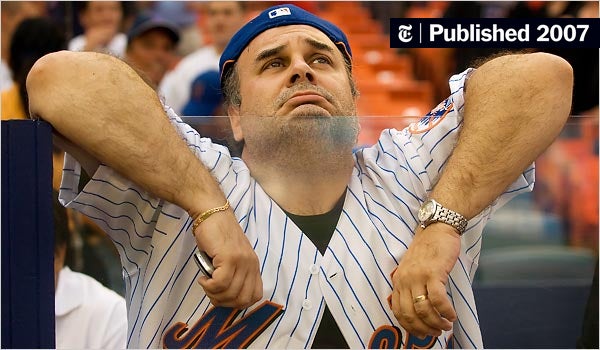
The New York Mets of 2007 were a team brimming with talent, stacked with All-Stars, and seemingly destined for greatness. Yet, as the season unfolded, their trajectory spiraled into one of the most infamous collapses in baseball history. What really happened? Was it a perfect storm of misfortune, a failure of leadership, or simply the cruel whims of fate? Buckle up, because the story of the Mets’ 2007 downfall is a cautionary tale wrapped in drama, ego, and a dash of cosmic irony.
The Illusion of Invincibility: A Roster Built for Glory
The Mets entered the 2007 season with a roster that read like a fantasy baseball owner’s wet dream. David Wright, the golden-armed third baseman, was the face of the franchise. Jose Reyes, the electrifying shortstop, terrorized opposing pitchers with his blistering speed. Carlos Beltrán, a switch-hitting outfield maestro, patrolled center field like a defensive savant. And then there was the pitching staff—a rotation featuring Tom Glavine, Orlando Hernández, and a young phenom named Mike Pelfrey, backed by a bullpen anchored by the enigmatic Billy Wagner.
To the casual observer, this team was a juggernaut. The Mets had reached the NLCS the previous year, and the addition of Beltrán—a free agent who signed a record-breaking seven-year deal—only reinforced the belief that they were on the cusp of something historic. But beneath the glossy veneer of All-Star talent, cracks began to form. Injuries, slumps, and a locker room rife with tension simmered just below the surface, waiting to erupt.
The First Domino: Injuries and the Fragility of Perfection
Baseball, more than any other sport, is a game of attrition. One injury can unravel an entire season. The Mets learned this the hard way. Reyes, their speedster and leadoff man, missed significant time with a hamstring injury. Wright, their emotional leader, battled through a wrist issue that sapped his power. Even Beltrán, the team’s marquee free agent, struggled with a knee problem that limited his defensive range and offensive production.
The pitching staff wasn’t immune. Glavine, the future Hall of Famer, posted a 4.52 ERA—his worst since 1996. Hernández, once a postseason legend, was plagued by inconsistency. The bullpen, once a strength, became a revolving door of blown saves and managerial misfires. The Mets were a team of fragile egos, and the injury bug didn’t discriminate.
The Mental Melt: When Talent Isn’t Enough
Even the most talented teams can crumble under pressure. The Mets of 2007 were no exception. They squandered leads, made costly errors, and seemed to forget how to win in critical moments. The collapse wasn’t just physical—it was psychological. The team’s confidence eroded with every loss, and the media scrutiny only amplified the pressure.
Manager Willie Randolph, a man with a calm demeanor, found himself in an impossible situation. His players looked lost. His decisions were second-guessed. The Mets’ front office, desperate to right the ship, made a series of questionable moves—trades, call-ups, and lineup shuffles—that only added to the chaos. The team’s chemistry, once a strength, became a liability.
The Wild Card: The Mets’ Own Worst Enemy
In the end, the Mets’ collapse wasn’t just about injuries or bad luck. It was about themselves. The team’s culture had become toxic. Players pointed fingers. The media dissected every misstep. The fans, once passionate, grew restless. The Mets were their own worst enemy, trapped in a cycle of self-destruction.
Consider the infamous moment in September when the Mets blew a seven-game lead in the NL East. A team that had been so close to greatness instead found itself in a freefall. The final stretch of the season was a masterclass in how not to lose a division. The Mets dropped series to the Marlins, the Braves, and the Phillies—teams they had no business losing to. The collapse wasn’t just a statistical anomaly; it was a psychological meltdown.
The Aftermath: Lessons from a Fallen Dynasty
The 2007 Mets’ collapse left scars—on the players, the organization, and the fanbase. For years, the team struggled to recapture its former glory. The front office overhauled the roster, the manager was fired, and the players moved on. But the lessons lingered. The Mets learned that talent alone isn’t enough. That leadership matters. That a team’s culture can make or break a season.
For the fans, the collapse became a cautionary tale—a reminder that even the brightest stars can burn out too soon. The 2007 Mets weren’t just a team that lost; they were a team that failed to live up to its potential. And in baseball, where hope springs eternal, that kind of failure lingers like a bad taste in the mouth.
Could It Happen Again? The Perils of Overconfidence
Fast-forward to today, and the Mets’ 2007 collapse serves as a stark warning. In an era where teams chase championships with reckless abandon, the Mets’ downfall is a reminder that hubris can be just as destructive as incompetence. The Mets of 2023, with their record payroll and high expectations, would do well to heed the lessons of the past.
Could another team suffer the same fate? Absolutely. Baseball is a game of inches, of momentum shifts, of mental fortitude. The Mets’ 2007 collapse wasn’t an anomaly—it was a blueprint for how quickly a season can unravel. The question isn’t whether it could happen again, but when.