In the high-stakes theater of Major League Baseball, where milliseconds dictate the difference between a game-winning swing and a strikeout, the art of pitch identification has evolved into a science of precision. For decades, batters have relied on instinct, experience, and the occasional tip from a pitcher’s tell. But what if there was a way to decode the very fabric of the pitch before it left the hurler’s hand? Enter the “Watch the Seams” approach—a revolutionary technique that transforms the baseball from a blur of white into a roadmap of movement, spin, and deception.
The Illusion of the Fastball: Why Seams Matter More Than Speed
At first glance, a 95-mph fastball appears as a singular, unyielding projectile—a white streak hurtling toward the plate. Yet, the seams of the baseball are anything but static. They are the hidden language of the pitch, whispering secrets about its trajectory, spin axis, and eventual destination. The human eye, unaided, struggles to parse this information, but with deliberate focus on the seams’ rotation, a batter can anticipate whether that “fastball” is truly a four-seamer or a disguised two-seamer with late run. The seams act as a gyroscope, their orientation revealing the pitch’s true nature before the pitcher’s arm even completes its motion.
Consider the pitcher’s arsenal: a four-seam fastball spins with backspin, its seams rotating in a perfect, symmetrical loop. The two-seamer, however, tilts its axis, causing the seams to wobble like a drunken spiral. This subtle asymmetry imparts late movement, turning a pitch that starts in the zone into one that dives away from the barrel. By tracking the seams’ rotation, a batter can distinguish between these twins, adjusting their timing and swing path accordingly. The illusion of velocity fades when the seams betray the pitch’s true intent.
The Spin Spectrum: Decoding the Hidden Fingerprints of Pitches
Every pitch in baseball leaves a unique spin signature—a fingerprint of movement etched into the air by the seams. The curveball, with its frantic, tumbling rotation, presents a chaotic pattern of seams flipping end over end. The slider, a hybrid of speed and bite, spins on a tilted axis, its seams slicing through the air like a knife. Even the changeup, often dismissed as a slower fastball, relies on a delicate manipulation of seam orientation to disrupt the batter’s timing.
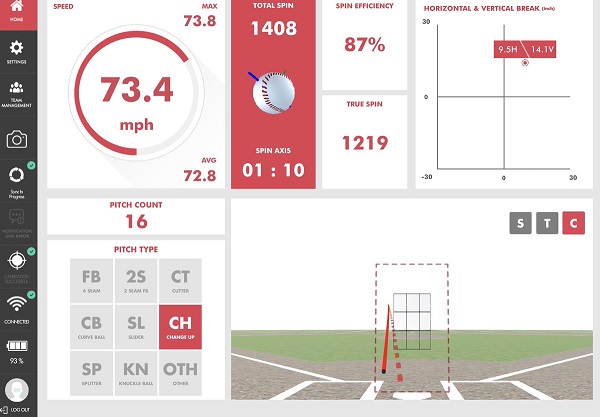
Advanced tracking systems like TrackMan and Rapsodo have quantified these spin signatures, but the “Watch the Seams” method democratizes this knowledge. By observing the seams’ initial alignment and their subsequent rotation, a batter can predict the pitch’s break before it begins. A curveball’s seams may start vertically aligned but rapidly tilt, signaling a downward trajectory. A slider’s seams might twist horizontally, indicating a sharp lateral break. This isn’t just about seeing the pitch—it’s about reading its soul.
The Art of the Tilt: How Pitchers Weaponize Seam Orientation
Pitchers are the architects of deception, and the seams are their blueprint. By altering the tilt of their pitches, they can manipulate the seams’ rotation to create movement that defies logic. A pitcher might throw a fastball with slight gyro spin—seams rotating like a football’s spiral—resulting in a pitch that stays straight but appears to rise due to its spin-induced carry. Conversely, a sinker with heavy seam tilt will tumble downward, its seams fluttering like a falling leaf.
The key lies in the pitcher’s grip. A four-seam grip ensures maximum backspin, while a two-seam grip introduces tilt. A changeup grip might subtly shift the seams’ alignment, reducing spin efficiency and creating the illusion of a fastball that mysteriously loses speed. By studying the seams’ initial orientation and their subsequent rotation, batters can reverse-engineer the grip, gaining a split-second advantage in decision-making. It’s a game of cat and mouse, where the seams are the only honest witnesses.
From Theory to Plate: Practical Applications for Batters
Watching the seams isn’t just an abstract concept—it’s a skill that can be honed with practice. Batters can train their eyes to track the seams’ rotation during bullpen sessions, using high-speed cameras or specialized training tools to reinforce the connection between seam movement and pitch type. The goal isn’t to replace traditional pitch recognition but to augment it with a deeper layer of insight.
In-game, the approach requires laser focus. As the pitcher begins their delivery, the batter’s gaze should lock onto the seams, ignoring the blur of the ball itself. The initial orientation of the seams—whether they’re aligned vertically, horizontally, or at an angle—provides the first clue. As the pitch travels, the seams’ rotation reveals the spin axis, allowing the batter to adjust their swing path in real time. It’s a mental chess match, where the seams are the board and the pitch is the opponent’s next move.
The Future of Pitch Recognition: AI, Seams, and the Next Frontier
The “Watch the Seams” approach is just the beginning. As technology advances, the integration of artificial intelligence and biomechanical analysis could take this concept to new heights. Imagine a system that not only tracks seam rotation but also predicts pitch type based on the pitcher’s grip pressure, finger placement, and arm slot—all before the ball is released. The seams would become the cornerstone of a predictive model, turning the art of pitch recognition into a precise science.
Teams are already experimenting with augmented reality (AR) glasses that overlay seam trajectories in real time, giving batters a tactical advantage. The next evolution might involve neural interfaces that directly feed seam data to a batter’s brain, eliminating the need for conscious processing. The game is evolving, and the seams are the Rosetta Stone of this revolution.
Conclusion: The Seams as the Ultimate Equalizer
Baseball has always been a game of inches, where the difference between a hit and a miss can hinge on a single millisecond of recognition. The “Watch the Seams” approach flips the script, transforming the baseball from an incomprehensible blur into a canvas of movement and deception. By learning to read the seams, batters can peer into the pitcher’s soul, anticipating pitches before they’re thrown. It’s not just about seeing the ball—it’s about understanding its hidden language.
In an era where analytics and technology dominate the sport, the seams offer a return to fundamentals, a reminder that baseball is as much about intuition as it is about data. The next time you watch a game, don’t just watch the pitcher’s arm. Watch the seams. They’re the key to unlocking the game’s deepest secrets.